 @raiders@darktundra.xyz
2026-10-08 16:37:41
Anonymous NFL GM Issues Bold Kirk Cousins Prediction for Raiders https://heavy.com/sports/nfl/las-vegas-raiders/anonymous-gm-bold-kirk-cousins-prediction/
 @JBrickelt963@framapiaf.org
2026-08-11 20:42:02
RE: https://hostux.social/@ffeth/117076687306058186
« Au lieu de partager l’effort, on le fait entièrement porter sur France Musique. Il y a lŠ un défaut d’équité », proteste un producteur préférant garder l’anonymat.
La radio musicale ne couvre plus qu…
 @Techmeme@techhub.social
2026-08-10 10:40:36
The UK's Report Remove service receives 420 reports from under-18s of explicit images digitally faked or manipulated to depict them in H1, exceeding 2025's 397 (Dan Milmo/The Guardian)
https://www.theguardian.com/technology/2026/aug/08/uk-ch…

 @Don_kun@nerdculture.de
2026-08-09 15:59:19
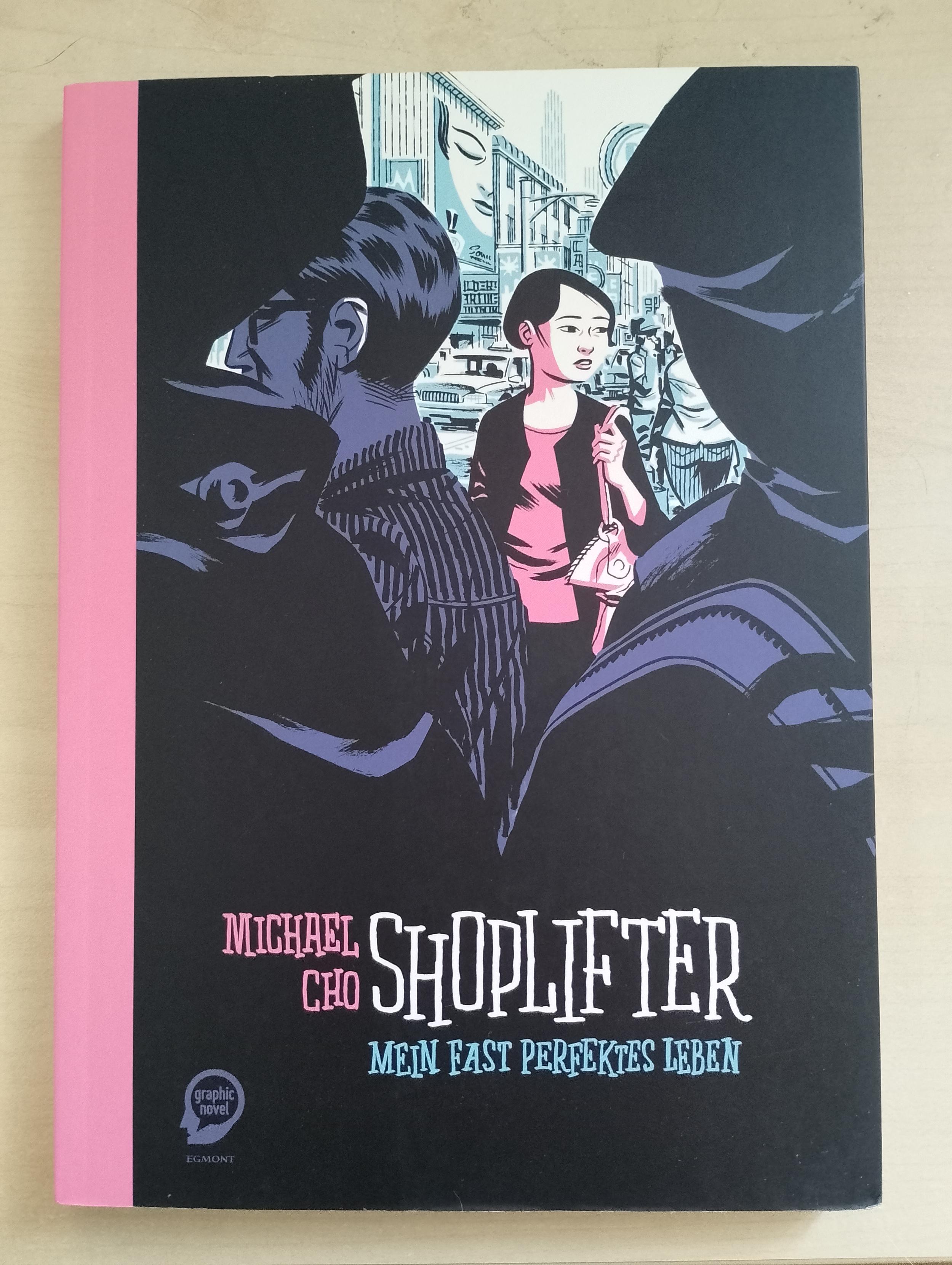
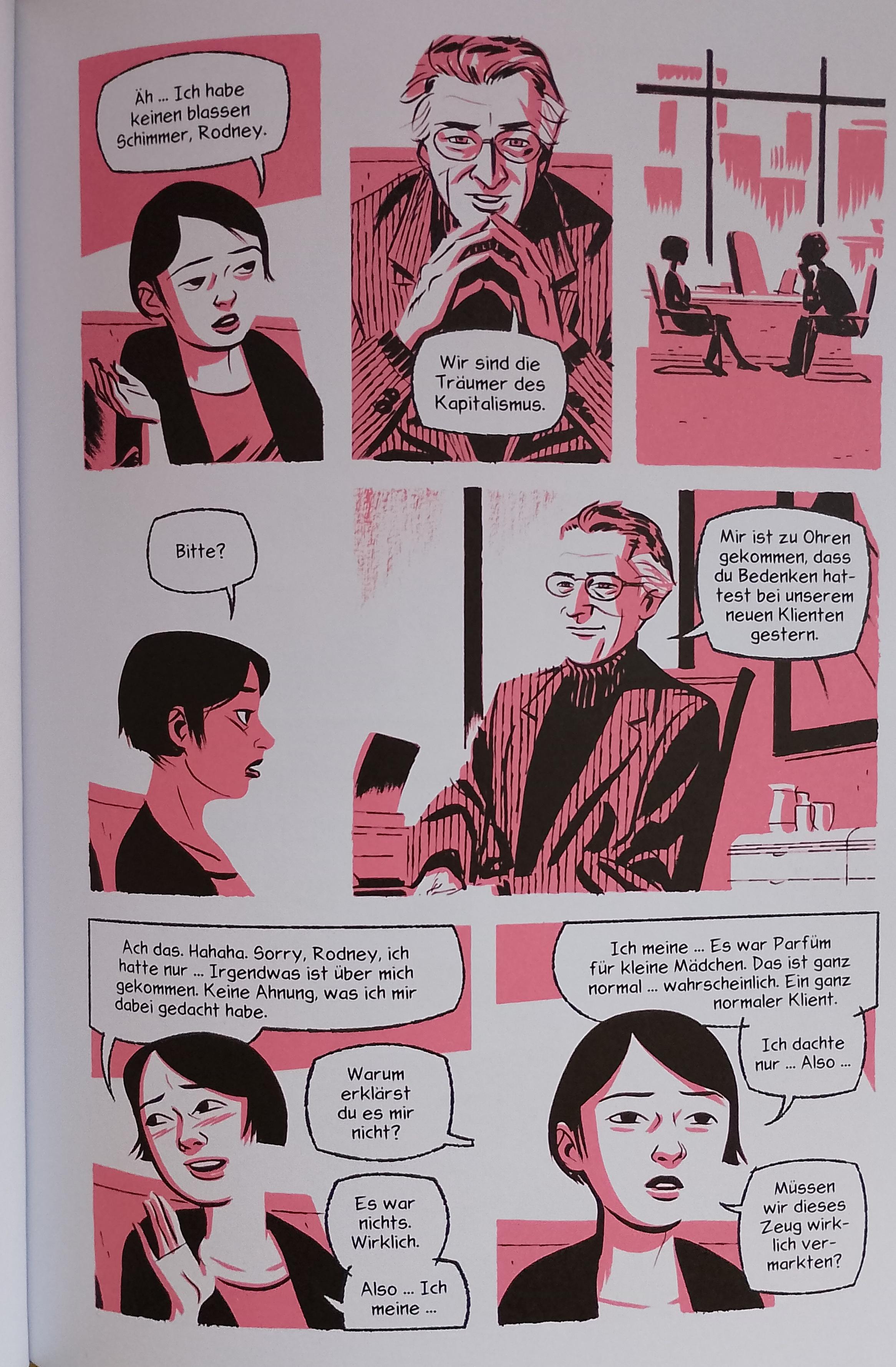
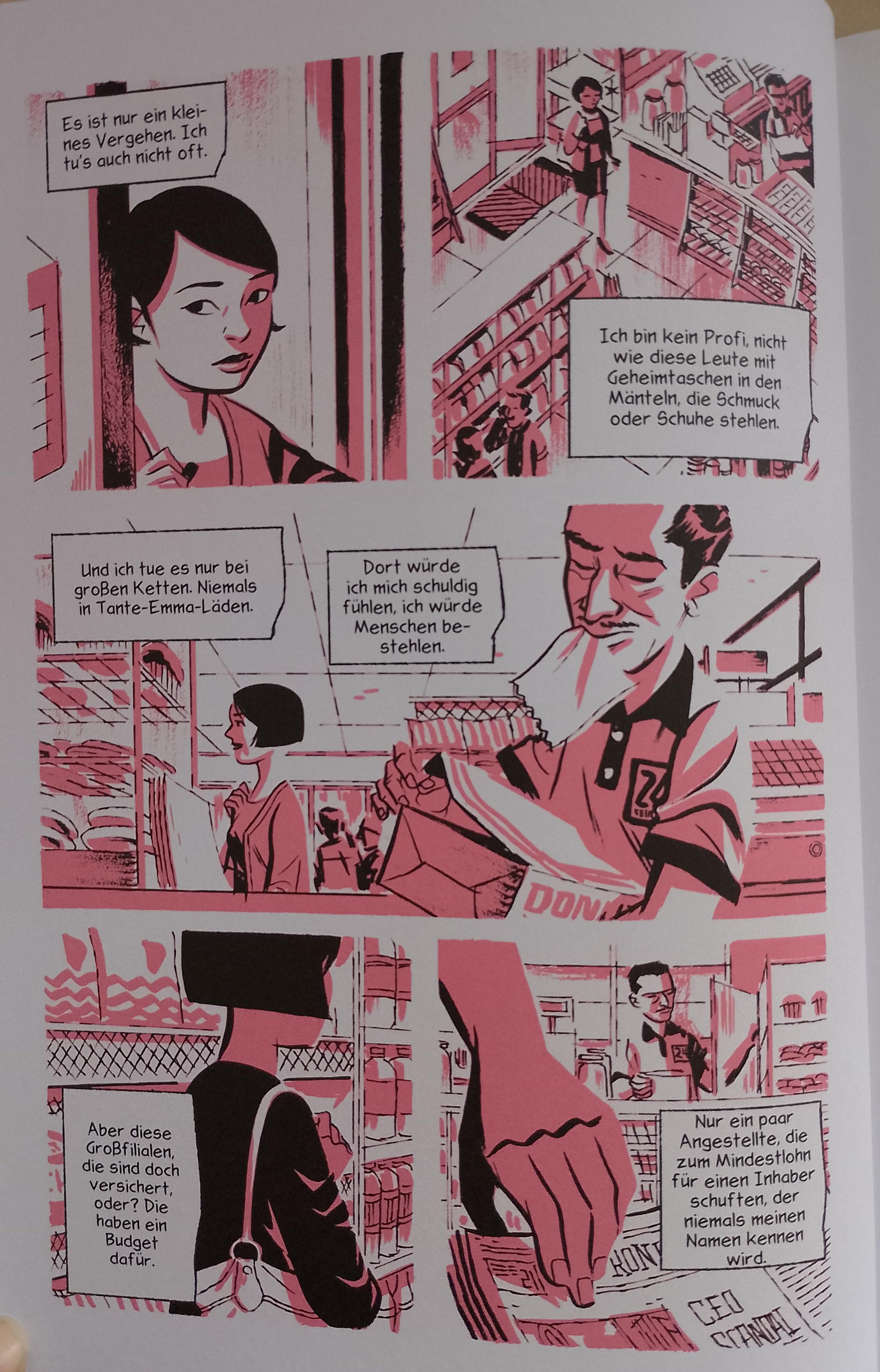
Auf dem Comicsalon gekauft und jetzt gelesen: "Shoplifter" von Michael Cho.
Eine Kurzgeschichte über eine Werbetexterin, die mit ihrem Beruf und ihrem Leben generell hadert. Die einzige Ausflucht aus ihrem Alltag, der einzige "Kick" ist ein gelegentlicher kleiner Ladendiebstahl. Ihr Leben nimmt dann aber durch eine Aneinanderreihung von Ereignissen eine Wendung...
Eine durchaus mitreißende Alltagsgeschichte, deren Protagonistin einen beim Lesen schnell hineinzi…
 @cdarwin@c.im
2026-09-23 15:21:39
The United States has long supported a culture of anonymity to foster both the free exchange of controversial ideas and the protection of privacy.
There is a long and well-established First Amendment right to engage in anonymous speech which can only be abridged in certain circumstances.
Globally, anonymity and technologies that facilitate it have been critical protections for dissidents, journalists, LGBTQ communities, and anyone living under oppressive circumstances, including…
 @thomasrenkert@hcommons.social
2026-10-07 10:56:58
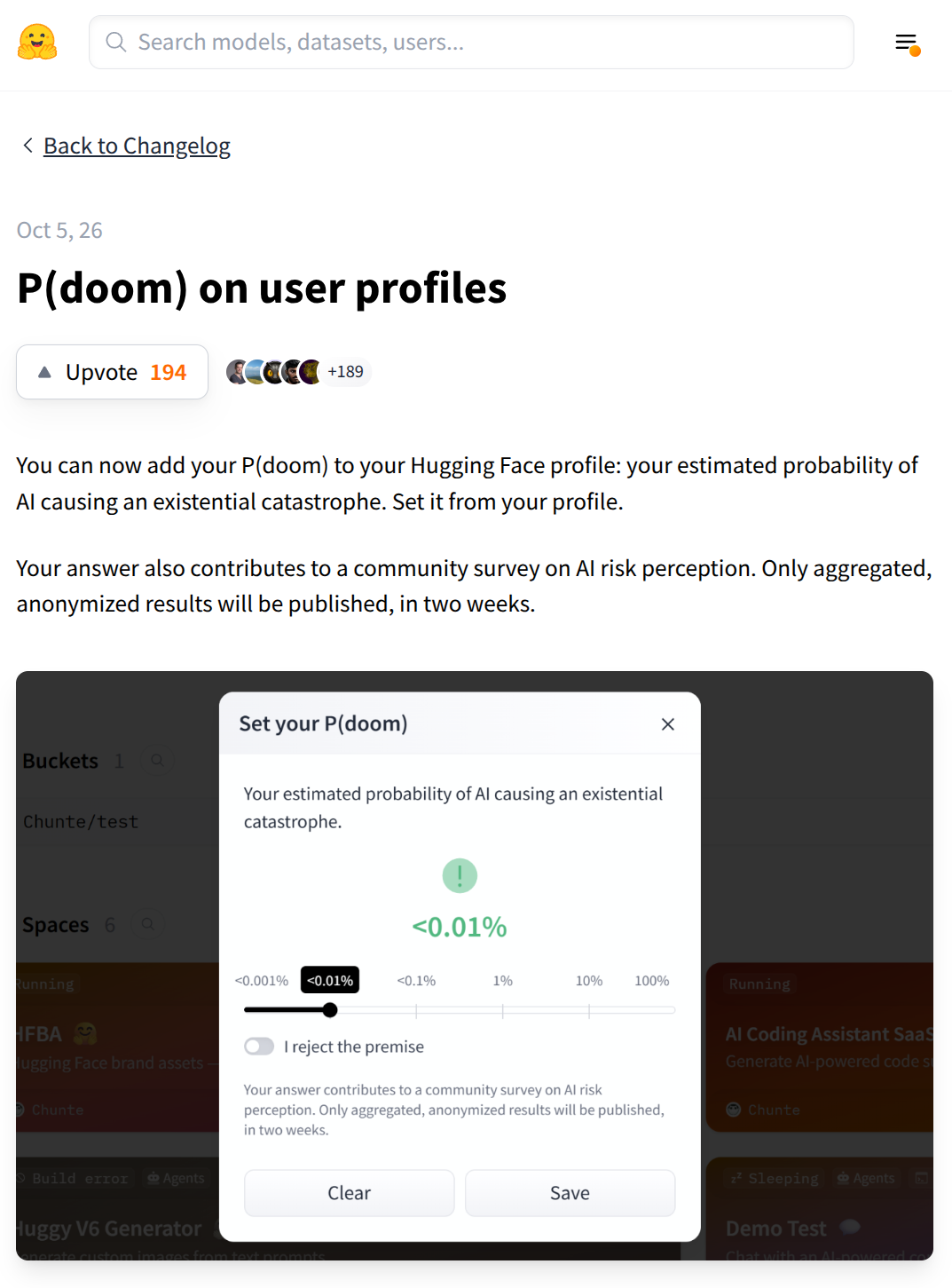
#Huggingface lets you add your personal p(doom) prediction to your profile now.
Makes for a nice personal touch of living through the apocalypse, if you ask me.
 @Techmeme@techhub.social
2026-07-18 19:11:12
Prediction market political betting on insider info spreads in DC; sources: WH lawyers raised alarms over anonymous Polymarket bets on the Iran ceasefire timing (Wall Street Journal)
https://www.wsj.com/politics/policy/dc-government-prediction-m…
 @arXiv_physicsinsdet_bot@mastoxiv.page
2026-08-24 07:53:05
Preventing quart-NaI adhesion in Bridgman growth using ammonium iodide
Lam Tan Truc, N. T. Luan, Gul Rooh, O. Gileva, K. A. Shin, H. S. Lee, A. Iltis, C. R. Byeon, C. H. Lee, H. J. Kim
https://arxiv.org/abs/2608.21171 https://arxiv.org/pdf/2608.21171 https://arxiv.org/html/2608.21171
arXiv:2608.21171v1 Announce Type: new
Abstract: Adhesion between NaI(Tl) single crystals and the walls of quartz ampoules remains a major limitation for Bridgman growth under sealed conditions, particularly for applications requiring ultra-radiopure scintillators for dark matter searches, where sealed handling is essential. In this study, ammonium iodide (NH4I) was used as an additive to generate HI in situ, thereby suppressing the NaOH-SiO2 reaction that forms adhesive sodium silicate phases. Small-diameter crystals (8 mm) were first grown to determine the NH4I concentration required to eliminate adhesion. The optimized condition was then applied to the growth of a large NaI(Tl) crystal. A crack-free and bubble-free NaI(Tl) crystal with dimensions of 3 inches in diameter by 3 inches in length was successfully grown. The crystal exhibited a light output of 59,000 photons/MeV, which is higher than that of the commercial NaI(Tl) crystals used as references in this study.
toXiv_bot_toot
@cdarwin@c.im2026-07-21 15:49:18
Senator John Fetterman said last week he would formally switch his affiliation if Democrats make opposition to Israel part of their official platform.
It’s the first time the Pennsylvania senator has laid out a scenario in which he would jump ship.
Fetterman’s colleagues have doubts about his ability to win a Democratic primary.
One Democratic senator, who requested anonymity to speak freely, expressed anxiety over the prospect of an unexpected party switch by Fetterman.

 @veit@mastodon.social
2026-09-25 10:43:39
Researchers at ETH Zurich and Anthropic have published an impressive study demonstrating just how fragile online anonymity has become. They show that large language models can be used for de-anonymisation on a large scale. With unrestricted internet access, their agent was able to re-identify users of Hacker News and participants in Anthropic interviews with a high degree of accuracy, based solely on pseudonymous online profiles and conversations: #Anonymity #LLM