 @cdarwin@c.im
2026-07-21 03:54:42
National parks are deteriorating. There’s a fix Congress isn’t making.
The national park system faces a maintenance backlog of $24 billion in crumbling roads, aging water systems, washed-out trails and dilapidated visitor facilities.
That is more than seven times the National Park Service’s annual budget.
Last month, committees in both the House and Senate advanced bipartisan bills to dedicate roughly $1.3 billion annually for park maintenance over the next five years. …

 @toxi@mastodon.thi.ng
2026-07-18 16:56:00
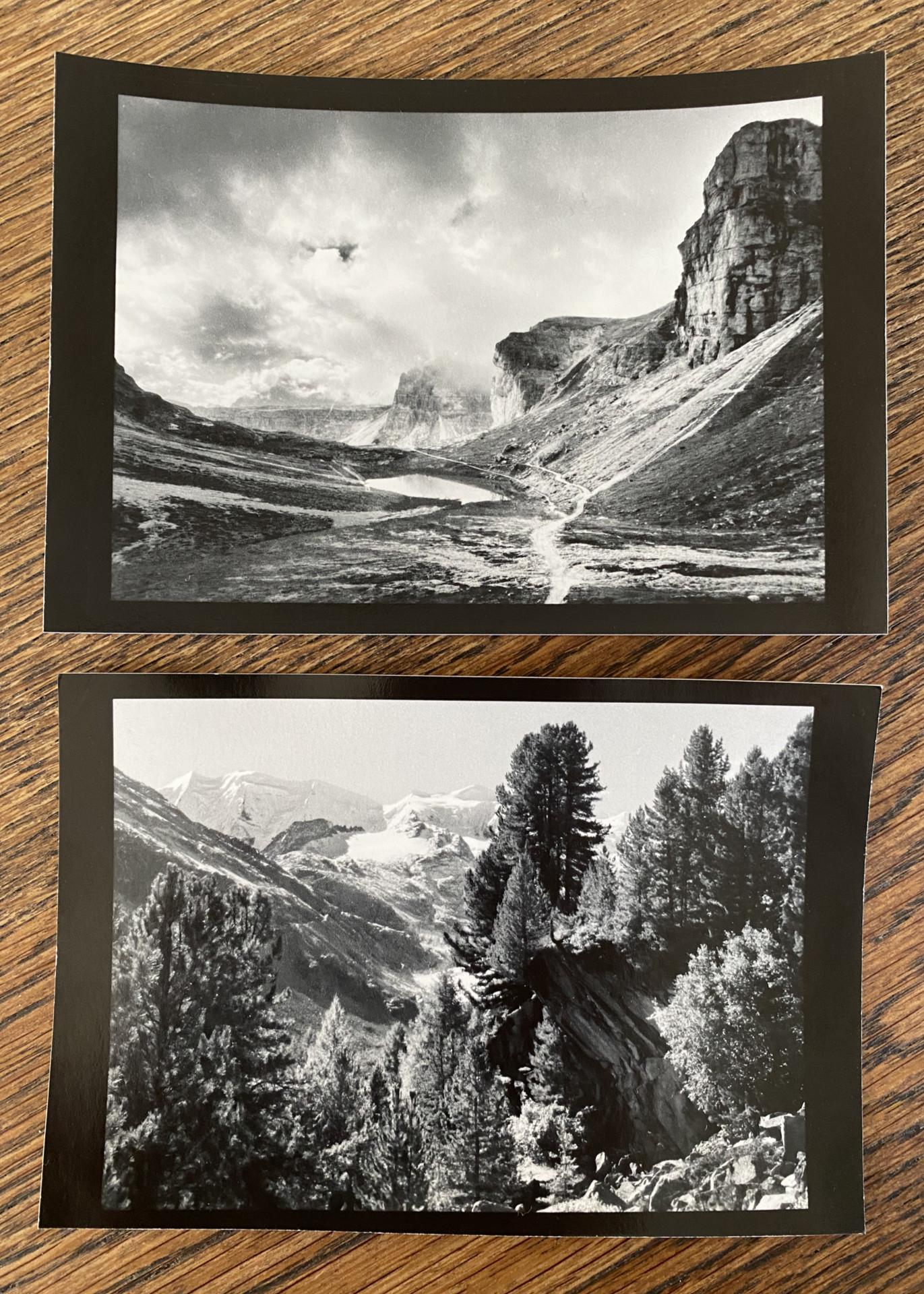
Two small new prints from this afternoon, this time not Kallitype but contact printing on silver chloride FB paper, developed with Adox MCC. The increase in depth and detail is just wonderful and the feel of the final results an instant throwback to my early darkroom adventures ~40 years ago... 😍
The pictures are of two of my favorite places in recent years. Larger prints will be available for purchase in September.
 @Techmeme@techhub.social
2026-09-16 18:46:20
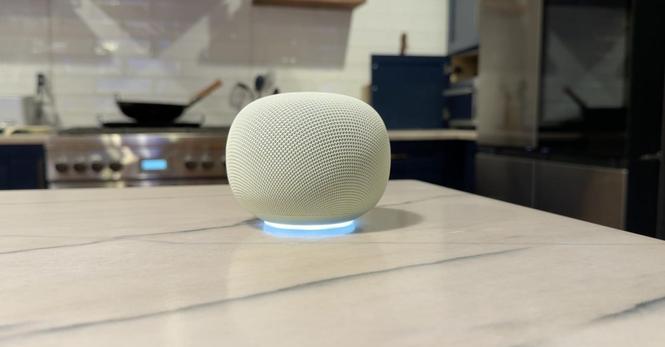
Google adds MCP integration to Google Home, letting third-party AI agents analyze home data and control devices, rolling out to Premium Advanced users in the US (Jennifer Pattison Tuohy/The Verge)
https://www.theverge.com/tech/996310/googl
 @arXiv_qbioNC_bot@mastoxiv.page
2026-07-21 08:13:25
Exploring Brain Networks Using Noninvasive Electrophysiological Measurements: Methods and Applications
Richard Leahy, Takfarinas Medani
https://arxiv.org/abs/2607.17602 https://arxiv.org/pdf/2607.17602 https://arxiv.org/html/2607.17602
arXiv:2607.17602v1 Announce Type: new
Abstract: Electroencephalography (EEG) and magnetoencephalography (MEG) provide noninvasive measurements of brain activity with millisecond temporal resolution, enabling the investigation of functional and effective interactions within large-scale brain networks. This chapter presents a comprehensive overview of the methodological foundations and practical workflows for EEG/MEG-based brain network analysis. We first review the physical principles underlying EEG and MEG, emphasizing their complementary strengths and limitations. We then describe the forward and inverse problems, including subject-specific head modeling, source reconstruction techniques, and the importance of accurate anatomical modeling for reliable source localization. Strategies for mitigating volume conduction and signal leakage are discussed, together with best practices for source-space connectivity analysis. The chapter reviews widely used functional and effective connectivity measures, including coherence, phase synchronization metrics, amplitude envelope correlation, Granger causality, dynamic causal modeling, and transfer entropy, highlighting their assumptions, advantages, and limitations. Modern end-to-end analysis pipelines are presented, with particular emphasis on Brainstorm and complementary open-source software for reproducible EEG/MEG research. Finally, we discuss emerging approaches, including time-varying connectivity, cross-frequency interactions, and network-based analyses, illustrating how noninvasive electrophysiology contributes to understanding brain organization in health and disease. The chapter provides both conceptual foundations and practical guidance for researchers and advanced students seeking to map and interpret human brain networks using EEG and MEG.
toXiv_bot_toot
 @mcdanlj@social.makerforums.info
2026-07-12 02:45:56
 @memeorandum@universeodon.com
2026-08-19 05:35:43
Peltola and Sullivan Advance in Crucial Alaska Senate Contest (Kellen Browning/New York Times)
https://www.nytimes.com/2026/08/19/us/politics/peltola-sullivan-alaska-senate-primary.html
http://www.memeorandum.com/260819/p4#a260819p4
@arXiv_qbioNC_bot@mastoxiv.page2026-07-21 08:08:14
Emergent topological structure in spontaneous brain-organoid activity
Eve Bodnia, Margaux Basart, Sofie Hai, Lenzie Ford, Nina Miolane, Kenneth S. Kosik, Dirk Bouwmeester, Lincoln D. Carr
https://arxiv.org/abs/2607.16517 https://arxiv.org/pdf/2607.16517 https://arxiv.org/html/2607.16517
arXiv:2607.16517v1 Announce Type: new
Abstract: Neural activity is widely held to organize on low-dimensional structure embedded in a high-dimensional state space. Persistent homology reads such structure directly from the pattern of pairwise correlations, without assuming in advance which variables are relevant. We apply persistent homology to microelectrode-array (MEA) recordings of spontaneous activity from human (Lancaster) and mouse (Pa\c{s}ca) cortical organoids, spanning $26$--$234$ simultaneously sorted units, and ask whether topological data analysis resolves structure at the node counts that neural recordings actually deliver. Building weighted networks in correlation space and characterizing them by Vietoris--Rips filtration, we find that the first homology ($H_1$, loops) rises significantly above a rate- and population-preserving null in $14$ of $18$ datasets. This loop structure occupies a non-redundant core: it is robust to random removal of units yet disrupted by targeted removal of the units that carry it. Topological richness grows with network size, and second homology ($H_2$) emerges significantly above the null only in the larger networks. These results show that persistent homology resolves structured topology in neural recordings at the scale experiments actually deliver.
toXiv_bot_toot
 @lpryszcz@genomic.social
2026-09-06 11:21:52
"...there are 196 Indigenous communities living ... in voluntary isolation. Most are in South America... Though fundamentally diverse, these communities have all chosen to reject outsiders and the industrialised world, and live self-sufficiently.
...
Increasingly, however, outsiders are trying to contact them – and make content from them.
...
For now, their numbers are believed to be few, ...but advocates believe the threat to be real, growing and warranting action.…
 @Techmeme@techhub.social
2026-06-30 16:56:42
Ottawa-based Dominion Dynamics, which is building software, sensors, and drones to autonomously monitor the Arctic, raised a CA$139M Series A led by Georgian (Josh Scott/BetaKit)
https://betakit.com/dominion-dynamics-lands-139-million-in-cana…
 @cdarwin@c.im
2026-08-30 15:13:32
Don’t look now, but suddenly the U.S. Senate is in play
At the start of this election cycle,
it looked like winning control of the Senate was all but out of Democratic reach.
There are 35 contests on the ballot in November.
Of those, nearly two dozen are effectively over before they’ve even started,
given the advantage one party holds over the other.
Of the remainder, most are being held in states Trump won in 2024,
which makes them, broadly speaki…
