 @arXiv_mathST_bot@mastoxiv.page
2026-08-17 08:33:08
Crosslisted article(s) found for math.ST. https://arxiv.org/list/math.ST/new
[1/1]:
- Graph Causal Optimal Transport and Wasserstein Distances
Jan Ob{\l}\'oj, Vlad Tuchilus
https://arxiv.org/abs/2608.13716 https://mastoxiv.page/@arXiv_mathPR_bot/117109746090804032
- Detection of Structural Distortions in Functional Time Series
Debanjana Datta, Rituparna Sen, Nalini Ravishanker
https://arxiv.org/abs/2608.13762 https://mastoxiv.page/@arXiv_statME_bot/117109778563001128
- A Structural Characterization of Entropy Functionals
Daniel Lazarev
https://arxiv.org/abs/2608.13917 https://mastoxiv.page/@arXiv_csIT_bot/117109760641851678
- Change Point Detection and Localization in High-Dimensional Time Series
Patrick Bastian, Daria Tieplova, Nina D\"ornemann, Tim Kutta
https://arxiv.org/abs/2608.14344 https://mastoxiv.page/@arXiv_statME_bot/117109842628849962
- A distance-based theory of lottery complexity
Giulio Principi
https://arxiv.org/abs/2608.14464 https://mastoxiv.page/@arXiv_econTH_bot/117109786200544079
- Handover of In-Context Learning State Across Session Boundaries
Masahiro Kato, Taka Kato
https://arxiv.org/abs/2608.14528 https://mastoxiv.page/@arXiv_csAI_bot/117109896699069976
toXiv_bot_toot
 @heiseonline@social.heise.de
2026-09-17 11:04:04
AGNTCon MCPCon: Agentische KI wird erwachsen
Auf einer eigenen Konferenz diskutiert die Community über die Zukunft des Model Context Protocols: Wie wird agentische KI sicher, überwachbar und skalierbar?
https://www.

 @aredridel@kolektiva.social
2026-07-17 15:48:40
RE: https://eldritch.cafe/@miranda_blue/116935608086213327
This is showing one thing that I think should become general principle: Using an LLM for someone else _is rude and bad_. Presenting something untranslated that _they_ can have an LLM translate is better than doing it yourself, and not showing that input — the prompt here is not included and is a key piece of context, and the results are also bad _with no recourse_.
Information has been destroyed. Trust has been broken (or in the case of commerce, failed to be established). Even if the total amount of LLM-use were the same, this is worse than the reader using it.
PROMPTING AN LLM FOR SOMEONE ELSE IS RUDE.
 @netzschleuder@social.skewed.de
2026-07-18 22:00:04
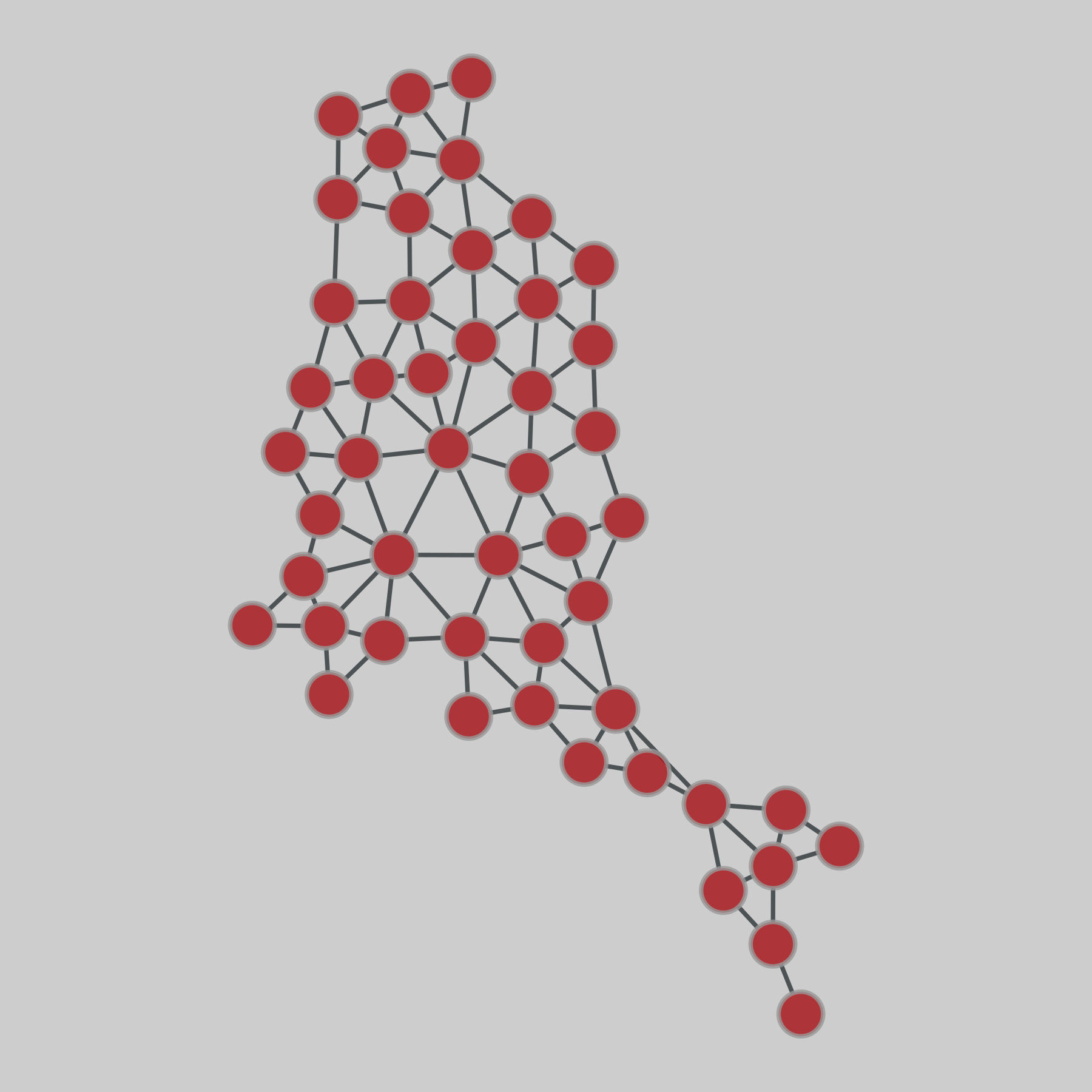
contiguous_usa: Contiguous states (USA)
A network of contiguous states in the USA, in which each state is a node and two nodes are connected if they share a land-based geographic border. The dataset includes the lower 48 states, and the District of Columbia.
This network has 49 nodes and 107 edges.
Tags: Transportation, Roads, Unweighted
 @djghettoredneck@mastodon.djghettoredneck.com
2026-08-17 03:13:30

 @davidaugust@mastodon.online
2026-08-14 22:33:51
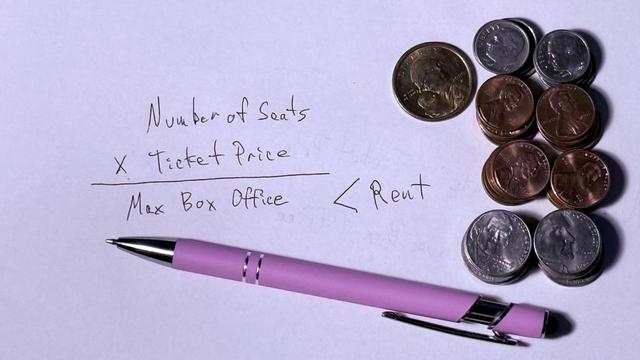
Just posted the story of how a theatre once killed itself with math.
Anyone can, you just have to ignore the math.
#math
 @donelias@mastodon.cr
2026-07-13 18:53:55
Israel ha cometido genocidio contra los palestinos en la Franja de Gaza
https://news.un.org/es/story/2025/09/1540443
Así afirmó la Comisión Internacional Independiente de Investigación sobre los territorios palestinos ocupados, urgiendo a Israel a cumplir con sus obligaciones l…
 @arXiv_qfinTR_bot@mastoxiv.page
2026-07-16 07:57:14
Detecting unusual trading patterns on cryptocurrency exchanges by means of complexity measures
Jakub Zwydak, Marcin W\k{a}torek, Jaros{\l}aw Kwapie\'n, Stanis{\l}aw Dro\.zd\.z
https://arxiv.org/abs/2607.13916 https://arxiv.org/pdf/2607.13916 https://arxiv.org/html/2607.13916
arXiv:2607.13916v1 Announce Type: new
Abstract: Artificial transaction generation remains an important source of potential market manipulation on cryptocurrency exchanges, as it may distort reported liquidity and reduce market transparency. This study proposes a diagnostic framework for detecting unusual trading patterns based on complexity and statistical-structure measures derived from high-frequency trade-level data. The analysis considers log-returns, trading volume, and transaction counts, using tail distributions, autocorrelation functions, multifractal characteristics, approximate entropy, and detrended cross-correlations. The methodology is applied to BTC, ETH, and XRP traded on Binance, Bitget, KuCoin, and Kraken over the period from April 1 to June 30, 2025. The results reveal a pronounced anomaly on Bitget for BTC and ETH after mid-May 2025. The number of transactions increases sharply, but there is no proportional increase in traded volume or return fluctuations. This regime is characterised by numerous low-volume trades, weaker autocorrelations, reduced multifractal organisation, higher short-pattern irregularity, and weaker cross-correlations involving the transaction-count series. These features are consistent with a noise-like component in trading activity and may indicate artificially increased transaction counts, although they do not provide direct proof of wash trading. The findings show that complexity-based indicators can be useful for detecting exchange-specific trading anomalies that remain hidden in price-based measures.
toXiv_bot_toot
 @primonatura@mstdn.social
2026-08-12 15:00:17
"Climate change doubled likelihood of Canada’s extreme fire weather, study finds"
#Canada #Climate #ClimateChange
 @arXiv_mathST_bot@mastoxiv.page
2026-08-14 08:12:20
On Bridging Mixture Distributions
Pierre Del Moral, Ajay Jasra, Ke Zhao
https://arxiv.org/abs/2608.13383 https://arxiv.org/pdf/2608.13383 https://arxiv.org/html/2608.13383
arXiv:2608.13383v1 Announce Type: new
Abstract: In this article we consider bridging between two mixture probability measures. In particular, given access to a Markov kernel between two component distributions, we provide a general mechanism to generate samples from one mixture to the other. Associated to a given reference and extended state space, we prove entropic optimality of this approach. In order to use this idea one needs to know the underlying mixtures and the Markov kernel, which is seldom available, and so we consider the case of Gaussian mixtures and Schr\"odinger Bridges. We prove a general $2-$Wasserstein continuity bound between the exact bridge and one that is approximated, based on $\epsilon-$covariance inflation, and these rely on a novel continuity analysis of perturbed Riccati maps. We apply our results in the context of bridging mixtures of Gaussians, single Gaussians and empirical estimators of the Gaussian parameters and the Monge map. For mixtures of Gaussians, when the parameters are estimated using the Expectation-Maxmization algorithm, the upper-bound on the $2-$Wasserstein distance between the true and approximated bridges is, under assumptions and with probability at least $1-10N^{-1}$, $\mathcal{O}\big(\big[\big(\tfrac{d\log N}{N}\big)^{1/2}\left\{1 \big(\tfrac{d\log N}{N}\right)^{1/2}(\epsilon^{-2} 1)\big\} \epsilon^2\big]\big) $
and for the other two cases, in expectation, $\mathcal{O}\left(d\left\{\tfrac{1 \epsilon^{-2}}{1 N} \epsilon^2\right\}\right)$, where $d,N\in\mathbb{N}$ is the dimension of the Gaussian and the number of empirical samples respectively. We also investigate our bounds numerically.
toXiv_bot_toot