 @burger_jaap@mastodon.social
2026-06-19 11:40:32
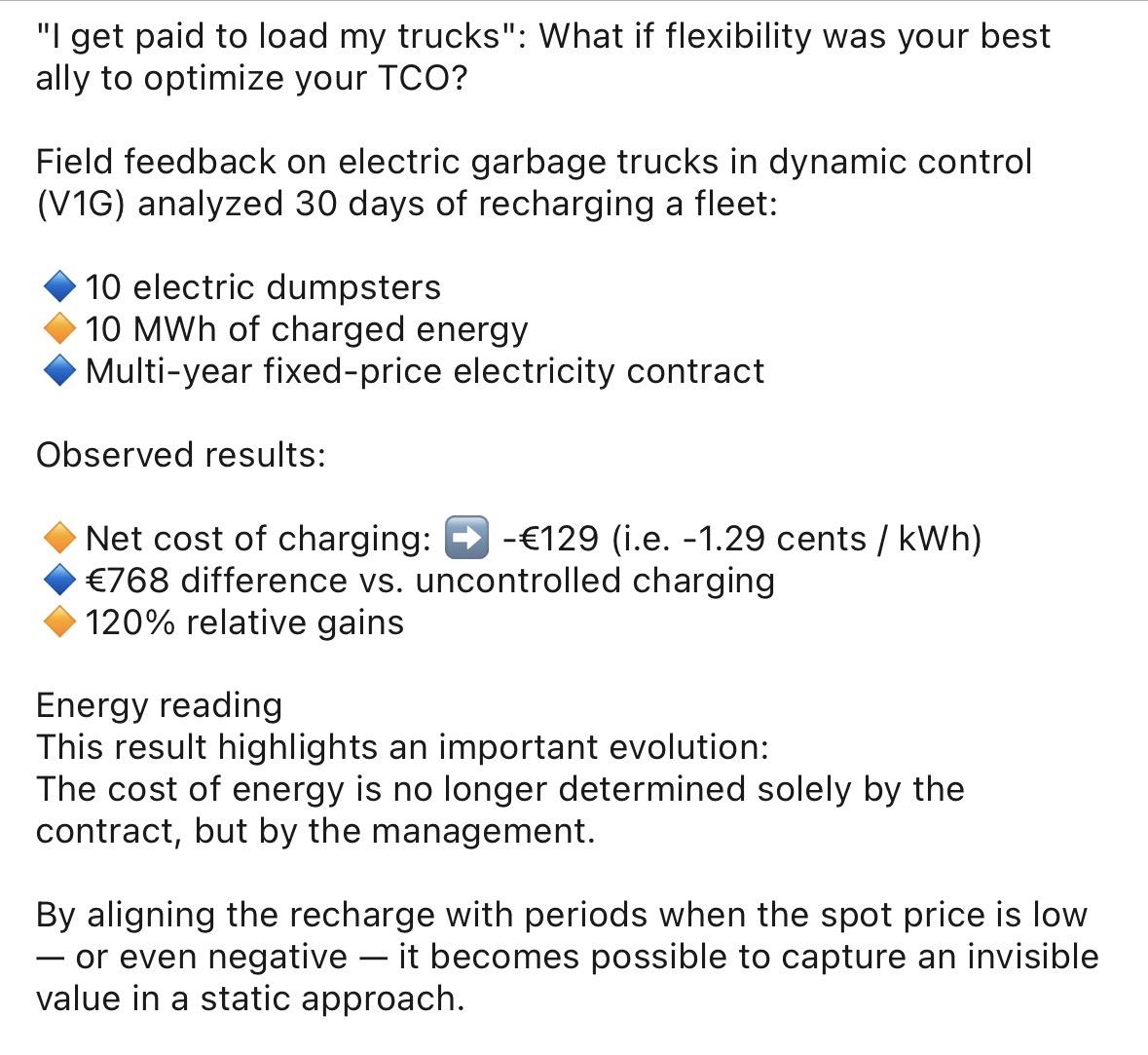
Impressive real-world numbers of EDF 🇫🇷 (with its smart charging subsidiary DREEV) for charging a fleet of electric waste collection trucks:
10 MWh of charging for 10 trucks, at a cost of minus €129, by collecting otherwise wasted energy and providing grid support
#EV #Flexibility
 @geant@mstdn.social
2026-09-18 11:32:56
🌍 🛰️ Are you working on Earth Observation research? We want to hear from you.
Building on the Helsinki Declaration, GÉANT and partner networks are running a short survey to understand the researchers' needs in the context of the Group on Earth Observations (GEO) and other research initiatives on EO around the globe.
🔗 Complete the survey by mid-October 2026:
![Earth Observation researchers: help shape the future of network, data and infrastructure support [Complete the Survey]](https://media.mstdn.social/media_attachments/files/117/291/497/731/876/163/original/94f3154ab4c2fdff.png)
 @cdarwin@c.im
2026-07-18 01:21:56
The Newsom administration is suing five more California cities
— Calexico, Costa Mesa, Half Moon Bay, Ridgecrest and Turlock — for failing to complete state-mandated housing plans, known as the “housing element.”
Huntington Beach was the first city to face such a legal action, and it recently finalized its housing element plans following a court-order and massive fines.
The law, which has been in place since 1969, requires cities and counties every eight years to d…

 @paulwermer@sfba.social
2026-09-18 14:55:14
Riddle me this: Why are these highly touted #AI programs so vulnerable to each other's hacking efforts?
https://www.theguardian.com/technology/202
 @PaulWermer@sfba.social
2026-09-18 14:55:14
Riddle me this: Why are these highly touted #AI programs so vulnerable to each other's hacking efforts?
https://www.theguardian.com/technology/202
 @arXiv_csLG_bot@mastoxiv.page
2026-06-19 08:44:35
Crosslisted article(s) found for cs.LG. https://arxiv.org/list/cs.LG/new
[7/8]:
- MedRLM: Recursive Multimodal Health Intelligence for Long-Context Clinical Reasoning, Sensor-Guid...
Aueaphum Aueawatthanaphisut
 @Techmeme@techhub.social
2026-08-17 05:25:34
Qwen 3.8 27B shows a 17GB open-weight general purpose model can have long context, effective tool calling, strong vision ability, and competent code generation (Simon Willison/Simon Willison's Weblog)
https://simonwillison.net/2026/Aug/16/qwen-38-27b/

 @mszll@datasci.social
2026-08-17 07:30:48
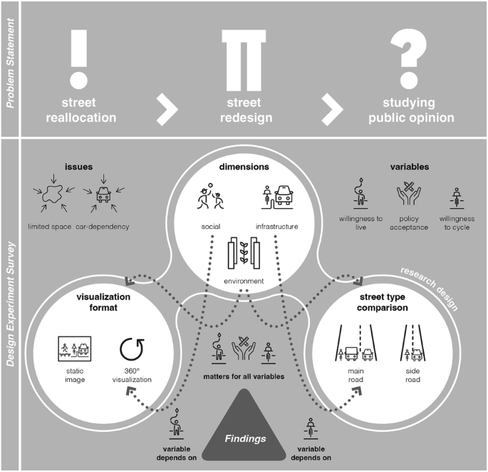
Space for people, not cars: a large-scale visual choice experiment on urban street redesigns
https://www.nature.com/articles/s42949-026-00463-5
 @aredridel@kolektiva.social
2026-07-17 15:48:40
RE: https://eldritch.cafe/@miranda_blue/116935608086213327
This is showing one thing that I think should become general principle: Using an LLM for someone else _is rude and bad_. Presenting something untranslated that _they_ can have an LLM translate is better than doing it yourself, and not showing that input — the prompt here is not included and is a key piece of context, and the results are also bad _with no recourse_.
Information has been destroyed. Trust has been broken (or in the case of commerce, failed to be established). Even if the total amount of LLM-use were the same, this is worse than the reader using it.
PROMPTING AN LLM FOR SOMEONE ELSE IS RUDE.
@burger_jaap@mastodon.social2026-08-18 12:25:38
