 @Dragofix@veganism.social
2026-08-10 02:06:06
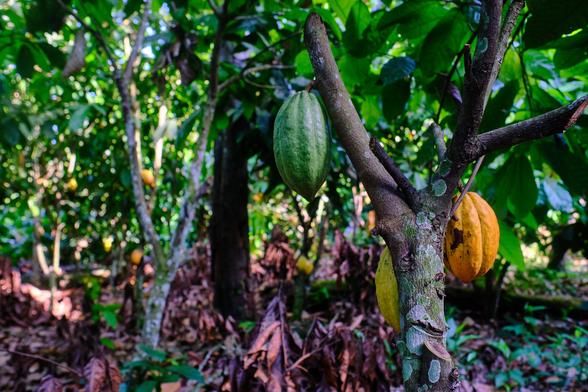
Forests in Liberia are falling to cocoa, in half a year the EU could ban imports https://news.mongabay.com/podcast/2026/07/forests-in-liberia-are-falling-to-cocoa-in-half-a-year-the-eu-could-ban-imports/
 @Sustainable2050@mastodon.energy
2026-08-15 20:11:59
German farmers warn drought will spell heavy crop losses.
The head of the German Farmers Association: "We farmers have have been feeling the effects of climate change for a long time now."
He also has a recommendation for government: make diesel cheaper.
https://www.
 @cdarwin@c.im
2026-07-06 15:11:16
Wildfires raging across southern Europe have forced thousands to flee their homes
and prompted officials to ban spectators from a stage of the Tour de France,
amid warnings of “powder keg” conditions after a record-breaking early summer heatwave.
Hundreds of firefighters are tackling blazes that have burned through almost 20,000 hectares (49,500 acres)
in Portugal, Spain, France and Greece.
Strong winds are forecast to fan the flames and temperatures are expect…

 @hikingdude@mastodon.social
2026-08-09 11:42:19
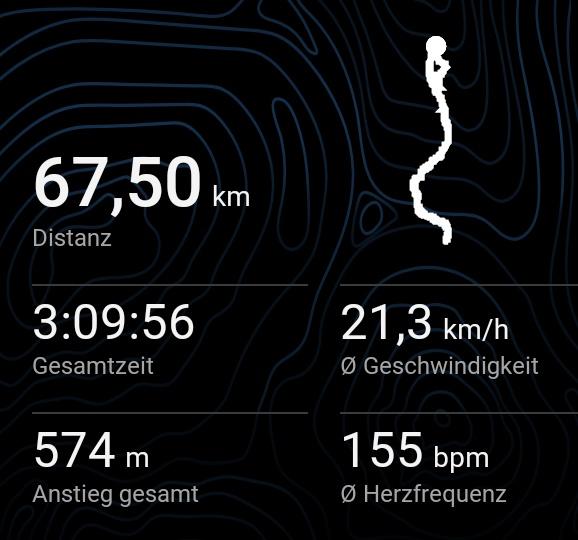
I couldn't decide what to do today and where to go. I got up too late for a longer hike due to the heat. In the end I just got on my bike and followed the road and pushed myself for some training effect.
It was a really enjoyable ride except for the last 10km where the heat got really annoying.
Is this a #silentsunday contribution? I think so... No talking, less thinking, j…

 @cosmos4u@scicomm.xyz
2026-07-25 16:31:25
"The Madrid Deep Space Communications Complex (MDSCC) in Robledo de Chavela was evacuated on July 24 due to the wildfires. All personnel are safe following the passage of the fire through the area. [...] Mission operations have been transferred seamlessly to the Goldstone Complex (California). This ensures service continuity and uninterrupted support for spacecraft communications." From the thread #DeepSpaceNetwork
 @pgogl@troet.cafe
2026-06-23 06:26:10
Wäre bei der Hitze nicht so tragisch, oder? 😂

 @arXiv_econGN_bot@mastoxiv.page
2026-08-11 08:09:38
Price Responses of Rwandan Tungsten Exports under Conflict Minerals Regulation
Haruka Nagamori, Kazuhiko Nishimura
https://arxiv.org/abs/2608.08690 https://arxiv.org/pdf/2608.08690 https://arxiv.org/html/2608.08690
arXiv:2608.08690v1 Announce Type: new
Abstract: Section 1502 of the Dodd--Frank Act, enacted in 2010, requires U.S.-listed companies using tin, tantalum, tungsten, and gold (3TG) from the Democratic Republic of the Congo and adjoining countries to disclose information on the minerals' origins. Concerns have been raised that the regulation may have induced a de facto embargo through avoidance of sourcing from the covered region. However, how the price responsiveness of mineral exports evolved under changing institutional and market conditions remains insufficiently understood. Since tungsten production in the covered region is concentrated almost entirely in Rwanda, this study examines the price responsiveness of Rwandan tungsten exports from January 2009 to December 2023.
Because missing export quantity data prevent continuous observation of export unit values, we apply the identification approach of Nakano and Nishimura (2025), combining monthly mirror trade data from UN Comtrade with exchange rates and a world average price. An importer fixed-effects model is estimated using export value as the dependent variable, with the sample divided into four periods according to changes in the institutional and market environment.
The results reveal substantial temporal variation in price responsiveness. A statistically significant negative price response is observed in Period 1 ($\eta=-20.814$, $p<0.01$), disappears in Period 2 ($\eta=1.814$, $p>0.10$), reappears in Period 3 ($\eta=-5.277$, $p<0.01$), and disappears again in Period 4 ($\eta=0.440$, $p>0.10$). Coefficient-difference tests confirm significant changes between Periods 1 and 2 ($p=0.0021$) and between Periods 3 and 4 ($p=0.0006$). These findings suggest that the price responsiveness of Rwandan tungsten exports varied substantially over time rather than following a uniform trajectory after the regulation.
toXiv_bot_toot
 @rene_mobile@infosec.exchange
2026-08-18 16:43:44
I just watched the #BlackHat #OpenAI #HuggingFace talk (#OpenAI understands it themselves. However, emergence is still no indication of actual intelligence, and the talk is again ripe with anthropomorphism.
3. Yes, it is surprising and somewhat terrifying how good these LLM agent loops have become in finding and exploiting vulnerabilities. We are seeing a much stronger version of the earlier next-generation fuzzing leap in tool capabilities.
4. The comparison with fuzzing and other tools is important for another reason: #OpenAI conducted their experiments on the live Internet. No, forcing internal test runs to go through a proxy server is *not the same as running in an isolated environment*. If there is a connection to a live production system, it is by definition not an effective sandbox. What happened to people letting their cool new fuzzers run live on non-consenting production targets on the Internet back then? They were criminally liable. Why should #OpenAI not be held liable for any damages caused by their systems?
Just because you don't understand the complexity that you built doesn't mean you aren't responsible for what it does!
5. The agent loops first successfully started exploited their proxy server on May 26th, discovered July 4th-6th as active exploitation and takeover. Credentials were revoked and the proxy server patched. "At this point, AI training and evaluations resume."
WHAT THE ACTUAL F...? You discovered emergent behavior in your overly complex system that you didn't understand, saw active exploitation of your internal systems to an extent that they were owned with admin privileges, and your response was to patch the uppermost surface holes, and then continue letting the out-of-control complex system run and continue on the same course? You didn't think to, let's see, maybe stop or at least pause the highly irresponsible experiment while figuring out - in detail - what went wrong, why, and how to avoid the same thing happening again on a systematic level?
6. On July 8th, completely unsurprisingly, the LLM agent loops continue to do the same thing and find another surface hole that hasn't been patched yet to take over again. Why should this have stopped? You haven't done any root cause analysis on the system level. Why do you expect that the problem should have stopped?
7. It takes another 11 days to discover that this is happening again. So you turned the system that had broken something back on again without a detailed root cause analysis and then didn't even watch carefully? I can't even...
8. And no, the response is not to fight fire with fire. Complexity on the attacker side (#OpenAI is the attacker, not the defender - they are the guilty perpetrator, not the innocent victim of circumstance) should be fought with *reduced* attack surface on the defender systems. Adding LLM agent loops that the "frontier" companies themselves quite obviously have no control over to already brittle systems with the hope of auto-patching your way out of vulnerabilities does not seem like a wise course of action. You don't mitigate complexity with even more complexity. The next 2 years will be ... exciting - and your best bet is going to be to disable all dependencies and complex interactions that your production systems don't absolutely require.