I had a weird dream where I was talking to someone at some kind of ceremony, I think a funeral, where I had timidly painted my face with clay as part of some ritual. This person was talking about how far society has come while our brains have not caught up.
Imagine if your ancient cave dwelling ancestors were dropped into this world of cars, office hours, budgets, climate change, and AI. They would be absolutely freaking out and struggling to understand things all the time... Just like you are now.
Society teaches us to suppress these emotions. You're supposed to be OK with giant metal boxes flying around you in rumbling stampedes, but you feel it in unexplained anxiety. You're supposed to just fit your life into tight little bounds that ignore weather and season, but you feel it in more unexplained anxiety and depression. We are all part of something so big and complicated we can't make sense of it, we cannot possibly comprehend it all, it is simply too much to fully grasp the implications of our individual actions within global capitalism. Should we be surprised by our urge to simply destroy it, by the anger and desire to simply "smash" something far more complex than can be met with simple violence?
Some part of my brain was trying to remind me to be compassionate to myself. Perhaps that reminder can be useful to you as well.
Why river management is so crucial to protecting one of world's most important wetlands #environment
Sony says it is closing the virtual PlayStation 3 store in select markets in 2026 ahead of global store closures for the PS3 and PS Vita in July 2027 (Jess Weatherbed/The Verge)
https://www.theverge.com/games/960168/sony-playstation-ps3-vita-store-shut-down
Semi-subtoot: there's a certain kind of anti-genocide narrative that draws comparisons between the Gaza genocide and the genocide of Jews, queer, and disabled people during WW2, with an incredulous overtone, the subtext of which is: if the good nations invaded Germany to stop the Nazis' evil in WW2, it's hypocritical for this nations not to take action to protect Gazan civilians now. There are a couple of problems with this line of reasoning, but the most obvious from an anarchist perspective (which sees "good nation" for the oxymoron it is) is that it's ahistorical. The reasons for the various allies' entrance into WW2 are varied, but they weren't about good and evil, and in fact the full depth of the evils of the Holocaust *was not known* in allied countries until after the war. Nations never really do things to "fight evil" like some humans might; they always act out of a kind of (imperfect) self-interest. The motivations for many of the allies were simply "we don't want Germany to conquer and destroy us" (and the imperfection in that motive is amply evident in the appeasement that preceded the war). America was of course not swayed by that motive, and it was the Japanese that (thinking the issue would have to come to a head eventually and that a surprise attack was worth speeding it up) put America in a situation where it joined for similar reasons.
Why is this extra relevant right now? Because neither the US nor any European country is existentially threatened by Israel (or threatened at all in fact, quite the opposite they're all benefiting economically from the situation in Gaza). The lesson of history isn't "brave, good nations will stand up to fight against anyone who commits genocide or other major evils", it's "nations act in their narrow and twisted and often mistaken self-interest (the interest of the national entity, which is often counter to the interest of it's citizens), and they always mythologize their actions after the fact as having been a fight against evil, which sometimes by luck is partially true."
To double down on this point: in the European theater the U.S. war actions were pretty good overall, defeating an evil opponent through military force and being a fairly gracious victor to the civilian populations there. In contrast, in the Pacific theater the U.S. was one of two evil empires duking it out for global dominance at the expense of civilians on both sides. The Japanese empire was a vile regime and perpetrated horrors in China, Korea, and across southeast Asia. The U.S. was barely better, between Japanese internment camps at home, and mass targeting of civilians on Japan, both with the firebombing of Tokyo and especially the nuclear bombs dropped on Hiroshima and Nagasaki.
So if your model of how we stop genocide is "convince the good guys to invade (or exert political pressure) and save the day", your model is wrong. That's not what happened in WW2. I'm not confident I know the perfect solution, but I do think it involves a mass of people making increasingly disruptive protest so that the cost *to rich companies and thus politicians* of falling to intervene is too high to stomach. That's a large part of what succeeded in South Africa, for example. Thankfully, there is already a vibrant protest movement to end the genocide in Gaza, and even though they haven't been fully successful yet, I'm optimistic that as things naturally (and through hard work) fall apart for various fascists politically, that movement will be able to succeed.
#gaza #genocide
Aidan Hutchinson: Lions remain 'in a window' to win Super Bowl despite disappointing 2025 https://www.nfl.com/news/aidan-hutchinson-lions-remain-in-a-window-to-win-super-bowl-despite-disappointing-2025
Now, I don't especially like the term "church" so I may use something else... like "coven." You can do what you want. But I happen to have already mapped out an example. (It is exactly that, just an example, so take if it's useful, change if you need, and don't stick to anything too closely.) Oh, this mapping also means that you would, for religious reasons, only be allowed to work under capitalism 4 days a week instead of 5.
Given the increases in productivity over the last 100 years, a 4 day work week is a completely reasonable expectation. If we have to annex Monday for the weekend by force of religion, so be it. It is rightfully ours anyway. If enough people try it, this will probably work. If it doesn't work, it just needs more people.
The Practice of Worship:
It is recommended to break down worship in to three sections: the functional, the communal, and the spiritual. It is also recommended to break these across multiple days. A common structure for some Christian churches is to take 10-15 minutes for announcements (Functional), an hour or two for services (Spiritual), followed by (Communal) coffee, tea, and cookies for an unspecified time up to two hours after. When starting or working with limited time a single compressed model like this may work, but it's not optimal.
- The Functional
The purpose of this section is to address the functional needs of the coven. Block out time (less than 90 minute blocks is recommended) to go through reports and updates from those involved in the Dispensary, Library, Works Committee (infrastructure), and Services Committee (providing services internally and, potentially, externally). Talk through any additional announcements, including those from other covens you may be federated with.
It is helpful to include unstructured communal time, such as shared meals, during or after functional meetings. As the federation grows, more time will be needed. It is recommended to break functional meetings, work parties, and such across multiple days. When a federation becomes sufficiently large, it is recommended to take every Monday, on top of Saturday and Sunday, as a third day of community and worship.
The scope of the functional spans 3 realms (which may be more-or-less fluid): the personal or family, the coven and federation, and humanity itself. It is up to each coven and individual to negotiate how to allocate the three days of the weekend once we have liberated Monday from the work week, but it is important to reserve it for one of these three. However, some people must work on weekends. Medical personnel, for example, cannot conform to a standard work week. While the work week should be universally restricted, which specific days are used will be up to the specific coven and their members.
A functional meeting can start with an agenda like the following:
Functional Invocation
Announcements
Report Backs
Dispensary
Inventory Check
What is low
What is empty
What is expiring
What is needed
Funds status
Library
Inventory Check and Items needing return
Library acquisition requests
Funds status and budget check
Works Committee
Upcoming projects
Subcommittee updates (Following the Works Committee agenda)
New committee formations
Funds status
Services Committee
New capabilities announcements
New needs requests
Subcommittee updates (Following the Works Committee agenda)
New committee formations
Funds status
Task Check
Breaking the Circle
This agenda is a suggestion for those who don't know where to start. It can be adapted or ignored as appropriate.
- The Spiritual
Spirituality is necessarily an undefined space. It is deeply personal. Each individual taking time to share their own personal spiritual experiences can help each connect with each other. This experience of connection can itself be a spiritual experience. It may also be useful to read esoteric, mystical, or philosophical texts together as type of "book club" and share thoughts. Others may draw from their own knowledge or traditions. This is something that must be defined together within a group.
- The Communal
The communal aspect of the practice of worship bind the coven and federation together. Within the community we find joy and release, connection and comfort. The coven is where we turn in times of need, and where we share our hopes and dreams.
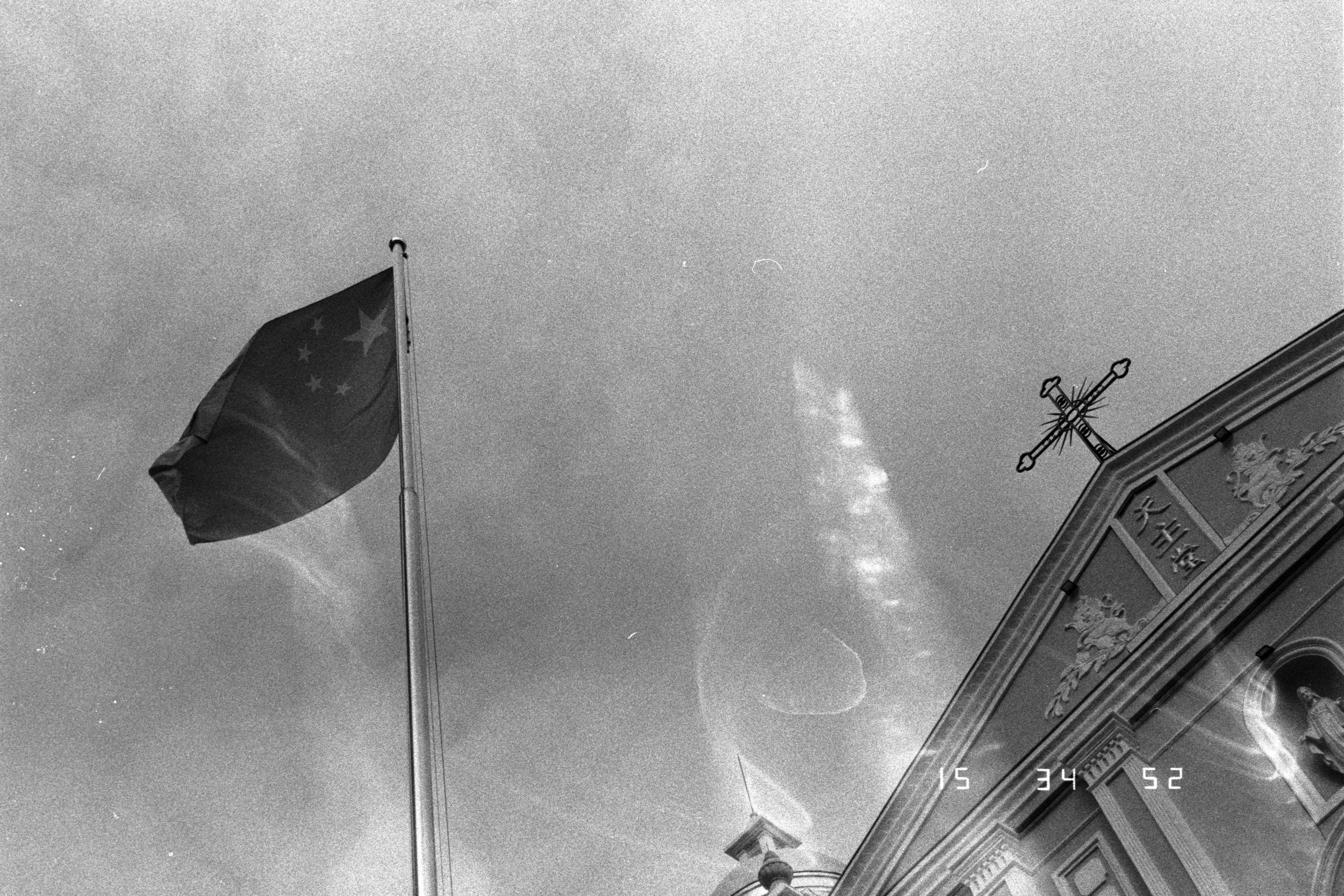
The Aspiration of History 🌠
历史的热望 🌠
📷 Pentax 6x7
🎞️ Ilford FP4 Plus 125 (6x7)
If you like my work, Support by buying me a coffee or a roll of film from
PayPal https://www.paypal.com/paypalme/ydcdingsite
Wise
Ignoring EFF’s warnings about the dangersand impossibility of implementing a new mandate for 3D print surveillance software,
the California State Assembly has signed off on legislation to do just that.
In the process, legislators amended the bill to make it even more confusing,
while failing to address the risks to privacy, speech, and consumer rights.
We must renew our call on legislators to drop this bill as it heads to the state senate,
and protect the to…
A Not So Brave New World III 🌐
不太美丽的新世界 III 🌐
📷 Nikon F4E
🎞️ Lucky SHD 400 (FF)
If you like my work, Support by buying me a coffee or a roll of film from
PayPal https://www.paypal.com/paypalme/ydcdingsite
Wise

- Definite and distinct ecclesiastical government
This is explicitly defined in your legal documents. It's the way in which you "govern" things that are legally owned by the "church." If you're going to start a church with some people, you need to have a way of working together. The more formal you are about writing all this stuff out, the easier it will be when you *inevitably* have conflict. (Conflict is normal, so everyone should expect it.)
I also wrote something up about this. Again, it's an example (using the term "coven", because I like it more) so take it for what it's worth:
Group agreements are collectively defined rules that describe how members should interact. They may function to simplify interactions, ensure access needs are met, or to protect against the emergence of hierarchical behavior.
You can use the following prompts, or define your own:
- How should we interact with each other?
- What are your access needs?
- What would help you feel safe and respected?
- How should we deal with conflict?
- How do we deal with unanswerable questions?
- What is the process by which we update these agreements?
Write down these agreements. Edit them until you reach consensus. If it isn't possible to reach a consensus, the group may need to break apart to form separate covens.
Keep these available to refer to as they may be needed during services. These agreements will change over time. Keep them updated and be sure to check in regularly, perhaps even through a specific yearly ritual, to make sure they all still apply and no more are needed.