 @netzschleuder@social.skewed.de
2026-01-28 21:00:20
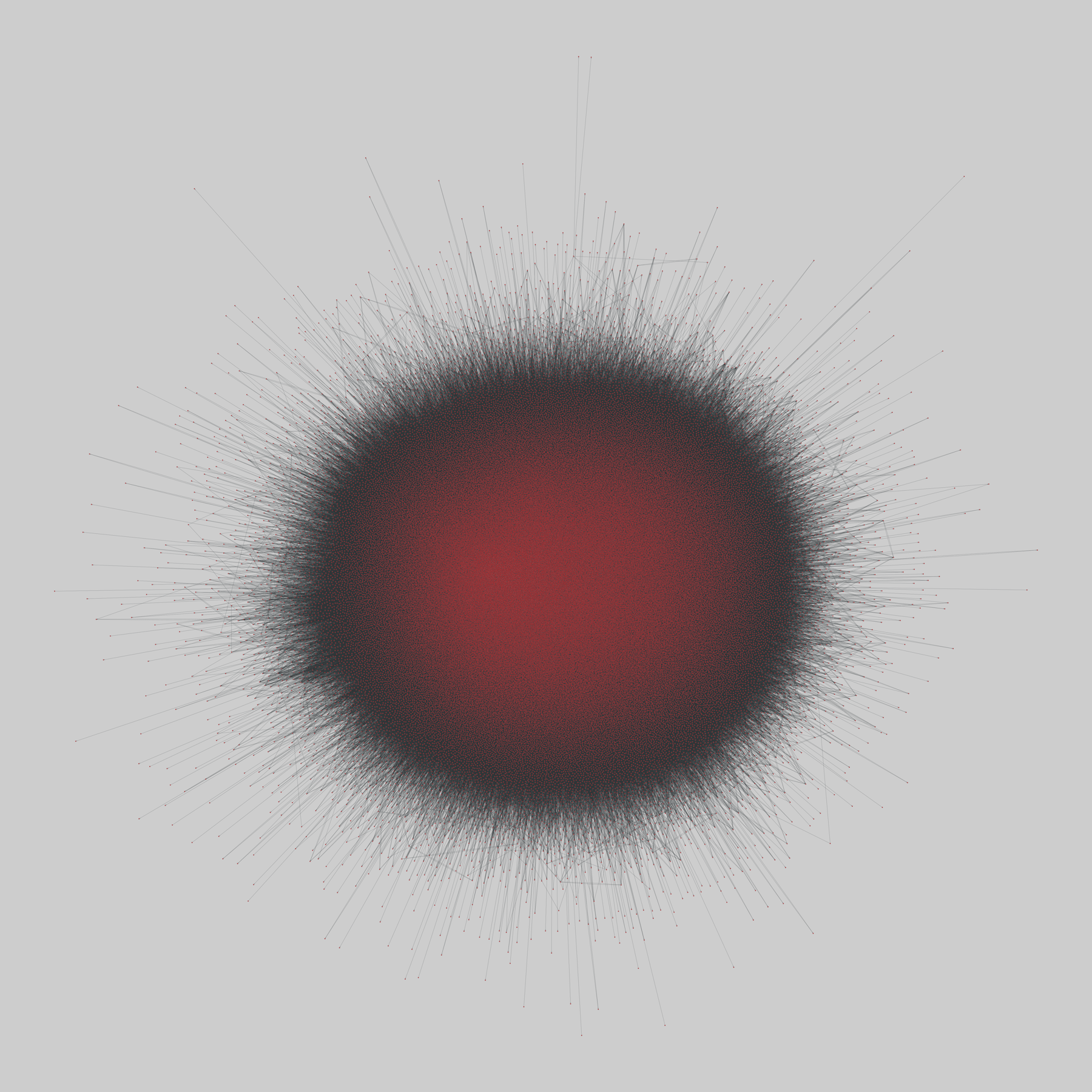
twitter: Twitter followers (2010)
A directed network of following relationships from Twitter, from a snowball sample crawl across "quality" users in 2009. A directed edge (i, j) indicates that user i follows user j.
This network has 465017 nodes and 834797 edges.
Tags: Social, Online, Unweighted
https://network…
 @netzschleuder@social.skewed.de
2025-12-29 07:00:06
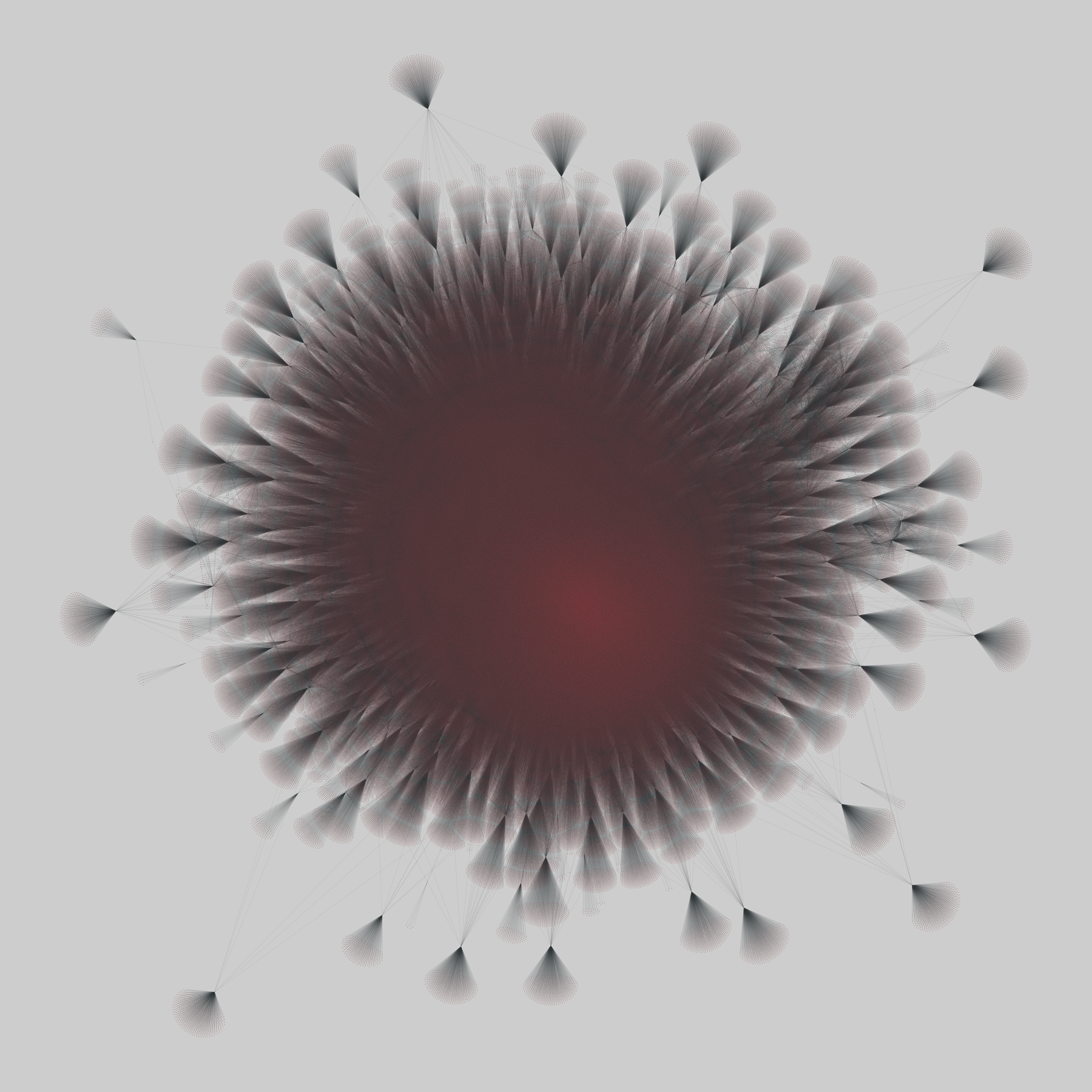
twitter_15m: Twitter 15-M movement (2011)
A network representing follower-following relations among Twitter users associated with the 15-M Movement or Anti-austerity movement in Spain, in the period April-May 2011. Metadata include hashtags in the tweets.
This network has 87569 nodes and 6030459 edges.
Tags: Social, Online, Unweighted, Metadata
 @arXiv_physicsfludyn_bot@mastoxiv.page
2026-02-27 08:29:00
On the spatial structure and intermittency of soot in a lab-scale gas turbine combustor: Insights from large-eddy simulations
Leonardo Pachano, Daniel Mira, Abhijit Kalbhor, Jeroen van Oijen
https://arxiv.org/abs/2602.23155 https://arxiv.org/pdf/2602.23155 https://arxiv.org/html/2602.23155
arXiv:2602.23155v1 Announce Type: new
Abstract: This work presents a numerical investigation of soot formation in the Cambridge lab-scale gas turbine combustor. Large-eddy simulations (LES) of a swirl-stabilized ethylene flame are performed using the flamelet generated manifold method coupled with a discrete sectional model to account for soot formation, growth, and oxidation. The study aims to elucidate the mechanism governing the spatial structure and intermittency of soot, supported by comparisons with experimental data. The predicted soot distribution agrees well with measurements, with peak concentrations near the bluff body. Flow recirculation is identified as the key mechanism driving soot accumulation in fuel-rich regions, where surface reactions dominate soot mass growth. Soot intermittency arises from fluctuations in the flow field driven by interactions between the flame front and the recirculation vortex. Two soot modeling approaches are evaluated, differing in their treatment of soot model quantities: the first approach employs on-the-fly computation of source terms (FGM-C), while the second uses fully pre-tabulated source terms (FGM-T). Their predictive performance and computational cost are compared in the context of unsteady, sooting flames in swirl-stabilized combustors.
toXiv_bot_toot
 @wraithe@mastodon.social
2026-01-14 18:30:49
I know everyone’s already dragging the living shit out of this already but 🤷🏻♀️:
All ICE/BP should have:
Clearly marked vehicles
Clearly marked names on uniforms (large TEXT for both)
ID/badges
Dismissal and/or prosecution for failing to comply.
QR codes are just unneeded “tech” complication
The current regime talks a lot of shit about ID being required to vote, but is fine with armed agents of the govt having less ID than a teen trying (and failing) to…
 @arXiv_physicsfludyn_bot@mastoxiv.page
2026-02-26 09:23:30
A minimal wake-vortex model explains formation flight of flapping birds
Olivia Pomerenk, Kenneth S. Breuer
https://arxiv.org/abs/2602.22043 https://arxiv.org/pdf/2602.22043 https://arxiv.org/html/2602.22043
arXiv:2602.22043v1 Announce Type: new
Abstract: Collective patterns of motion emerge across biological taxa: insects swarm, fish school, and birds flock. In particular, large migratory birds form strikingly ordered V-shaped formations, which experiments and direct numerical simulations have demonstrated provide substantial energetic benefits during long-distance flight. However, the precise aerodynamic and morphological mechanisms underlying these benefits remain unclear. In this work, we develop a reduced-order model of the wake-vortex interactions between two flapping birds flying in tandem. The model retains essential unsteady flapping dynamics while remaining computationally tractable. By optimizing over a six-dimensional state space, which comprises the follower's three-dimensional relative position and three independent flapping parameters, we identify the energetically optimal leader-follower configuration of northern bald ibises. The predicted optimum agrees quantitatively with live-bird measurements. Because of its simplicity, the model allows for direct interrogation of the physical mechanisms responsible for this optimum. In particular, it isolates precisely how the follower's wing kinematics interact with the leader's wake to enhance aerodynamic efficiency. The model predicts an 11% reduction in total mechanical power for a follower in formation flight -- consistent with experimental estimates -- and shows that this saving arises from reductions in both induced and profile power, dominated by decreased profile power enabled primarily through reduced flapping amplitude and, secondarily, reduced upstroke flexion. These results provide a mechanistic explanation for the structure of V-formations and offer new insight into the aerodynamic principles governing collective flight.
toXiv_bot_toot
@netzschleuder@social.skewed.de2026-01-19 18:00:06
twitter_15m: Twitter 15-M movement (2011)
A network representing follower-following relations among Twitter users associated with the 15-M Movement or Anti-austerity movement in Spain, in the period April-May 2011. Metadata include hashtags in the tweets.
This network has 87569 nodes and 6030459 edges.
Tags: Social, Online, Unweighted, Metadata
 @netzschleuder@social.skewed.de
2026-02-19 04:00:16
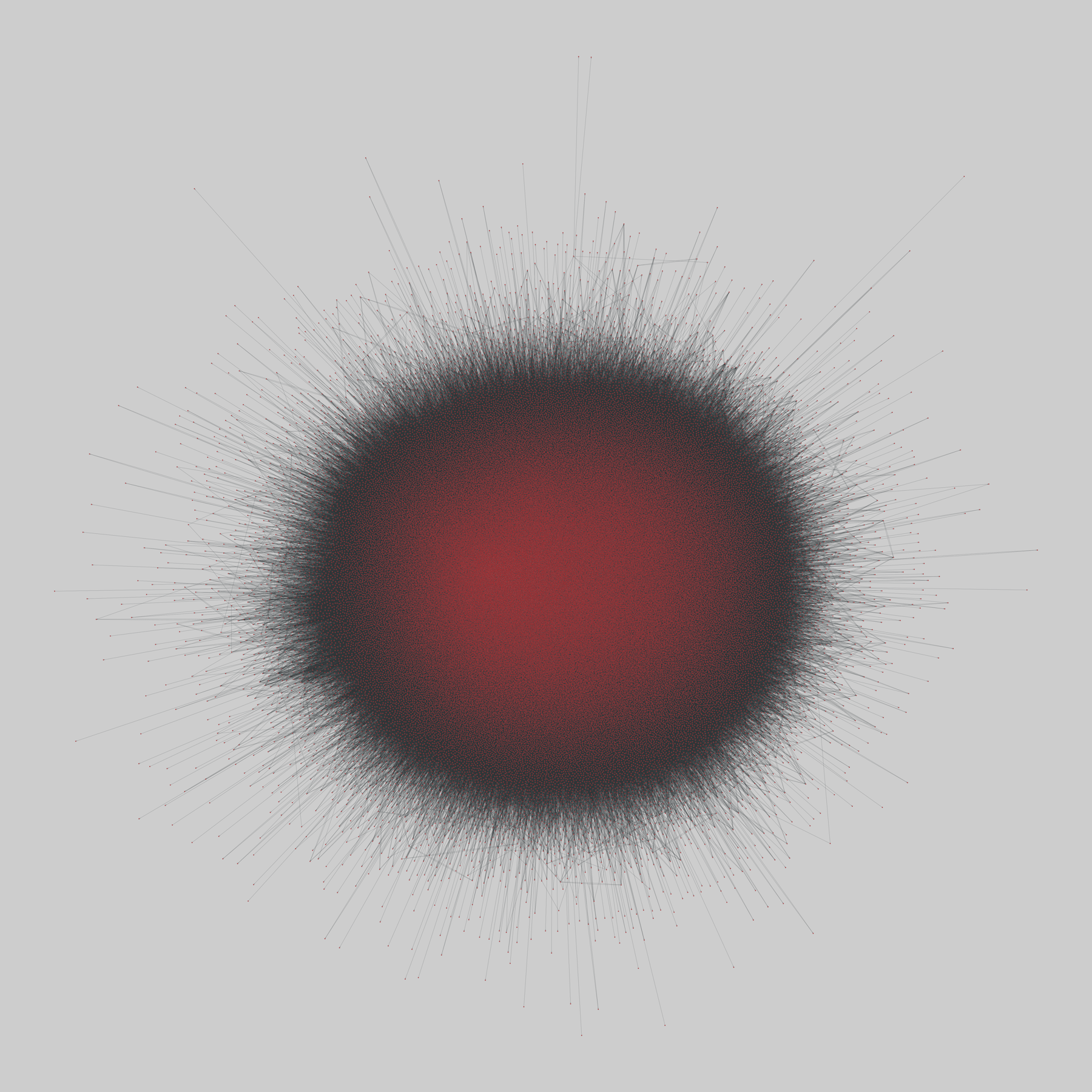
twitter: Twitter followers (2010)
A directed network of following relationships from Twitter, from a snowball sample crawl across "quality" users in 2009. A directed edge (i, j) indicates that user i follows user j.
This network has 465017 nodes and 834797 edges.
Tags: Social, Online, Unweighted
https://network…
 @netzschleuder@social.skewed.de
2026-01-19 02:00:20
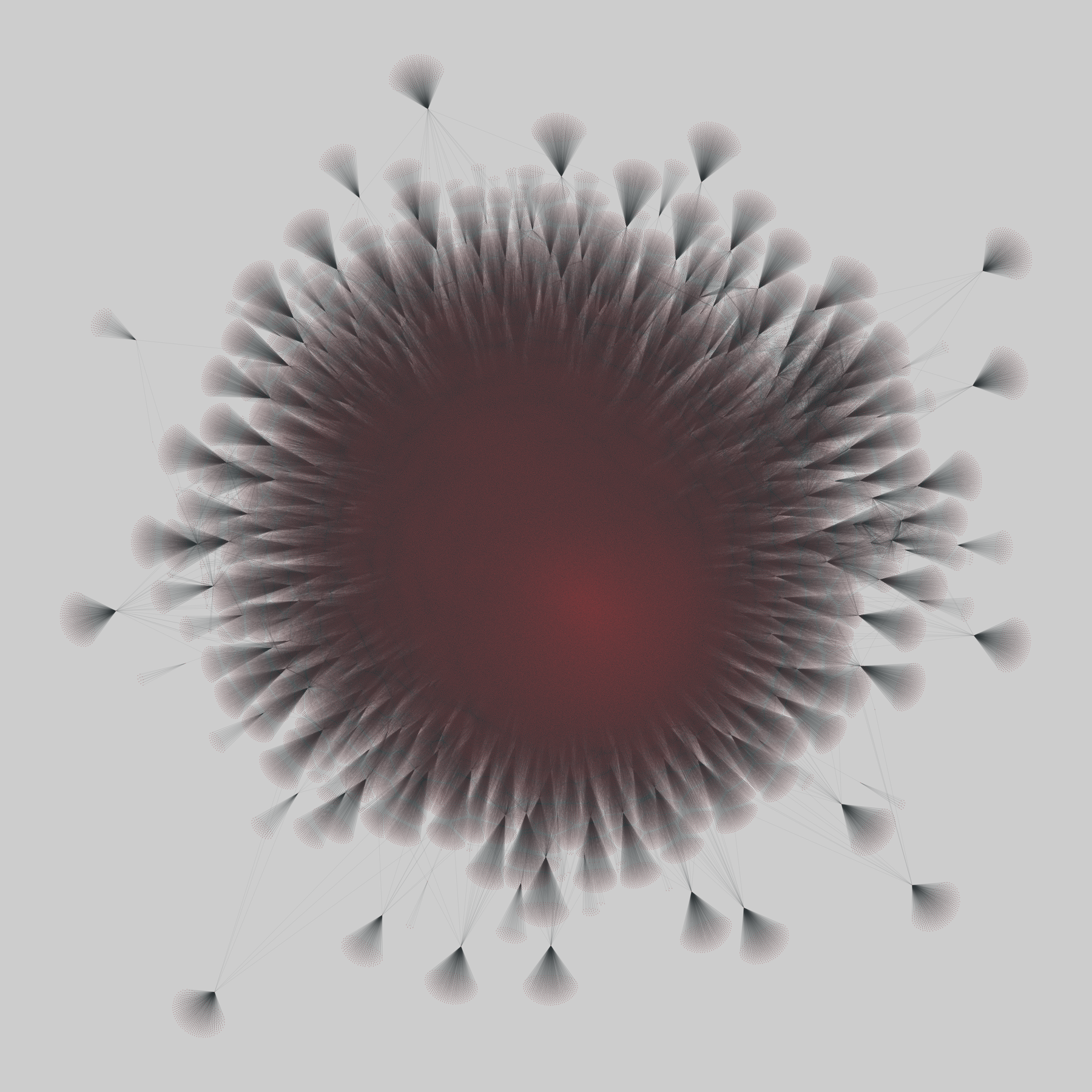
twitter: Twitter followers (2010)
A directed network of following relationships from Twitter, from a snowball sample crawl across "quality" users in 2009. A directed edge (i, j) indicates that user i follows user j.
This network has 465017 nodes and 834797 edges.
Tags: Social, Online, Unweighted
https://network…
