 @cdarwin@c.im
2026-04-12 03:48:26
Brian Morales, a U.S. citizen,
has been deported to Mexico despite telling arresting officers that he had proof of citizenship at home, according to a new report.
According to Univision’s Lidia Terrazas, 25-year-old Denver-born Brian Morales was threatened with either deportation or prison time following a traffic stop in Texas by Customs and Border Patrol (CBP) agents.
This is the latest in a string of incidents involving U.S. citizens and Department of Homeland Security …

 @NFL@darktundra.xyz
2026-02-12 12:10:38
Raiders' Maxx Crosby refuses to 'throw gasoline on the fire' as trade rumors rage https://www.nfl.com/news/raiders-maxx-crosby-refuses-to-throw-gasoline-on-the-fire-as-trade-rumors-rage
 @publicvoit@graz.social
2026-02-09 07:55:17
If you're following my #publiicvoit blog via Atom feed:
I might have found a fix for my broken feed format: https://github.com/novoid/lazyblorg/issues/24
Please report back a…
 @Archivist@social.linux.pizza
2026-03-07 15:18:13
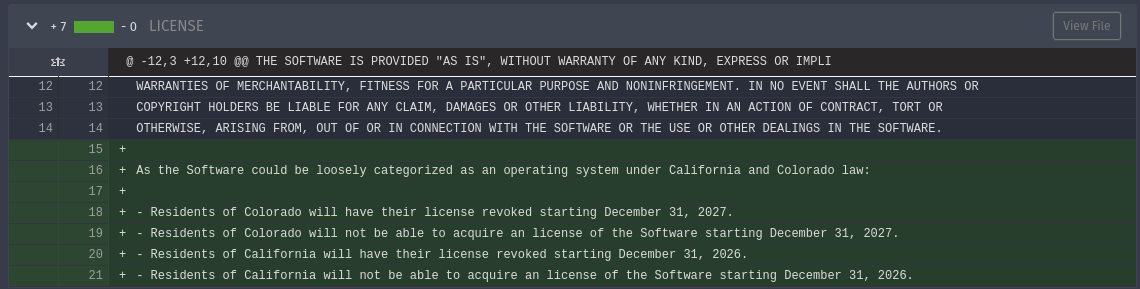
This is the most stupid commit I had to make in a while
 @bourgwick@heads.social
2026-02-08 01:31:46
revisiting this magical compilation of jamaican gospel 45s via the late great social music club. from the '60s/'70s but all feeling earlier, pre-reggae, except in the barest hints. joyous & aglow & lo-fi. @…

 @markhburton@mstdn.social
2026-03-30 18:41:21
 @cdarwin@c.im
2026-02-06 22:23:02
Following an intense backlash this morning,
the White House has now taken down Trump’s Truth Social repost
of a video showing a racist clip
⚠️depicting the Obamas as apes.
The post was up for 12 hours.
As we reported earlier, a few hours ago the White House had initially tried to brush off the outrage,
defending Trump’s repost as “an internet meme video”.
Politicians from both parties have this morning condemned the post
and urged Trump to remov…
@cdarwin@c.im2026-02-01 01:05:48
Minnesota resident Nicole Cleland had her Global Entry and TSA Precheck privileges revoked
three days after an incident in which she observed activity by immigration agents, the woman said in a court declaration.
An agent told Cleland that he used facial recognition technology to identify her, she wrote in a declaration filed in US District Court for the District of Minnesota.
Cleland, a 56-year-old resident of Richfield and a director at Target Corporation,
voluntee…
 @cdarwin@c.im
2026-02-05 19:46:49
Following the fatal shootings of American citizens Renee Good and Alex Pretti by federal agents in Minneapolis last month,
Democrats have refused to support long-term funding for the Department of Homland Security unless Republicans agree to reforms on the tactics of federal agents carrying out Donald Trump’s immigration crackdown.
“The American people rightfully expect their elected representatives to take action to rein in ICE and ensure no more lives are lost,” Senate minorit…
@cdarwin@c.im2026-04-06 10:44:51
The Trump administration has spent the better part of a year quietly negotiating agreements with poorer nations
as it seeks to scale back and reimagine U.S. foreign assistance for efforts like HIV and tuberculosis prevention through a new “America First” global health strategy.
To date, 28 deals have been negotiated with foreign governments, mostly throughout Africa.
But in a break with precedent, the administration has refused to disclose their full terms publicly.
…
