 @azonenberg@ioc.exchange
2026-03-30 12:31:22
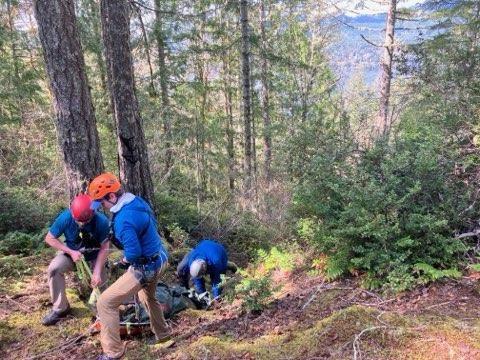
Sadly couldn't join myself (wife wasn't feeling good and wanted me to stay home and help parent while she napped) but my SAR team participated in a great inter-agency training this past weekend.
It's always nice to practice alongside volunteers from other teams that we work with on real incidents and get to know each other without the pressure of a real emergency.
One note: I half feel like there should be a CW on this post for mentioning law enforcement in a positiv…



 @alejandrobdn@social.linux.pizza
2026-01-25 15:12:23
He creates a 3D-printed Lamborghini in his garden for just $20,000 and turns down a substantial offer: "it's the best feeling in the world" https://www.italpassion.fr/en/lamborghini/
 @LaChasseuse@mastodon.scot
2026-01-29 20:35:35
This new Icelandic film looks like a winner. I love their films - so much dry wit and such an interesting culture and language! https://thelovethatremains.film/trailer

 @UP8@mastodon.social
2026-01-25 16:49:04
Two women with white shirts promote EYES: Encouraging Young Scientists and Engineers
https://einhorn.cornell.edu/opportunity/encouraging-young-engineers-and-scientists-eyes/

 @arXiv_physicsfludyn_bot@mastoxiv.page
2026-02-26 09:23:30
A minimal wake-vortex model explains formation flight of flapping birds
Olivia Pomerenk, Kenneth S. Breuer
https://arxiv.org/abs/2602.22043 https://arxiv.org/pdf/2602.22043 https://arxiv.org/html/2602.22043
arXiv:2602.22043v1 Announce Type: new
Abstract: Collective patterns of motion emerge across biological taxa: insects swarm, fish school, and birds flock. In particular, large migratory birds form strikingly ordered V-shaped formations, which experiments and direct numerical simulations have demonstrated provide substantial energetic benefits during long-distance flight. However, the precise aerodynamic and morphological mechanisms underlying these benefits remain unclear. In this work, we develop a reduced-order model of the wake-vortex interactions between two flapping birds flying in tandem. The model retains essential unsteady flapping dynamics while remaining computationally tractable. By optimizing over a six-dimensional state space, which comprises the follower's three-dimensional relative position and three independent flapping parameters, we identify the energetically optimal leader-follower configuration of northern bald ibises. The predicted optimum agrees quantitatively with live-bird measurements. Because of its simplicity, the model allows for direct interrogation of the physical mechanisms responsible for this optimum. In particular, it isolates precisely how the follower's wing kinematics interact with the leader's wake to enhance aerodynamic efficiency. The model predicts an 11% reduction in total mechanical power for a follower in formation flight -- consistent with experimental estimates -- and shows that this saving arises from reductions in both induced and profile power, dominated by decreased profile power enabled primarily through reduced flapping amplitude and, secondarily, reduced upstroke flexion. These results provide a mechanistic explanation for the structure of V-formations and offer new insight into the aerodynamic principles governing collective flight.
toXiv_bot_toot