 @qurlyjoe@mstdn.social
2026-03-17 17:26:36
This is a test of @altbot
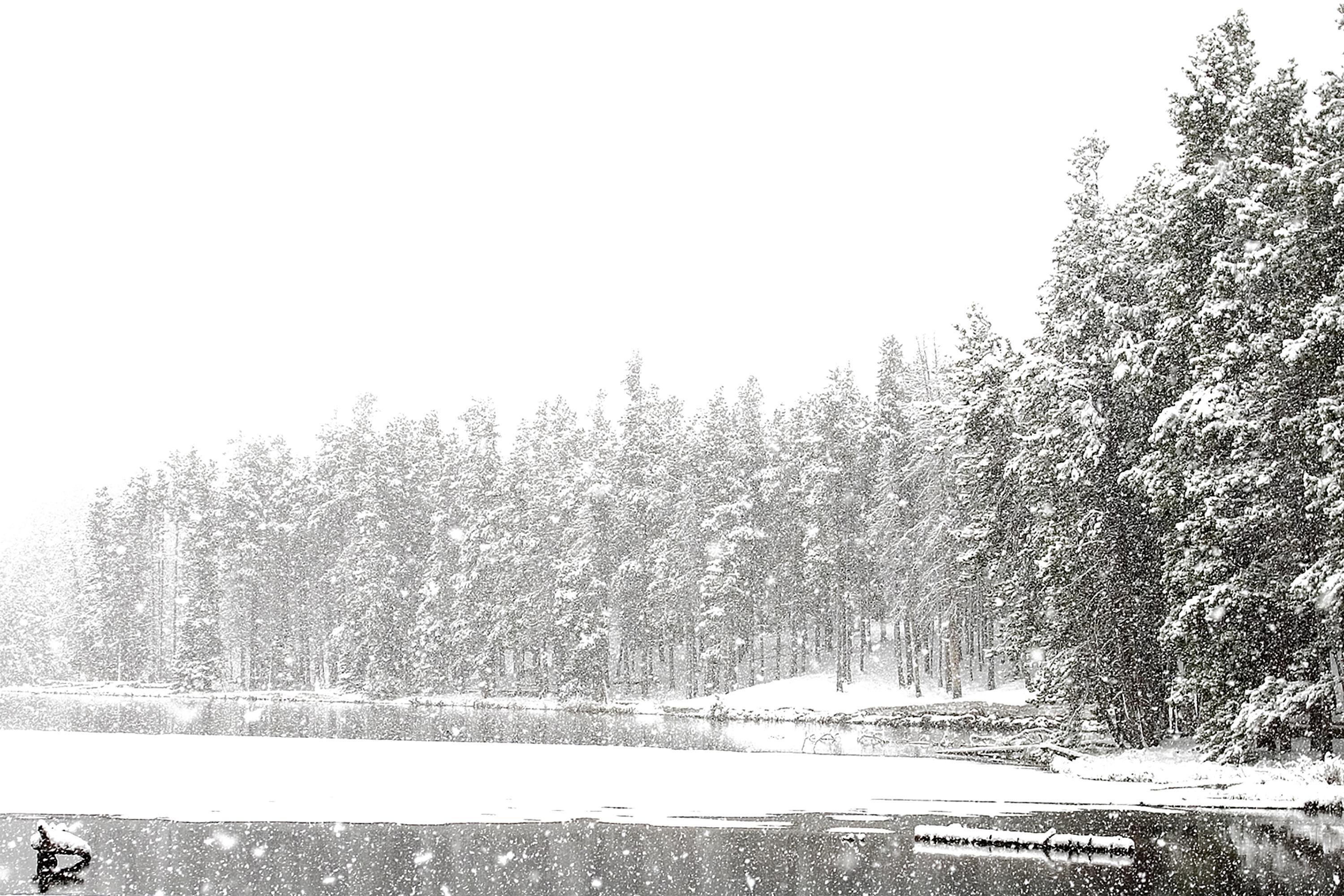
Sprague Lake in snow.
Retrying altbot
 @burger_jaap@mastodon.social
2026-04-09 09:46:59
 @tinoeberl@mastodon.online
2026-04-07 15:17:53
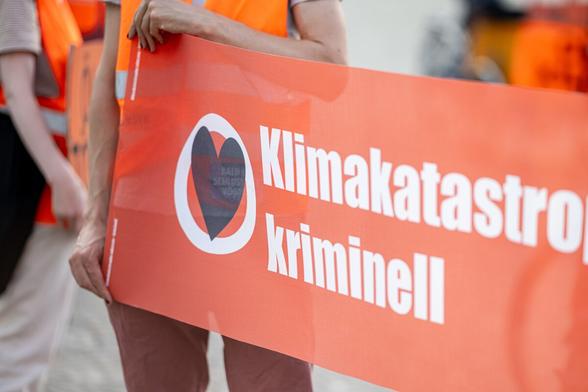
Das #Landgericht Flensburg stuft die #LetzteGeneration nicht als #kriminelleVereinigung ein.
Straßenblockaden und andere Protestformen erfüllten nicht die Voraussetzung…
 @mia@hcommons.social
2026-01-30 09:38:05
'It is 2025, and seemingly everyone wants us in the humanities to do stuff “with AI,” informed not by what the technology avails but by the hopes it encodes.' Sonja Drimmer on 🔥on Art Forum
https://www.artforum.com/features/generative-ai-st…
 @fanf@mendeddrum.org
2026-03-06 09:42:01
from my link log —
Measuring C std::unordered_map badness.
https://artificial-mind.net/blog/2021/10/09/unordered-map-badness
saved 2021-10-24

 @Techmeme@techhub.social
2026-03-31 17:41:02
Google launches Veo 3.1 Lite, costing <50% of Veo 3.1 Fast and meant for "high-volume video applications", and affirms its commitment to video generation tools (Abner Li/9to5Google)
https://9to5google.com/2026/03/31/veo-3-1-lite/

 @Mediagazer@mstdn.social
2026-03-31 17:55:43
Google launches Veo 3.1 Lite, costing <50% of Veo 3.1 Fast and meant for "high-volume video applications", and affirms its commitment to video generation tools (Abner Li/9to5Google)
https://9to5google.com/2026/03/31/veo-3-1-lite/

 @arXiv_physicsfludyn_bot@mastoxiv.page
2026-02-27 08:29:00
On the spatial structure and intermittency of soot in a lab-scale gas turbine combustor: Insights from large-eddy simulations
Leonardo Pachano, Daniel Mira, Abhijit Kalbhor, Jeroen van Oijen
https://arxiv.org/abs/2602.23155 https://arxiv.org/pdf/2602.23155 https://arxiv.org/html/2602.23155
arXiv:2602.23155v1 Announce Type: new
Abstract: This work presents a numerical investigation of soot formation in the Cambridge lab-scale gas turbine combustor. Large-eddy simulations (LES) of a swirl-stabilized ethylene flame are performed using the flamelet generated manifold method coupled with a discrete sectional model to account for soot formation, growth, and oxidation. The study aims to elucidate the mechanism governing the spatial structure and intermittency of soot, supported by comparisons with experimental data. The predicted soot distribution agrees well with measurements, with peak concentrations near the bluff body. Flow recirculation is identified as the key mechanism driving soot accumulation in fuel-rich regions, where surface reactions dominate soot mass growth. Soot intermittency arises from fluctuations in the flow field driven by interactions between the flame front and the recirculation vortex. Two soot modeling approaches are evaluated, differing in their treatment of soot model quantities: the first approach employs on-the-fly computation of source terms (FGM-C), while the second uses fully pre-tabulated source terms (FGM-T). Their predictive performance and computational cost are compared in the context of unsteady, sooting flames in swirl-stabilized combustors.
toXiv_bot_toot
 @paulbusch@mstdn.ca
2026-03-21 11:52:57
Good Morning #Canada
We're now getting to the big ones... as we break into the top 10 in #CanadaRivers. The South Saskatchewan River is #10, beginning at the confluence of the Bow and Oldman Rivers in southern Alberta and ends at the Saskatchewan River Forks, the confluence of the South and North Saskatchewan Rivers which then becomes the Saskatchewan River. Flowing for 1,392 km it drains a watershed of 146,100 km2, 1,800 of which are in Montana, USA.
Major dams were constructed on the river to prevent flooding, for reservoirs, irrigation, and for hydroelectric power. The South Saskatchewan provides approximately 19% of the hydro-electricity generated by SaskPower. A 2009 WWF Canada report analysed the river flow on ten Canadian rivers & found the South Saskatchewan River was most at risk. Climate change, agricultural & urban infrastructure water use, and dams producing hydroelectricity, have all combined to reduce the flow of the river by 70%.
#CanadaIsAwesome #Hydrology
https://canadiangeographic.ca/articles/a-prayer-not-a-protest/