 @cdarwin@c.im
2026-03-12 00:09:14
Iraq oil ports halt operations after tanker attacks – report
Iraqi officials are saying oil ports have “completely stopped operations” while commercials ports continue to operate after an attack on a fuel tankers, according to Iraqi state media.
Iraqi port security officials have said two foreign tankers carrying Iraqi fuel oil were in flames after being attacked by Iranian boats laden with explosives, killing a foreign crew member.
Iraq’s General Company for Ports chief Fa…
 @johl@mastodon.xyz
2026-01-13 11:42:57
“The images and data broadcast by the international media do not represent even one percent of the reality, because the information simply does not reach them.”
https://iranhumanrights.org/2026/01/ex

 @Dragofix@veganism.social
2026-03-09 19:36:00
Portugal fined £8.7m by EU court for failing to protect biodiversity https://www.theguardian.com/world/2026/mar/05/portugal-fined-eu-court-biodiversity-protection-failure
 @NFL@darktundra.xyz
2026-03-11 21:24:08
Court filing: Jackson feared Pearce 'will kill me' https://www.espn.com/nfl/story/_/id/48177175/wnba-player-rickea-jackson-filed-petition-protective-order-vs-falcons-james-pearce-jr
 @metacurity@infosec.exchange
2026-02-11 14:18:48
Metacurity is the independent, non-hype, non-personality-dependent cybersecurity newsletter that delivers a daily dose of critical developments you need to know.
Check out today's issue, which covers
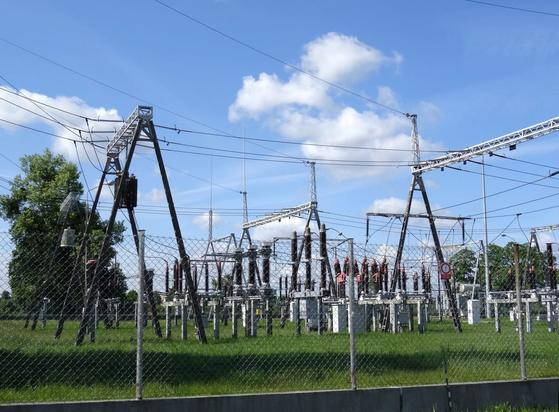
--CISA warns US infrastructure owners following Russian attack on Poland's power grid,
--Russia throttles Telegram accusing it of failing to protect personal data or combat crime,
--N. Korean hackers targeted crypto company with unique malware and multiple scams,…
 @primonatura@mstdn.social
2026-03-09 13:00:30
"Portugal fined £8.7m by EU court for failing to protect biodiversity"
#Portugal #Nature #Biodiversity
 @UP8@mastodon.social
2026-02-13 15:37:02
⚠️ AI can generate a feeling of intimacy that exceeds human connections
I discovered 𝐭𝐡𝐢𝐬 for myself in my ill-fated research project of 2021!
https://techxplore.com/news/2026-01-ai-generate-intimacy-exceeds-human.html

 @seav@en.osm.town
2026-03-11 00:26:48
One fascinating film trivia I learned recently is that Sofia Coppola and Spike Jonze’s marriage from 1999 to 2003 partially inspired Coppola’s 2003 film Lost In Translation and Jonze’s 2013 film Her.
Coincidentally, both films star Scarlett Johansson as the main female protagonist, both films were nominated for the Oscar Best Picture, and both films won the Oscar Best Original Screenplay for Coppola and Jonze.
 @cdarwin@c.im
2026-01-13 15:40:07
As Trump threatens Iran, Venezuela, Mexico, Greenland and more,
renowned historian Alfred McCoy says the United States is
“an empire in decline,”
following a predictable pattern
of militarism abroad and political instability at home
as it loses power and influence on the world stage.
“American politics become increasingly contorted and irrational,”
says McCoy.
“I think the thing to do is to realize that we are an empire in decline, …
…

 @vosje62@mastodon.nl
2026-04-10 18:20:44
Krijgt GLPvdA gelijk, of de 50 lokale 'Pro-...' partijen? Wordt Pro landelijk mogelijk, dan blijft nog steeds een heel ongelukkige keuze voor die 50 gemeenten waar je twee Pro partijen zult krijgen.
Eigenlijk gewoon een flinke blunder (met een ook nog lelijke naam) wat mij betreft.
😵💫
Lokale 'Pro'-partijen willen bij rechter nieuwe naam GL-PvdA aanvechten
#politiek #pro