 @danyork@mastodon.social
2026-03-25 01:26:11
AVFTCN 040 – Returning From A Hiatus, and Plans for 2026
I'm back. After a self-imposed hiatus for most of 2025, I'm returning to something I've been deeply missing... writing and speaking. If you've been following me for any length of time, you know that not writing or speaking is, for me, a kind of pressure that builds and builds until I am ready to explode. 🤯 So what happened? The short version: my role at the…
 @cdarwin@c.im
2026-03-25 14:18:33
A three-judge panel has denied a filing by California’s attorney general, Rob Bonta,
seeking a court order to stop the Riverside county sheriff’s department from continuing its recount of ballots from the November 2025 special election.
The LA Times reported that Bonta filed a petition with the fourth appellate district on Monday,
writing that “the sheriff’s misguided investigation threatens to sow distrust and jeopardize public confidence” in upcoming elections.
On T…
 @floheinstein@chaos.social
2026-03-25 03:51:23
This is conCERNing...
https://home.cern/news/press-release/experiments/base-experiment-cern-succeeds-transporting-antimatter
And it raises some questions:
- what orange-black UN number do you put on that truck?

 @Mediagazer@mstdn.social
2026-04-23 16:01:26
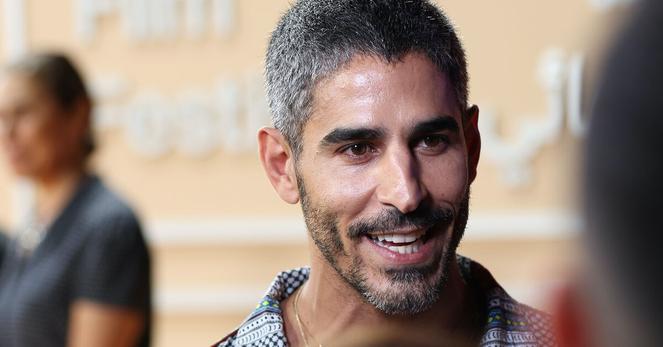
Kuwait acquits journalist Ahmed Shihab-Eldin following 52 days' detention after he shared footage of damage resulting from the Iran war (Adam Lucente/AL-MONITOR)
https://www.al-monitor.com/originals/2026/04/kuwait-acquits-…
 @brian_gettler@mas.to
2026-02-12 14:49:34
Following federal cuts to history-focused organizations, the president of the Canadian Historical Association, Colin Coates, sent this letter to Marc Miller, the Minister of Canadian Identity and Culture.
One thing might not be obvious: Coates's reference to Carney's recent Quebec City speech suggests Canadians' need for historical context right now. He doesn't agree with Carney's claims. In fact, most Canadian historians would dispute them.


 @grahamperrin@bsd.cafe
2026-04-18 12:16:25
Thank you for expressing the argument eloquently, succinctly, and without aggression.
I confess, I often tire of reading information that's repetitive. My feelings go way beyond ennui when predictability is coupled with writing that's selfish, sloppy, and divisive. This wrong style of writing has become a norm for some of the people are right to be concerned.
I'm amongst the countless people who are, quietly, deeply concerned about the impact on Earth's resourc…
 @vosje62@mastodon.nl
2026-03-18 20:46:08
Vraagje over films bij de ARD..
Films worden nagesynchroniseerd ok.
Maar bij de 'originele versies' krijg ik soms wel heel erg de indruk dat ze in de originele taal zijn nagesynchroniseerd. Ligt dat aan mijn oren, of klopt dat ook?
#ARD
 @tiotasram@kolektiva.social
2026-04-02 09:21:35
Imagine:
You are these parent of an adorable 4-year-old kid. They have made a toy airplane out of spare cardboard. Sadly, during play the wing has fallen off. You, a wise parent, produce a piece of duct tape and tape it back on. Your kid asks: "but what if the tape breaks, or the other wing falls off?" Dutifully, and with a completely serious manner, you duct tape the other wing, and then with a sharpie you write "Please DO NOT fall off!" on each wing. "There," you say, now the wings will not fall off. "
Your child happily returns to their play.
Imagine:
You are boarding a Boeing airplane for an intercontinental flight. Just the other day you were reading news about the emergency exit door falling off a Boeing airplane during flight. Thankfully nobody was injured in that incident, but a passenger could have been sucked out the gap and killed. As you walk down the aisle towards your seat at the back, you notice that around the emergency exit door of this plane, there are some scratch marks. It looks like it might not be 100% seated in place. You see several rolls worth of duct tape slapped onto the gaps between the door and the frame. In sharpie, someone has written "Please DO NOT fall off!" on the duct tape.
This is a post about #Agentic #AI.
To clarify: there are a host of reasons why using Claude Code is unethical in the first place, besides the fact that its a danger to its users. These make it unethical to use it even for a child's-toy-like application. But the source code we've just witnessed in the recent leak is *exactly* this level of "engineering." If you see an app that claims to be "programmed with AI" and it has any possibility of failing in a way that could harm you (for example, if it connects to the internet, meaning that poor programming could allow hackers to take over the device you run it on), my advice is: "Do not use it and warn your friends and family."
P.S. yes, this advice does apply to Microsoft Widows at this point, although that can be a tougher bullet to bite.
 @newstik@social.heise.de
2026-04-18 17:02:14
"The April Fools' posts have since been deleted."
https://www.web3isgoinggreat.com/?id=hyperbridge-exploit
@cdarwin@c.im2026-03-14 17:44:01
In late Middle English writing, 'a' and 'an' commonly were joined to the following noun,
if that word began with a vowel,
-- which caused confusion over how such words ought to be divided when written separately.
In 'nickname', 'newt', and British dialectal 'naunt',
the -n- belongs to a preceding indefinite article 'an' or possessive pronoun 'mine'.
My naunt for "mine aunt" is recorded from 13c.…
