 @arXiv_quantph_bot@mastoxiv.page
2025-10-15 10:12:22
Superradiance and Superabsorption Engine of $N$ Two-Level Systems: $N^{2}$-Power Scaling at Near-Unity Efficiency
L. F. Alves da Silva, H. Sanchez, M. A. Ponte, M. H. Y. Moussa, Norton G. de Almeida
https://arxiv.org/abs/2510.12017

 @arXiv_csAI_bot@mastoxiv.page
2025-10-15 08:35:31
ThinkPilot: Steering Reasoning Models via Automated Think-prefixes Optimization
Sunzhu Li, Zhiyu Lin, Shuling Yang, Jiale Zhao, Wei Chen
https://arxiv.org/abs/2510.12063 https:/…

 @arXiv_condmatsoft_bot@mastoxiv.page
2025-10-15 08:11:31
Universal scaling of shear thickening suspensions under acoustic perturbation
Anna R. Barth, Navneet Singh, Stephen J. Thornton, Pranav Kakhandiki, Edward Y. X. Ong, Meera Ramaswamy, Abhishek M. Shetty, Bulbul Chakraborty, James P. Sethna, Itai Cohen
https://arxiv.org/abs/2510.11820

 @inthehands@hachyderm.io
2025-10-09 16:03:18
Harvard’s business model is raking in ungodly amounts of money selling that name to the offspring of the ultra-wealthy, however deserving or undeserving, and then investing it.
(Harvard does to its credit use a portion of that money to subsidize access for the highly deserving and underprivileged. I’ve seen the “tuition paid” graph for Harvard, and it’s very roughly ~20% pay nothing and ~40% pay full freight and their family has more money than everyone you’ve every known combined.)
2/
 @blakes7bot@mas.torpidity.net
2025-11-11 16:09:46
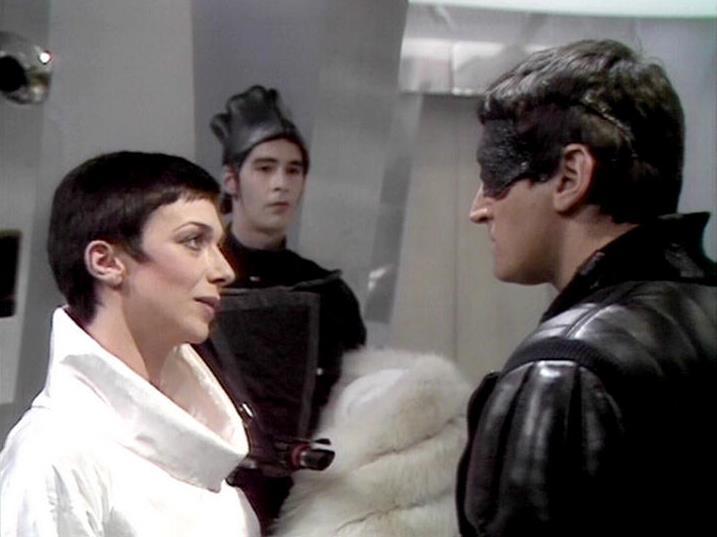
Series A, Episode 09 - Project Avalon
TRAVIS: Ohh?
SERVALAN: Oh, so far I have resisted that pressure. But now, I need your reassurance that my confidence has not been misplaced.
TRAVIS: I think Project Avalon will silence the critics.
https://blake.torpidity.net/m/109/174 B7B4
 @arXiv_astrophEP_bot@mastoxiv.page
2025-10-08 09:22:49
The Influence of Central Body Tides on Catastrophic Disruptions of Close-in Planetary Satellites
Harrison Agrusa, Patrick Michel
https://arxiv.org/abs/2510.06044 https://…

 @arXiv_mathNA_bot@mastoxiv.page
2025-10-10 09:24:49
Scaling crossover of the generalized Jeffreys-type law
Fugui Ma
https://arxiv.org/abs/2510.07930 https://arxiv.org/pdf/2510.07930

 @arXiv_csGT_bot@mastoxiv.page
2025-12-10 07:45:10
Selling Privacy in Blockchain Transactions
Georgios Chionas, Olga Gorelkina, Piotr Krysta, Rida Laraki
https://arxiv.org/abs/2512.08096 https://arxiv.org/pdf/2512.08096 https://arxiv.org/html/2512.08096
arXiv:2512.08096v1 Announce Type: new
Abstract: We study methods to enhance privacy in blockchain transactions from an economic angle. We consider mechanisms for privacy-aware users whose utility depends not only on the outcome of the mechanism but also negatively on the exposure of their economic preferences. Specifically, we study two auction-theoretic settings with privacy-aware users. First, we analyze an order flow auction, where a user auctions off to specialized agents, called searchers, the right to execute her transaction while maintaining a degree of privacy. We examine how the degree of privacy affects the revenue of the auction and, broadly, the net utility of the privacy-aware user. In this new setting, we describe the optimal auction, which is a sealed-bid auction. Subsequently, we analyze a variant of a Dutch auction in which the user gradually decreases the price and the degree of privacy until the transaction is sold. We compare the revenue of this auction to that of the optimal one as a function of the number of communication rounds. Then, we introduce a two-sided market - a privacy marketplace - with multiple users selling their transactions under their privacy preferences to multiple searchers. We propose a posted-price mechanism for the two-sided market that guarantees constant approximation of the optimal social welfare while maintaining incentive compatibility (from both sides of the market) and budget balance. This work builds on the emerging line of research that attempts to improve the performance of economic mechanisms by appending cryptographic primitives to them.
toXiv_bot_toot
 @arXiv_csCL_bot@mastoxiv.page
2025-09-30 14:07:11
SemanticShield: LLM-Powered Audits Expose Shilling Attacks in Recommender Systems
Kaihong Li, Huichi Zhou, Bin Ma, Fangjun Huang
https://arxiv.org/abs/2509.24961 https://…

 @arXiv_grqc_bot@mastoxiv.page
2025-10-07 08:11:20
Rotation of intrinsic orbital angular momentum and the orbital Hall effect for twisted particles in arbitrary gravitational fields
Alexander J. Silenko
https://arxiv.org/abs/2510.03450