@Techmeme@techhub.social
2025-10-17 22:50:54
Google is phasing out its Privacy Sandbox technologies; the initiative was launched in 2019 to develop privacy-protecting tech to replace third-party cookies (Kendra Barnett/Adweek)
https://www.adweek.com/media/googles-privacy-sandbox-is-officially-dead/

 @Mediagazer@mstdn.social
2025-10-17 22:51:04
Google is phasing out its Privacy Sandbox technologies; the initiative was launched in 2019 to develop privacy-protecting tech to replace third-party cookies (Kendra Barnett/Adweek)
https://www.adweek.com/media/googles-privacy-sandbox-is-officially-dead/

 @v_i_o_l_a@openbiblio.social
2025-11-17 08:50:48
"The Drain of Scientific Publishing"
#scientific
 @mela@zusammenkunft.net
2025-10-16 10:20:35
Ich denke, Karl Drais würde vor lauter Begeisterung eine Extrarunde auf seinem Schwarz-Rot-Gold angemalten Laufrad durch den Karlsruher Schlossgarten drehen.
https://www.scientificamerican.com/article/a-human-on-a-bicycle-i…
 @netzschleuder@social.skewed.de
2025-12-17 16:00:04
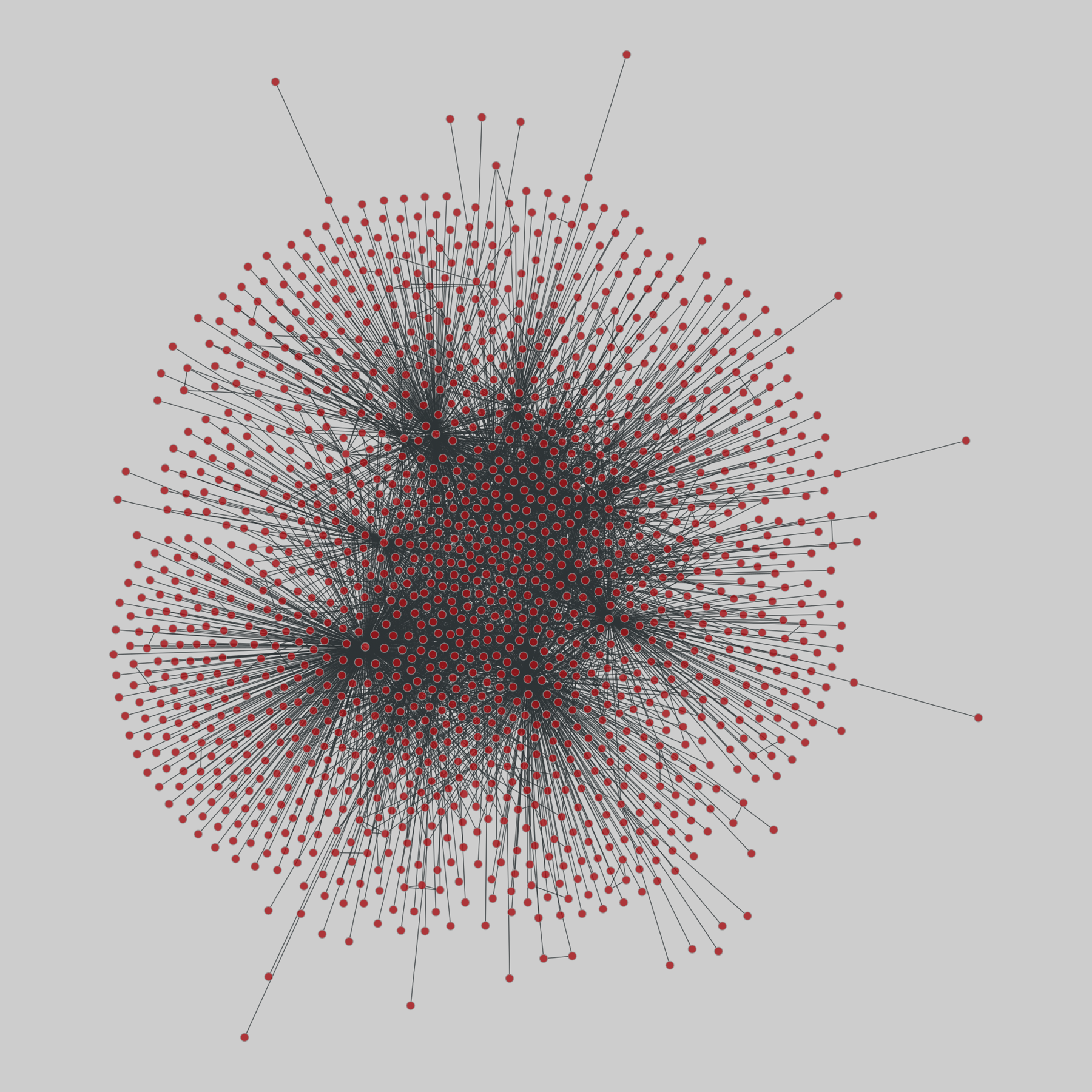
new_zealand_collab: New Zealand scientific collaborations (2015)
A network of scientific collaborations among institutions in New Zealand. Nodes are institutions (universities, organizations, etc.), and two nodes i,j are connected if Scopus lists at least one publication with authors at institutions i and j, in the period 2010-2015. Edges are weighted by the number of such collaborations. Nodes are annotated with the categorical type of institution.
This network has 1511 nodes an…
 @fanf@mendeddrum.org
2025-12-16 21:42:01
from my link log —
The Euclid-Mullin sequence of prime numbers.
https://blogs.scientificamerican.com/roots-of-unity/a-curious-sequence-of-prime-numbers/
saved 2019-05-26

 @jtk@infosec.exchange
2025-12-17 15:19:04
Linux kernel tooling update message included an unsurprising, but noteworthy lament about the state of #SMTP:
"We're increasingly having to deal with the degradation of the SMTP support by
all commercial companies: [...]"
 @seeingwithsound@mas.to
2025-12-17 19:53:53
Amid talk of a brain drain, some scientists leave U.S. behind https://www.statnews.com/2025/12/17/research-cuts-fuel-scientific-brain-drain-american-science-shattered/ "A large part of what we loved about the United States i…

 @hex@kolektiva.social
2025-11-16 07:08:26
There's a word at the beginning and end of Dawn of Everything that feels self-referential right now: Kairos.
> We began this book with a quote which refers to the Greek notion of kairos as one of those occasional moments in a society’s history when its frames of reference undergo a shift – a metamorphosis of the fundamental principles and symbols, when the lines between myth and history, science and magic become blurred – and, therefore, real change is possible. Philosophers sometimes like to speak of ‘the Event’ – a political revolution, a scientific discovery, an artistic masterpiece – that is, a breakthrough which reveals aspects of reality that had previously been unimaginable but, once seen, can never be unseen. If so, kairos is the kind of time in which Events are prone to happen.
> Societies around the world appear to be cascading towards such a point. This is particularly true of those which, since the First World War, have been in the habit of calling themselves ‘Western’. On the one hand, fundamental breakthroughs in the physical sciences, or even artistic expression, no longer seem to occur with anything like the regularity people came to expect in the late nineteenth and early twentieth centuries. Yet at the same time, our scientific means of understanding the past, not just our species’ past but that of our planet, has been advancing with dizzying speed. Scientists in 2020 are not (as readers of mid-twentieth-century science fiction might have hoped) encountering alien civilizations in distant star systems; but they are encountering radically different forms of society under their own feet, some forgotten and newly rediscovered, others more familiar, but now understood in entirely new ways.
Reading this as I write something very inspired by this work feels especially serendipitous, especially at this time. When they wrote the book, I think that kairos felt more serendipitous itself. But as the frequency of opportunity increases, the veil between realities feels more malleable... that perhaps we can poke a finger through and open a portal to a completely different future than the one we've felt locked into for such a long time.
https://anarchoccultism.org/building-zion/the-coordinated-swarm-lyhr
@netzschleuder@social.skewed.de2025-11-16 17:00:03
arxiv_collab: Scientific collaborations in physics (1995-2005)
Collaboration graphs for scientists, extracted from the Los Alamos e-Print arXiv (physics), for 1995-1999 for three categories, and additionally for 1995-2003 and 1995-2005 for one category. For copyright reasons, the MEDLINE (biomedical research) and NCSTRL (computer science) collaboration graphs from this paper are not publicly available.
This network has 8361 nodes and 15751 edges.
Tags: Social, Collaboration…