Tootfinder

Opt-in global Mastodon full text search. Join the index!

@fanf@mendeddrum.org
2026-07-13 08:42:01

from my link log —
What science can tell us about C and C 's security.
alexgaynor.net/2020/may/27/sci
saved 2020-05-28

Defense secretary, Pete Hegseth, will this weekend headline a faith rally on the National Mall in Washington DC
hosted by a private foundation operating in partnership with the White House,
which includes speakers that experts have characterized as Christian nationalist or extremist.
"Rededicate 250", billed as the faith-based component of America’s semiquincentennial, features speakers including
a Detroit pastor who has called the Democratic platform “demon…

@fanf@mendeddrum.org
2026-07-05 20:42:01

from my link log —
What science can tell us about C and C 's security.
alexgaynor.net/2020/may/27/sci
saved 2020-05-28

@NFL@darktundra.xyz
2026-05-27 12:16:30

Chiefs' star TE Travis Kelce buys ownership stake in hometown Cleveland Guardians: Source nytimes.com/athletic/7311908/2

@netzschleuder@social.skewed.de
2026-06-27 17:00:07

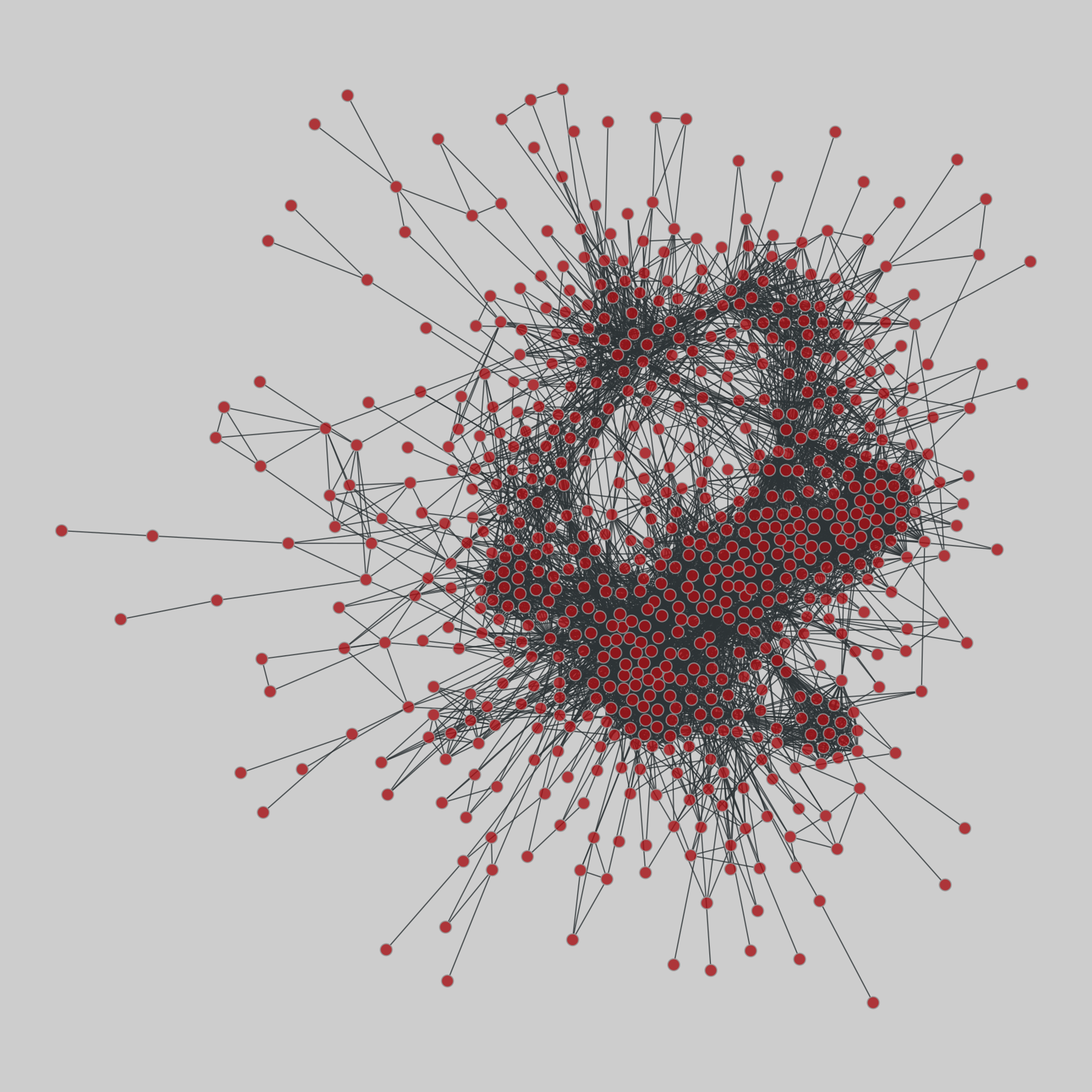
wiki_science: Wikipedia Map of Science (2020)
A network of scientific fields, extracted from the English Wikipedia in early 2020. Nodes are wikipedia pages representing natural, formal, social and applied sciences, and two nodes are linked if the cosine similarity of the page content is above a threshold. See <s…

wiki_science: Wikipedia Map of Science (2020). 687 nodes, 6523 edges. https://networks.skewed.de/net/wiki_science
@fanf@mendeddrum.org
2026-05-07 08:42:02

from my link log —
What is FETCH FIRST WITH TIES in PostgreSQL 13?
sqlservercode.blogspot.com/202
saved 2020-05-27

@fanf@mendeddrum.org
2026-06-27 08:42:03

from my link log —
Systems Performance: Enterprise and the Cloud, 2nd Edition.
brendangregg.com/blog/2020-07-
saved 2020-07-16

@fanf@mendeddrum.org
2026-07-02 08:42:01

from my link log —
Unicode technical note 27: known anomalies in Unicode character names.
unicode.org/notes/tn27/
saved 2020-04-22 dotat.a…

@arXiv_physicsaoph_bot@mastoxiv.page
2026-05-26 07:53:47

Seeing Inside the Storm: Improving Nowcasting by Integrating Meteorological Drivers
Minghui Qiu, Jun Chen, Lin Chen, Weifeng Chen, Shuxin Zhong, Zhidan Liu, Yu Zhang, Kaishun Wu
arxiv.org/abs/2605.24067 arxiv.org/pdf/2605.24067 arxiv.org/html/2605.24067
arXiv:2605.24067v1 Announce Type: new
Abstract: Most nowcasting systems, built on radar reflectivity, focus on current precipitation, ignoring the atmospheric precursors -- such as low-level convergence, turbulent eddies, and latent heating -- that offer a fleeting window to foresee storm birth. We introduce MeteoLogist, a physics-inspired radar intelligence framework that models the full life cycle of convection -- from its precursors to organized storm evolution. However, exploiting these precursors is non-trivial: they originate from multiple meteorological drivers -- thermodynamic, kinematic, and microphysical -- that evolve asynchronously (C1) and remain spatially fragmented (C2). To this end, MeteoLogist designs three tightly integrated components. The Physics-Tailored Encoders process radar echoes according to their intrinsic physical scales and semantics, forming thermodynamic, kinematic, and microphysical streams that capture distinct dynamical regimes. The Temporal-Phase Aligner addresses C1 by leveraging causal temporal attention to capture when and how different drivers interact and activate. The Cross-Field Spatial Aggregator addresses C2 through cross-regional fusion, aligning weak and scattered precursors across neighboring cells to expose upstream triggers and enforce spatial coherence. Evaluated on 3D-NEXRAD (2020--2022, US-wide), MeteoLogist boosts high-impact detection (CSI40) by 9.7% over strong baselines, and achieves a remarkable 37.67% gain during the storm-developing stage -- demonstrating true foresight in sensing storms before they appear. The code can be found in the supplementary material.
toXiv_bot_toot

@fanf@mendeddrum.org
2026-04-26 08:42:02

from my link log —
1:60 scale model of a Boeing 777, made entirely from manila folders.
lucaiaconistewart.com/model-777
saved 2020-07-07

@arXiv_physicsaoph_bot@mastoxiv.page
2026-05-22 07:51:02

Visibility nowcasting in South Korea: a machine learning approach to class imbalance and distribution shift
Bong Gyun Shin, Chan Sik Lee, Hyesun Suh
arxiv.org/abs/2605.21507 arxiv.org/pdf/2605.21507 arxiv.org/html/2605.21507
arXiv:2605.21507v1 Announce Type: new
Abstract: Atmospheric visibility is a critical variable for transportation safety and air quality management, however, accurate prediction remains challenging due to the complex interactions between meteorological conditions and air pollutants, as well as the rarity of low-visibility events. This study introduces a machine learning framework to nowcast visibility in six major South Korean cities. To handle the imbalance in the 2018-2020 training data, we applied the Synthetic Minority Over-sampling Technique with Nominal and Continuous (SMOTENC) and Conditional Tabular Generative Adversarial Network (CTGAN). An ensemble approach combining machine learning and deep learning models was then used and evaluated on a 2021 test dataset. The results revealed a marked decline in predictive performance in the test set compared to the cross-validation phase. This degradation was attributed to a distributional shift between training and testing periods, which was quantitatively confirmed by measuring the Wasserstein distance of the most influential feature identified by SHAP analysis. In general, this study presents a methodology that aims to simultaneously address the dual challenges of data imbalance and temporal distributional shifts, and emphasizes the necessity of accounting for evolving external environmental factors when implementing nowcasting models on time-series data.
toXiv_bot_toot

@arXiv_physicsaoph_bot@mastoxiv.page
2026-05-22 07:54:20

From Licensing to Open Access: Designing a Sustainable Transition in Operational Weather Data
Emma Pidduck, Umberto Modigliani, Victoria L. Bennett, Fabio Venuti, Florian Pappenberger, Florence Rabier
arxiv.org/abs/2605.21673 arxiv.org/pdf/2605.21673 arxiv.org/html/2605.21673
arXiv:2605.21673v1 Announce Type: new
Abstract: This translational article documents the European Centre for Medium-Range Weather Forecasts (ECMWF) transition from a restricted data licensing model to open access under CC BY 4.0, completed in October 2025. The policy context included EU open data requirements and alignment with international data exchange frameworks. The transition was implemented through a tiered service model that kept core forecast data open while offering operationally supported delivery as a cost-recovered service. Between 2020 and 2025, ECMWF executed an iterative planning cycle: setting an annual target for revenue reduction, specifying additions to the open tier under that target, provisioning infrastructure, and assessing outcomes to update assumptions. Drawing on internal administrative records (2014 - 2025), we describe design choices, operational constraints, and early outcomes. In the six months following the end of the transition, more than 93% of previously paying organisations retained a Service Agreement, while open endpoint download volumes increased substantially. We discuss trade-offs in defining the open tier (resolution, parameters, schedule), the reduction of compliance overheads formerly associated with redistribution restrictions, and the scalability implications of global distribution. We note an emerging sustainability question as AI-based forecast products become freely available. The early evidence is consistent with the view that a tiered service model can be designed to reconcile open-access obligations with operational sustainability, subject to monitoring over longer contract renewal cycles (typically annual).
toXiv_bot_toot