 @arXiv_csAI_bot@mastoxiv.page
2025-09-18 07:32:51
Evaluation Awareness Scales Predictably in Open-Weights Large Language Models
Maheep Chaudhary, Ian Su, Nikhil Hooda, Nishith Shankar, Julia Tan, Kevin Zhu, Ashwinee Panda, Ryan Lagasse, Vasu Sharma
https://arxiv.org/abs/2509.13333

 @toxi@mastodon.thi.ng
2025-11-17 11:07:22
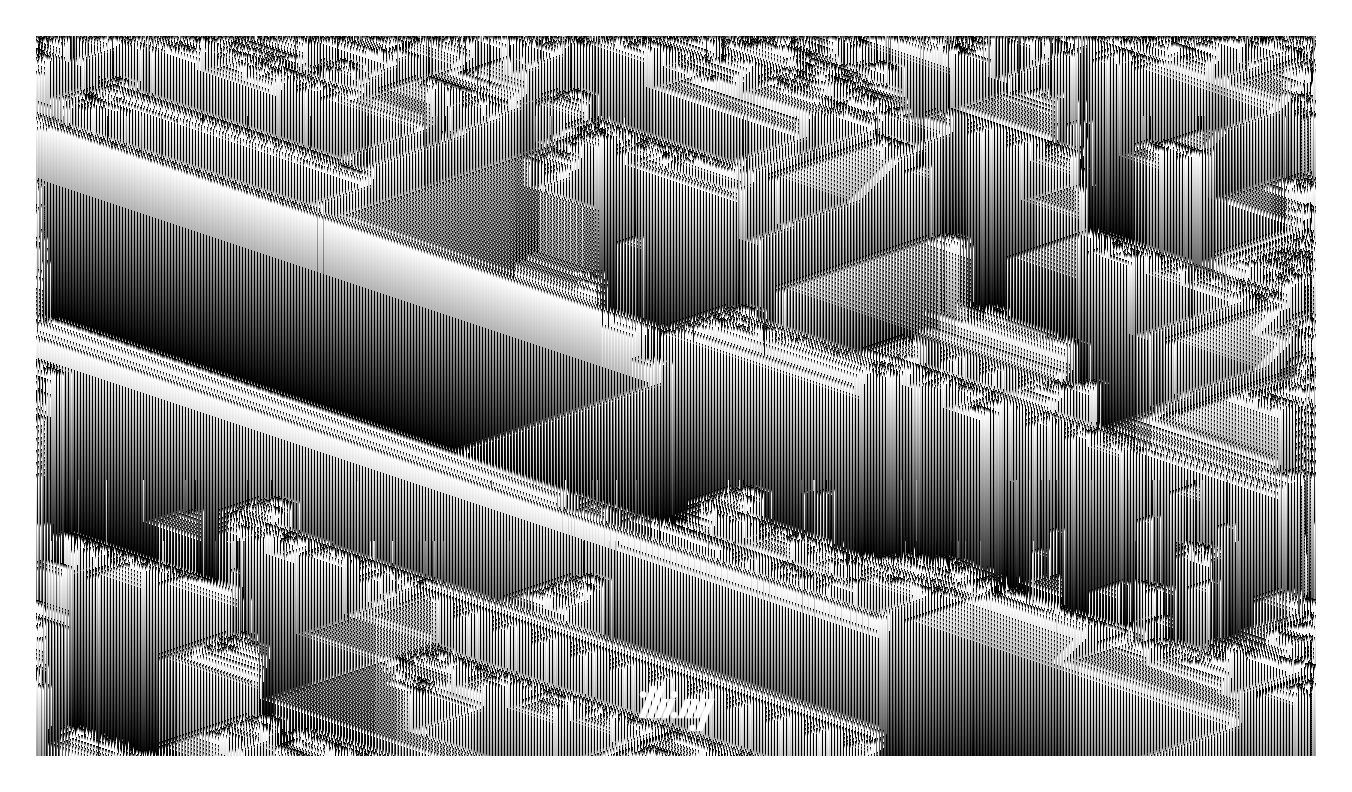
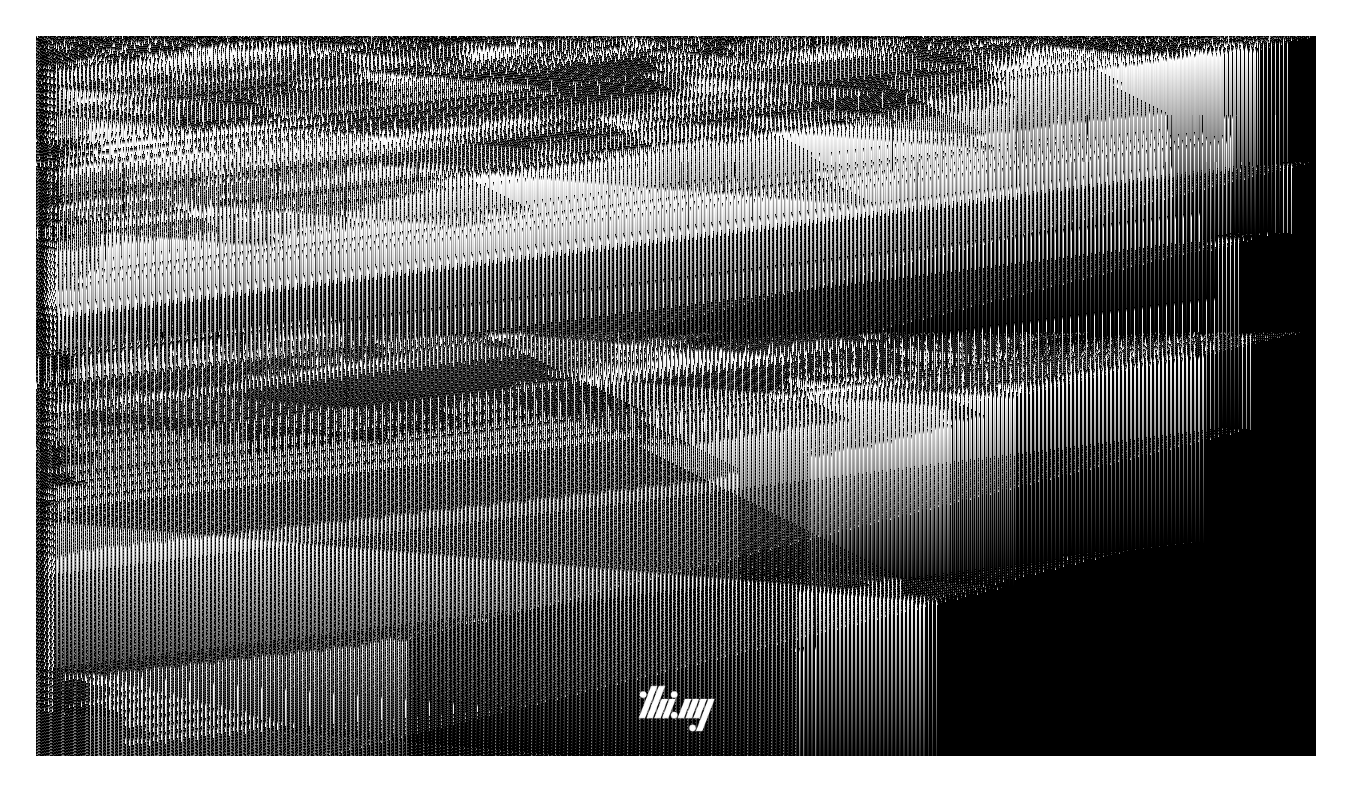
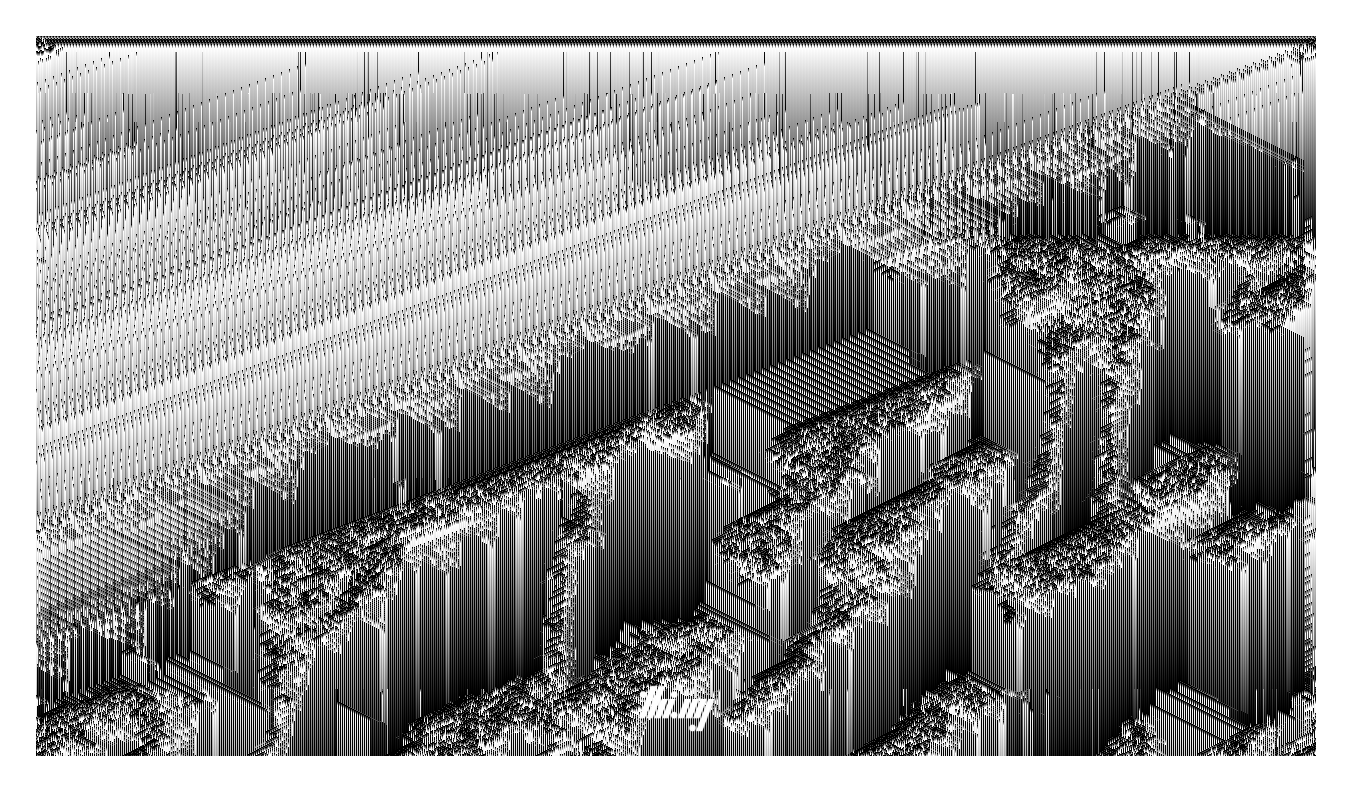
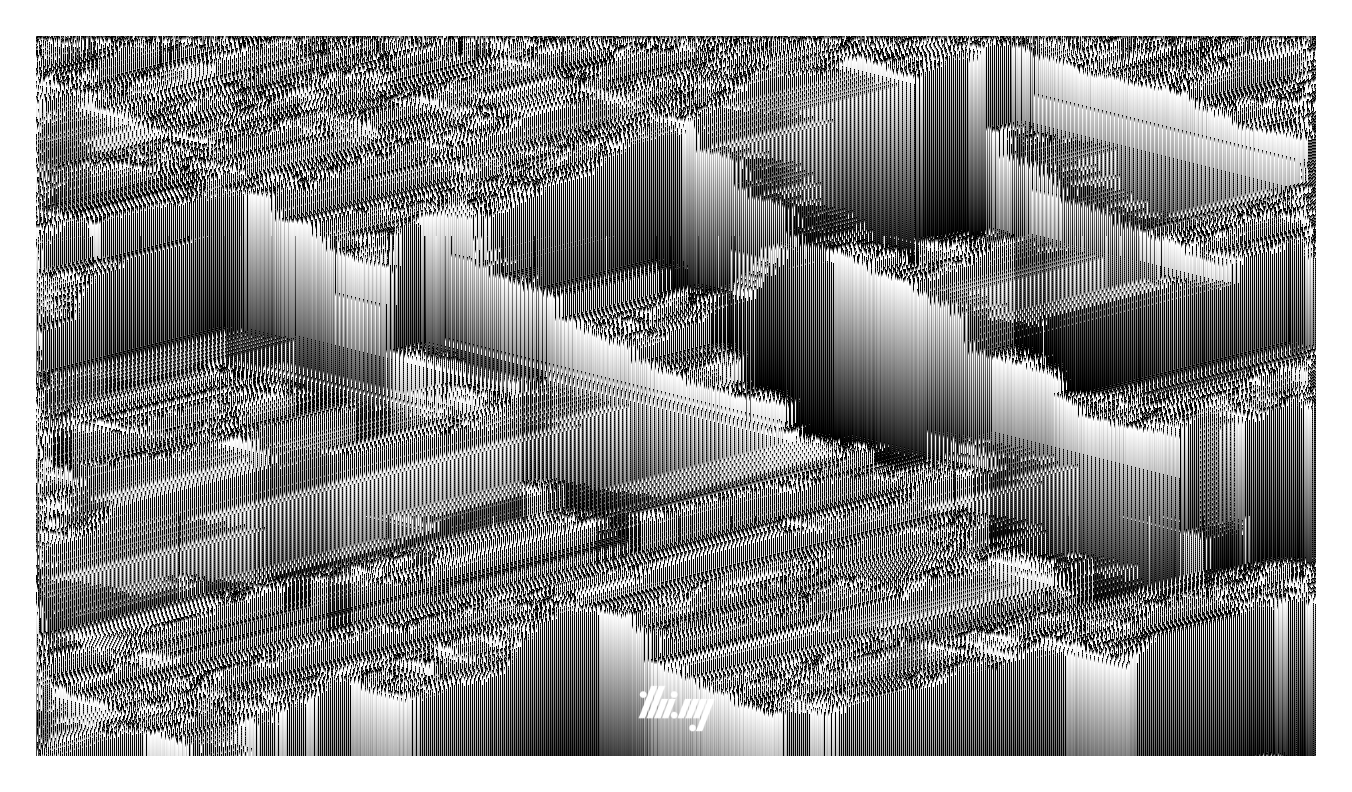
MonochromeEvolutionaryBioDigitalCellularAutomataSimulation
Unlike the recently shared[1] multi-cellular struggles, these here are some selected research stills (handpicked from tens of thousands) of only single CA configurations (aka mono-cultures) which I found interesting/promising and which were then used as raw ingredients/candidates for my infinitely evolving C-SCAPE project[2]...
Each of these cellular automata is 1.5D, meaning each pixel row is one generation, but I allowe…
 @jlpiraux@wallonie-bruxelles.social
2025-11-16 13:12:04
Les chimpanzés sont presque aussi rationnels que nous, selon une série d'expériences menées par l'anthropologue évolutionniste Jan Engelmann.
https://arstechnica.com/science/2025/11/the-evolution-of-rationality-h…
 @cowboys@darktundra.xyz
2025-12-17 20:31:25
6 players Cowboys must evaluate in final 3 games include playmaking QB, RB https://cowboyswire.usatoday.com/story/sports/nfl/cowboys/2025/12/17/6-players-cowboys-must-evaluate-include-joe-milton-pe…
 @hex@kolektiva.social
2025-11-17 06:11:16
I think we can actually prove that this constraint is the *only* constraint that can preserve freedom:
1. There will exist actors in a system who will wish to take advantage of others. Evolution drives survival and one strategy for increasing survival in an altruistic society is to become a parasite.
2. Expecting exploitative dynamics, a system needs to have a set of rules to manage exploitation.
3. If the set of rules is static it will lack the requisite variety necessary to manage the infinite possible behavior of humans so the system will fail.
4. If the system is dynamic then it must have a rule set about how it's own rules are updated. This would make the system recursive, which makes the system at least as complex as mathematics. Any system at least as complex as mathematics is necessarily either incomplete or inconsistent (Gödel's incompleteness theorem). If the system is incomplete, then constraints can be evaded which then allow a malicious agent to seize control of the system and update the rules for their own benefit. If constraints are incomplete, then a malicious agent can take advantage of others within the system.
5. Therefore, no social system can possibly protect freedom unless there exists a single metasystemic constraint (that the system must be optional) allowing for the system to be abandoned when compromised.
Oh, you might say, but this just means you have to infinitely abandon systems. Sure, but there's an evolutionary advantage to cooperation so there's evolutionary pressure to *not* be a malicious actor. So a malicious actor being able to compromise the whole system is likely to be a much more rare event. Compromising a system is a lot of work, so the first thing a malicious actor would want to do is preserve that work. They would want to lock you in. The most important objective to a malicious actor compromising a system would be to violate that metasystemic constraint, or all of their work goes out the window when everyone leaves.
And now you understand why borders exist, why fascists are obsessed with maintaining categories like gender, race, ethnicity, etc. This is why even Democrats like Newsom are on board with putting houseless people in concentration camps. And this is why the most important thing anarchists promote is the ability to choose not to be part of any of that.
 @arXiv_csCL_bot@mastoxiv.page
2025-09-18 07:59:41
Overview of Dialog System Evaluation Track: Dimensionality, Language, Culture and Safety at DSTC 12
John Mendon\c{c}a, Lining Zhang, Rahul Mallidi, Alon Lavie, Isabel Trancoso, Luis Fernando D'Haro, Jo\~ao Sedoc
https://arxiv.org/abs/2509.13569

 @fanf@mendeddrum.org
2025-12-17 15:42:01
from my link log —
PCIe 6 overview.
https://pcisig.com/blog/evolution-pci-express-specification-its-sixth-generation-third-decade-and-still-going-strong
saved 2022-01-13
 @arXiv_astrophGA_bot@mastoxiv.page
2025-09-18 08:26:11
Modeling Cosmological Evolution of Jetted Seyfert Galaxies for z<10
Julianne Goddard (Department of Physics and Astronomy, University of Kentucky, KY, USA), Isaac Shlosman (Department of Physics and Astronomy, University of Kentucky, KY, USA), Emilio Romano-Diaz (Argelander-Institut f\"ur Astronomie, Bonn, Germany)
https://arxiv.or…
 @arXiv_csAI_bot@mastoxiv.page
2025-09-18 09:10:21
SteeringControl: Holistic Evaluation of Alignment Steering in LLMs
Vincent Siu, Nicholas Crispino, David Park, Nathan W. Henry, Zhun Wang, Yang Liu, Dawn Song, Chenguang Wang
https://arxiv.org/abs/2509.13450
 @arXiv_csCL_bot@mastoxiv.page
2025-10-15 10:23:01
Deep Associations, High Creativity: A Simple yet Effective Metric for Evaluating Large Language Models
Ziliang Qiu, Renfen Hu
https://arxiv.org/abs/2510.12110 https://