 @cdarwin@c.im
2026-07-17 18:17:17
Donald Trump delivered a speech to the nation on Thursday night,
sowing doubts in the U.S. election system
and claiming that drastic changes were needed,
-- despite presenting no new or substantiated evidence
that any past election was affected by fraud.
Trump was expected to deliver a missive rehashing the results of the 2020 presidential race,
in which he legitimately lost to former President Joe Biden.
Instead, Trump downplayed those beliefs,

 @bici@mastodon.social
2026-07-18 03:12:27
U.S. President Donald Trump is blaming Canadian forest management for the smoke that has blanketed parts of the United States, threatening to increase tariffs to compensate for U.S. expenses caused by plummeting air quality.
But a wildfire expert says the President’s claims lack grounding in science and excoriated the remedies aimed at Canada as being unreasonable.
#REALITYCHECK…

 @heiseonline@social.heise.de
2026-07-14 14:13:22
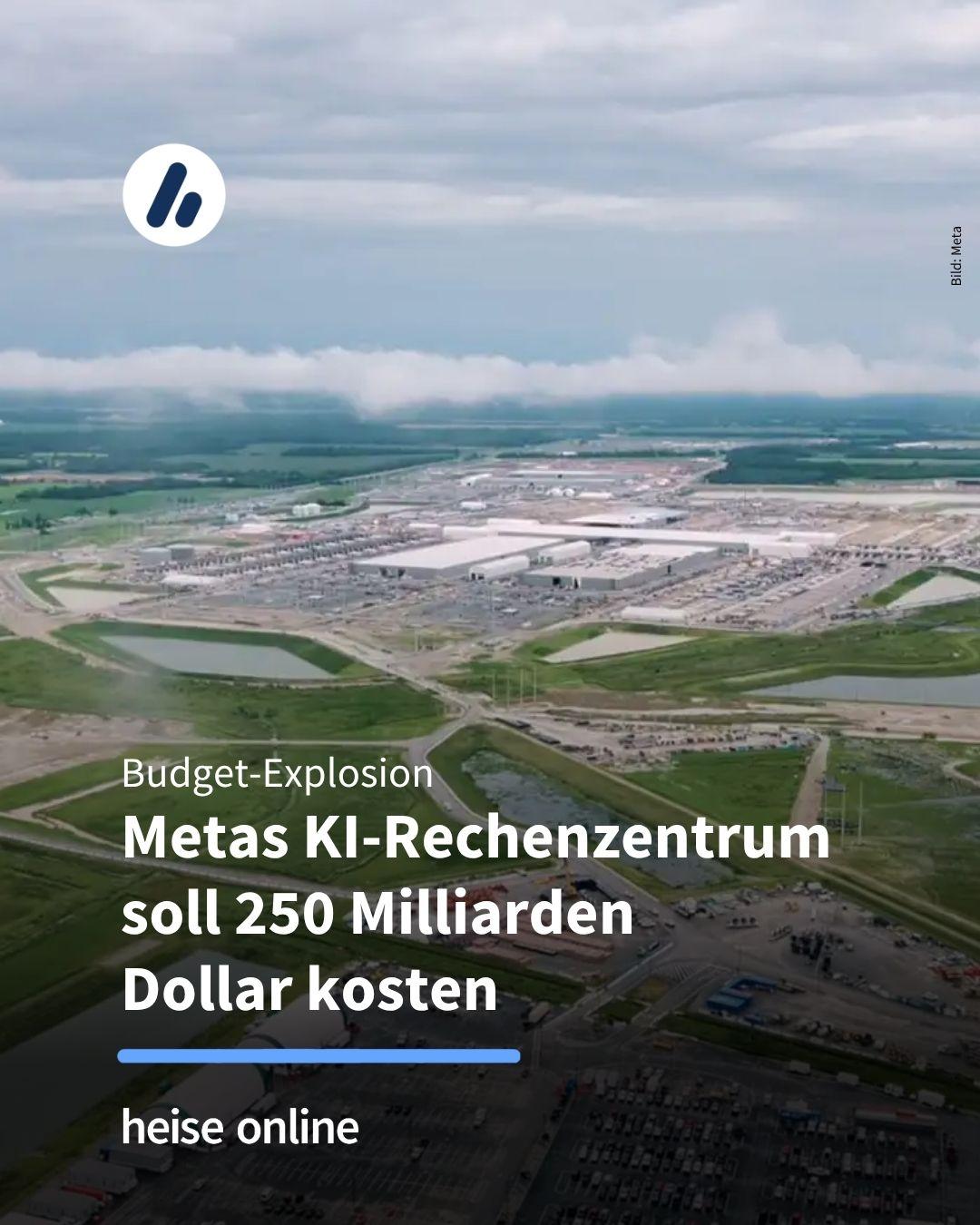
Meta so: "Wir machen KI." Auch Meta: baut praktisch eine neue Stadt... 🏙️ Der Konzern lässt in Louisiana seinen Hyperion-Campus entstehen, der auf knapp 16 Quadratkilometern zu den flächenmäßig größten Rechenzentrumsprojekten weltweit zählen soll. 🏗️
Zum Artikel: https://…
 @cdarwin@c.im
2026-07-16 05:29:36
Over the past 10 days,
ICE officials have killed two immigrants in separate shootings in Texas and Maine.
While the Department of Homeland Security has claimed that the officers were acting in self-defense and the interest of public safety,
no evidence has emerged to support those accounts, and outrage is mounting over these latest examples of violence from the agency.
How the killings of Lorenzo Salgado Araujo and Johan Sebastišn Duršn Guerrero, reflect a broader p…

 @hex@kolektiva.social
2026-06-27 04:05:41
Now, I don't especially like the term "church" so I may use something else... like "coven." You can do what you want. But I happen to have already mapped out an example. (It is exactly that, just an example, so take if it's useful, change if you need, and don't stick to anything too closely.) Oh, this mapping also means that you would, for religious reasons, only be allowed to work under capitalism 4 days a week instead of 5.
Given the increases in productivity over the last 100 years, a 4 day work week is a completely reasonable expectation. If we have to annex Monday for the weekend by force of religion, so be it. It is rightfully ours anyway. If enough people try it, this will probably work. If it doesn't work, it just needs more people.
The Practice of Worship:
It is recommended to break down worship in to three sections: the functional, the communal, and the spiritual. It is also recommended to break these across multiple days. A common structure for some Christian churches is to take 10-15 minutes for announcements (Functional), an hour or two for services (Spiritual), followed by (Communal) coffee, tea, and cookies for an unspecified time up to two hours after. When starting or working with limited time a single compressed model like this may work, but it's not optimal.
- The Functional
The purpose of this section is to address the functional needs of the coven. Block out time (less than 90 minute blocks is recommended) to go through reports and updates from those involved in the Dispensary, Library, Works Committee (infrastructure), and Services Committee (providing services internally and, potentially, externally). Talk through any additional announcements, including those from other covens you may be federated with.
It is helpful to include unstructured communal time, such as shared meals, during or after functional meetings. As the federation grows, more time will be needed. It is recommended to break functional meetings, work parties, and such across multiple days. When a federation becomes sufficiently large, it is recommended to take every Monday, on top of Saturday and Sunday, as a third day of community and worship.
The scope of the functional spans 3 realms (which may be more-or-less fluid): the personal or family, the coven and federation, and humanity itself. It is up to each coven and individual to negotiate how to allocate the three days of the weekend once we have liberated Monday from the work week, but it is important to reserve it for one of these three. However, some people must work on weekends. Medical personnel, for example, cannot conform to a standard work week. While the work week should be universally restricted, which specific days are used will be up to the specific coven and their members.
A functional meeting can start with an agenda like the following:
Functional Invocation
Announcements
Report Backs
Dispensary
Inventory Check
What is low
What is empty
What is expiring
What is needed
Funds status
Library
Inventory Check and Items needing return
Library acquisition requests
Funds status and budget check
Works Committee
Upcoming projects
Subcommittee updates (Following the Works Committee agenda)
New committee formations
Funds status
Services Committee
New capabilities announcements
New needs requests
Subcommittee updates (Following the Works Committee agenda)
New committee formations
Funds status
Task Check
Breaking the Circle
This agenda is a suggestion for those who don't know where to start. It can be adapted or ignored as appropriate.
- The Spiritual
Spirituality is necessarily an undefined space. It is deeply personal. Each individual taking time to share their own personal spiritual experiences can help each connect with each other. This experience of connection can itself be a spiritual experience. It may also be useful to read esoteric, mystical, or philosophical texts together as type of "book club" and share thoughts. Others may draw from their own knowledge or traditions. This is something that must be defined together within a group.
- The Communal
The communal aspect of the practice of worship bind the coven and federation together. Within the community we find joy and release, connection and comfort. The coven is where we turn in times of need, and where we share our hopes and dreams.
 @azonenberg@ioc.exchange
2026-09-09 10:36:16
Random thought: assuming infinite budget but only technology available today, would it be possible to keep a human head alive and conscious indefinitely without the rest of the body (for the rest of its natural lifespan) a la Futurama heads in jars?
Assume some sort of surgical procedure to remove the torso, hook the carotid and jugular to ECMO hemodialysis, and periodic infusions of total parenteral nutrition along with some means to cover the exposed tissue and promote healing of t…
 @CubitOom@social.linux.pizza
2026-08-06 22:02:14
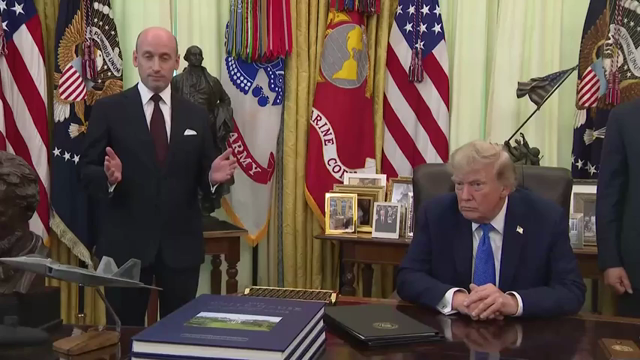
The US Regime has decided that the executive branch has the power to change the laws on who is eligible for brithright citizenship via executive order (08/06/26)
Executive Order:
https://www.whitehouse.gov/presidential-ac
 @paulwermer@sfba.social
2026-08-31 20:33:06
This year is the 250th Anniversary of the founding of San Francisco, as the #AnzaExpedition arrive in SF, and the #PresidioOfSanFrancisco was founded. To commemorate this event, Luis Valle retraced the exhibitions route by
 @PaulWermer@sfba.social
2026-08-31 20:33:06
This year is the 250th Anniversary of the founding of San Francisco, as the #AnzaExpedition arrive in SF, and the #PresidioOfSanFrancisco was founded. To commemorate this event, Luis Valle retraced the exhibitions route by