 @leftsidestory@mstdn.social
2026-09-17 07:44:55
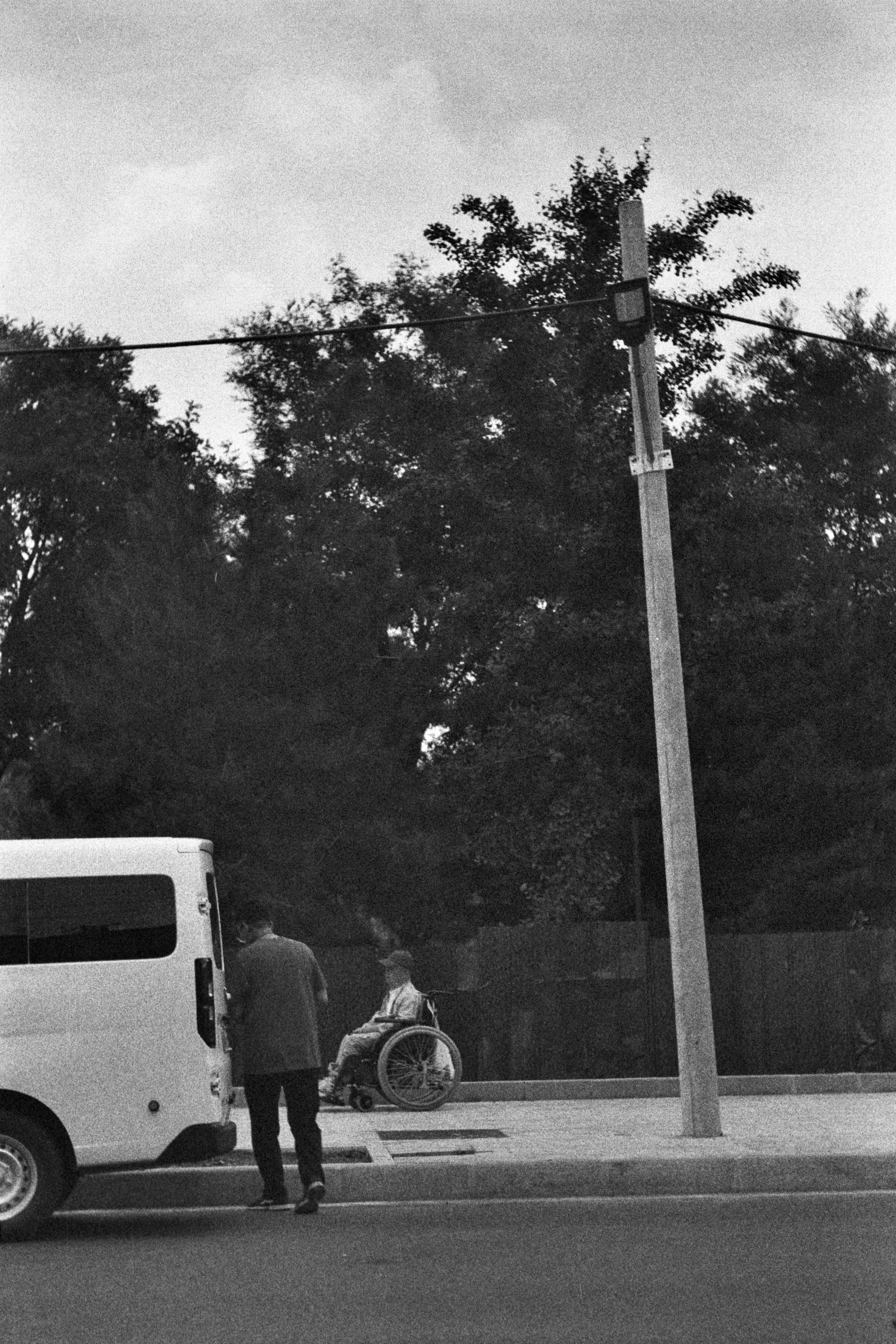
At the Corner III ✨
在角落里 III ✨
📷 Nikon FE
🎞️ Ilford Delta 3200
If you like my work, Support by buying me a coffee or a roll of film from
PayPal https://www.paypal.com/paypalme/ydcdingsite
Wise



 @grist@fosstodon.org
2026-09-18 12:58:53
Lumping together behemoth projects like Kubernetes with VLC and XZ Util is a mistake that confuses users and customers: the differences cannot be ignored. https://www.getgrist.com/blog/stop-saying-open-source-sustainability/
 @leftsidestory@mstdn.social
2026-08-09 00:30:02
City Clouds III ⛅️
城市云朵 III ⛅️
📷 Yashica 635
🎞️ Ilford HP5 Plus (FF), expired 1993
If you like my work, Support by buying me a coffee or a roll of film from
PayPal https://www.paypal.com/paypalme/ydcdingsite
Wise



 @arXiv_csHC_bot@mastoxiv.page
2026-08-12 09:04:18
Replaced article(s) found for cs.HC. https://arxiv.org/list/cs.HC/new
[1/2]:
- Music Interpretation and Emotion Perception: A Computational and Neurophysiological Investigation
Lyberatos, Kantarelis, Zioga, Anagnostopoulou, Stamou, Georgaki
https://arxiv.org/abs/2506.01982 https://mastoxiv.page/@arXiv_csHC_bot/114623887921808883
- Selective Prediction Reduces the Negative Effects of Automation Bias Overall but Increases False ...
Jabbour, Fouhey, Banovic, Shepard, Kazerooni, Sjoding, Wiens
https://arxiv.org/abs/2508.07617 https://mastoxiv.page/@arXiv_csHC_bot/115015501954907821
- Sighted by Default: Addressing Implicit Vision Assumptions in Real-Time VLM Assistance for BLV Users
Yi Zhao, Siqi Wang, Qiqun Geng, Erxin Yu, Jing Li
https://arxiv.org/abs/2511.00945 https://mastoxiv.page/@arXiv_csHC_bot/115490927925171769
- UXCascade: Scalable Usability Testing with Simulated User Agents
Steffen Holter, Eunyee Koh, Mustafa Doga Dogan, Gromit Yeuk-Yin Chan
https://arxiv.org/abs/2601.15777 https://mastoxiv.page/@arXiv_csHC_bot/115943802965989174
- Does Explanation Correctness Matter? Linking Computational XAI Evaluation to Human Understanding
Gregor Baer, Chao Zhang, Isel Grau, Pieter Van Gorp
https://arxiv.org/abs/2603.25251 https://mastoxiv.page/@arXiv_csHC_bot/116300187728326082
- Beyond Screenshots: Evaluating VLMs' Understanding of UI Animations
Chen Liang, Xirui Jiang, Naihao Deng, Eytan Adar, Anhong Guo
https://arxiv.org/abs/2604.26148 https://mastoxiv.page/@arXiv_csHC_bot/116492495199874264
- Quieting the Cobwebs: Browser Interaction for Visual Floaters
Kenneth Ge, Jinglin Li, Shikhar Ahuja
https://arxiv.org/abs/2605.12739 https://mastoxiv.page/@arXiv_csHC_bot/116571803728109358
- Patients With Personality: Realistic Patient Simulation through Controlled Diversity and Selectiv...
Moritz Schlager, et al.
https://arxiv.org/abs/2606.17441 https://mastoxiv.page/@arXiv_csHC_bot/116764285920198987
- TailVis: Expressive Chart Refinement Preserving Data-Binding Integrity
Yumin Song, Seokhyeon Park, Soohyun Lee, Aeri Cho, Hyeon Jeon, John Joon Young Chung, Jinwook Seo
https://arxiv.org/abs/2607.25386 https://mastoxiv.page/@arXiv_csHC_bot/117002258150815192
- How Usable Are Geospatial Foundation Models? A Systematic Evaluation of 89 Models
Robin Young, Artyom Gabtraupov, Kenzy Soror, Srinivasan Keshav
https://arxiv.org/abs/2608.03804 https://mastoxiv.page/@arXiv_csHC_bot/117041905504697955
toXiv_bot_toot
 @Mediagazer@mstdn.social
2026-09-15 23:40:54
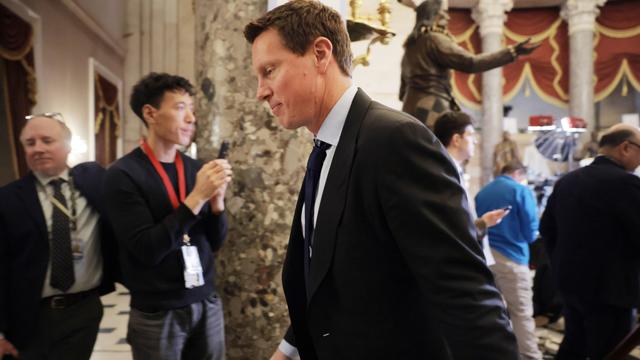
Filing: the DOJ says states suing to block the WBD deal must post a "proper bond" to cover potential damages, backing Paramount's request for a $1.88B bond (Winston Cho/The Hollywood Reporter)
https://www.hollywoodre…
 @jom@social.kontrollapparat.de
2026-08-15 16:45:12
Baby, we can never kill excel. Long live spreadsheets
Source: https://hachyderm.io/@liztai/117097082760512046 (Forked due to the lack of proper alt text for the image in the original toot.)
 @leftsidestory@mstdn.social
2026-07-28 01:29:16
Blurry Figures II 🪬
模糊的形象 II🪬
📷 Yashica 635
🎞️ Ilford FP4 Plus 125 (FF), expired 1994
If you like my work, Support by buying me a coffee or a roll of film from
PayPal https://www.paypal.com/paypalme/ydcdingsite
Wise



 @leftsidestory@mstdn.social
2026-07-29 01:26:55
Non-Blurry Figures 🧿
非-模糊的形象 🧿
📷 Yashica 635
🎞️ Ilford FP4 Plus 125 (FF), expired 1994
If you like my work, Support by buying me a coffee or a roll of film from
PayPal https://www.paypal.com/paypalme/ydcdingsite
Wise