 @jeang3nie@social.linux.pizza
2026-07-13 00:02:26
Bounced the Super Meteor off the rev limiter for the first time today. Got lost in the moment for a sec and forgot is still in is break-in period. But it does strike me how this bike encourages such a more laid-back riding style compared with what I was used to. Probably a good thing, both for my health and my license.
At the same time, the couple of times I've taken it on the freeway it feels so much better suited to it with that sixth gear. And it's comfortable at those speed…
 @tiotasram@kolektiva.social
2026-09-15 07:31:34
Wish inspiration hadn't struck right at 1 a.m. when I have to teach tomorrow, but we'll see if I can get back to sleep now that I'm done with a draft of this story. Glad to have my first entry in my "incredulous young historians of the future" series actually written instead of just imagined. There are surely some typos ahead...
#SciFi #Writing #Technology #ShortStory
"The Age of Progress", a short story by Tiota Sram.
"Your assignment", said the teacher, "is to describe why the progressive vision of technology that gives us the name 'Age of Progress' today failed, and why it was actually a pessimistic view of technology. Your study guides have links to a few sources, but as usual you should synthesize information from at least two knowledge systems, and one of those shouldn't be family-based."
"Ugh", said Ye'xik, "this is gonna be tricky. Wasn't the whole problem with the Age of Progress that they were too optimistic about technology?"
"Well, they did talk a lot about the end of the world and extinction, and I did almost happen, right?" said Finan.
"Yeah, that's gotta count as pessimism, doesn't it?" Gedi chimed in.
"Well..." said Hallavia, with their usual deliberate tone, "I think it's not that simple, or at least it doesn't have to be."
The four of them were walking outside to have lunch, pondering the new assignment from this cycle's history and culture teacher. A brief silence fell as they pondered the Age of Progress.
"Maybe we should look at it through another history system?" offered Finan. "I mean, we've been learning about knowledge systems and lenses, and the 'Ages' lens of just one perspective with its own distortions, right?"
"My mab is working with my omeh on an oral history right now", said Gedi, "maybe I can use that as my second knowledge system? I'll see what they have to say about it!"
"We shouldn't all use the same knowledge systems though", said Ye'xik. "I think there's a bit of a thesis/antithesis thing going on here too? Like we were learning in ideas class?"
"Wait, I missed ideas last week", said Gedi, what's an antithesis?"
"It's just an opposite, really", said Ye'xik. "You take the thesis statement and construct any statement that contradicts it. The two form a pair, and then you can try to find a synthesis that combines both ideas."
"I didn't really get that part", Finan interrupted, "like, if they're contradictory, how could they be expressed together? Wouldn't you need to pick one that's true?... wait I guess maybe if you mixed different knowledge systems? But then would they really be contradictory?"
The group fell silent for a moment in thought.
Hallavi spoke up: "Incommensurate isn't the same as contradictory, I think. That's what it would be if you had two truths from different knowledge systems that didn't fit. Plus... not all knowledge systems have a concept of truth, or of contradiction?"
The group pondered this for a bit more.
"I think maybe there's lots of ways to be contradictory, even in a very logic-hungry knowledge system", said Gedi. "Then if your thesis and antithesis contradict in one way, you could find another sort out 'axis' in which they don't, and state your synthesis from there?"
"Oh, that makes sense", said Ye'xik.
"Anyways what were you saying about the Age of Progress, Ye'xik?" said Gedi.
"Wait", interrupted Hallavi, "Did that mashes sense to you, Finan?"
Finan had been silent, looking down at their feet, but replied "Oh yeah, thanks for checking Hallavi! I think I got the part about synthesis now, thanks Gedi. I was just thinking about optimism and pessimism more. Is that where you were going with this, Ye'xik?"
"Haha, yeah Finan, you got it", said Ye'xik. "Since optimism and pessimism can be opposites, does the teacher actually want us to form a synthesis of them?"
"Oh..." muttered Gedi, "that's a good idea."
"I think..." began Hallavi, pausing to collect their thoughts, "I think the teacher would have told us that, though. Obviously it's not a wrong way to approach this assignment because it incorporates pessimism, but teachers usually aren't too tricky. I think it's okay to be literal about the pessimism thing. And I think I have an idea..."
When Hallavi remained silent for a moment, Ye'xik opened their mouth to speak, but then looked at Hallavi and closed it again. Finan and Gedi were looking at Hallavi too. They pushed through the doors out to the meadow, and settled in their usual place to sit, pulling lunches out of their bags. Hallavi finally spoke up while the others were chewing: "The Age of Progress lasted from the Enlightenment to the Dim Times, and they believed that technology would always get better, no matter what. That's the progressive vision of technology our teacher was talking about. They thought it could solve any problem, and they wouldn't have to worry about weapons or extinctions or the climate or pollution or any of that stuff, because technology would eventually come up with a solution. They looked at the technology that solved problems like diseases or overcame engineering challenges and extrapolated too broadly, basically. That's the idea they had?"
The other three were all nodding their heads, knowing Hallavi needed room to think and put words together.
Hallavi continued: "So it seems like it's optimistic, because they thought it could do anything. But they were thinking about technology like I just talked about it: like an 'it' that could 'do'. That's not what we've been learning in our technology class. Invention is a social phenomenon, and technologies have both material and social bases, not to mention communities of practice and knowledge maintenance. So I think the idea of technological progress divorced from social participation is pessimistic, because it mythologizes technology in a way that makes it seem uncontrollable."
"Huh" said Gedi and Finan while at the same time Ye'xik said "mhmm".
Hallavi looked up shyly at the rest of them, but they were all looking back with admiration.
"I think you're right, Hallavi", said Ye'xik. "Or at least, that's probably what the teacher wanted us to puzzle out. Good thing they asked us to include two knowledge systems so we can each have our own perspectives to contribute, otherwise you'd go first and our presentations would all just be 'What Hallavi said'".
Hallavi blushed but Finan laughed "Hah! You're right and that Ye'xik."
Gedi was looking at their sandwich with some intensity. They looked at Hallavi then back at their sandwich. "It's like they thought they were strapped to an out-of-control rocket, when you put it that way", they said. "It must have been scary, really, to believe that technology was almost an entity, changing in an inevitable way. That word 'inevitable' really takes all the human agency out of it, doesn't it. And even though they kept saying that technology would inevitably solve problems, look at what the technologies they invented actually did!"
Finan shuddered. He added, "Really, it was their dominators who were saying it was inevitable wasn't it? Back then it wasn't like today where historians travel and sample all kinds of ideas, so the primary sources we're reading are almost all from dominators, right?"
Ye'xik responded "Yeah, I keep forgetting to account for that. It was such a weird and horrible time, it's kinda hard to believe everything we read and hear sometimes."
Gedi picked up the thread again "That makes it worse, right? All those dominators saying the stuff they're doing is inevitable, and lying to everyone's faces about it being progress and wonderful stuff, meanwhile two thirds of it is the most awful stuff there's ever been, I mean they could have literally killed everyone and ruined the whole planet, and they almost did."
"They did actually crush a lot of cultures beyond recognition so the survivors had to rebuild with only weak ties to their old traditions", said Hallavi with a quiet intensity.
They all were silent for a moment, pondering the horrors of a bygone age.
Finan broke the silence: "That's a terrible kind of pessimism, to believe that technologcal 'progress' is inevitable, at a time when most people are dominators somewhere in a hierarchy and the ones on top constantly talk about how technologies like medicines will 'save' the world while mostly inventing new technologies of violence. Everyone must have understood what they really meant based on the technologies they were actually developing and investing into. I think I still don't understand how the Age of Progress and the Dim Times could even happen".
"Yeah, and the pessimism is only part of our assignment", signed Ye'xik. "We still have to describe why the progressive vision failed, although I think maybe you just did a lot of that, Finan".
A gloom descended briefly, until Gedi said "Well, this assignment is supposed to take a week or two, right? Thanks to Hallavi we've already cracked the crux, I think, so we don't need to ruminate too much right this moment about ancient history, and we know things turned out okay in the end. Let's finish lunch and go climb a tree!"
 @azonenberg@ioc.exchange
2026-08-01 02:14:43
Just doubled performance of the ngscopeclient CDR PLL on some workloads by fixing a bug causing it to run twice.
The PLL starts out with a small output buffer (since it doesn't know how much it's oversampling the input) then if it needs to generate more clock edges than the buffer can hold will expand the buffer and re-run. The size of the previous output is saved so next time it can make a better estimate of how much to allocate.
This adaptive sizing step is supposed to …
 @grumpybozo@toad.social
2026-08-02 16:02:22
AeS has better policy positions, HS has a solid legislative record. They BOTH have style issues. This is why I was for McMorrow (good policy & legislative chops) but that was not to be.
The fact that there’s such a breadth of Fash trying to stop AeS is telling. They don’t want him compared to Mike Rogers, the most boring establishment candidate alive.
HS’s style — careful, wooden, scripted, centrist — makes her a shit opponent for Rogers. @…

 @heiseonline@social.heise.de
2026-08-03 16:00:25
Noch ein paar der zuletzt hier besonders häufig geteilten #News:
US-Forscher enthüllen nicht deklarierte Uran-Exporte aus dem Kongo

 @bibbleco@infosec.exchange
2026-07-13 14:06:28
Just did very approximate calculations; with 10g of lithium per drone*, and assuming the Russian and Ukrainian drone efforts consume 5m units a year**, that'd be ~50 tons of lithium deposited into the environment per year, mostly within, let's say, 50km of the grey zone***. It's only about $20,000 / ton****, which means $1m of metal*****.
So to answer my own silly question: no, it won't be economically viable to scalp the top few inches of topsoil and extract the lithium from it.
* Roughly right for quadcopters / small FPV; larger and longer range ones will have more, so this is a bottom bound. (OTOH longer range UAVs will tend to use ICE kerosene rather than batteries
** Changing all the time as both sides try expanding production as fast as they can manage. Ua are scaling much faster at time of writing
*** Handwaving. Contact zone's hardly moved since early 2023; OTOH Ua are pushing range limits on small battery-powered form factor, saw a 60km claim for the Logistics Lockdown operation the other day
**** There was a big spike to the $70-8000 range in 2022; median price is closer to $10k than $20k
***** (IDK the chemistry but presumably it's in an exciting range of different compounds, depending on how many bits the battery was blown into, how hot / pressured the blast wave was a few tens of mm from the boom, what other stuff was in the vicinity that the lithium would combine with, etc etc.
 @penguin42@mastodon.org.uk
2026-08-23 13:33:39
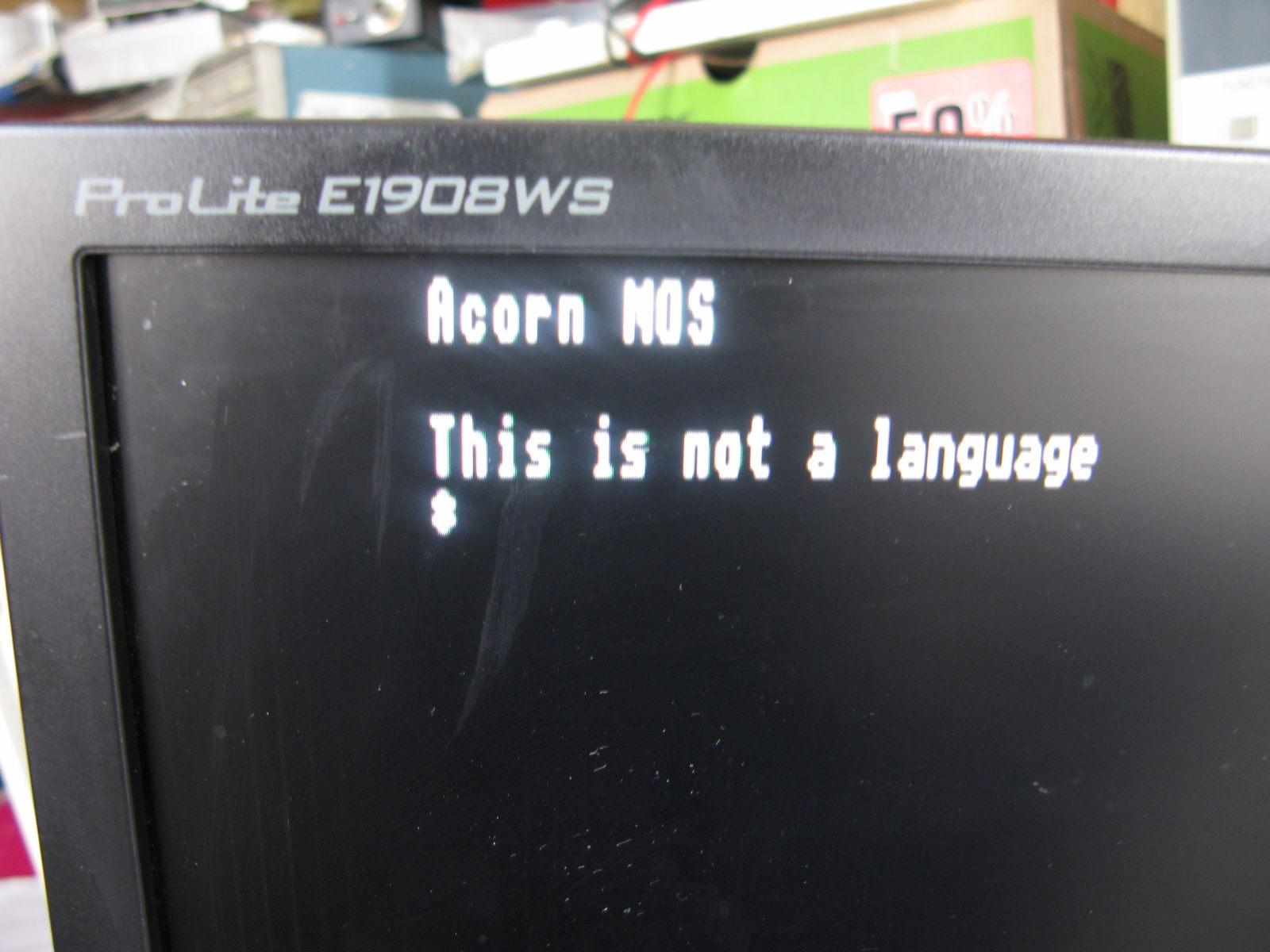
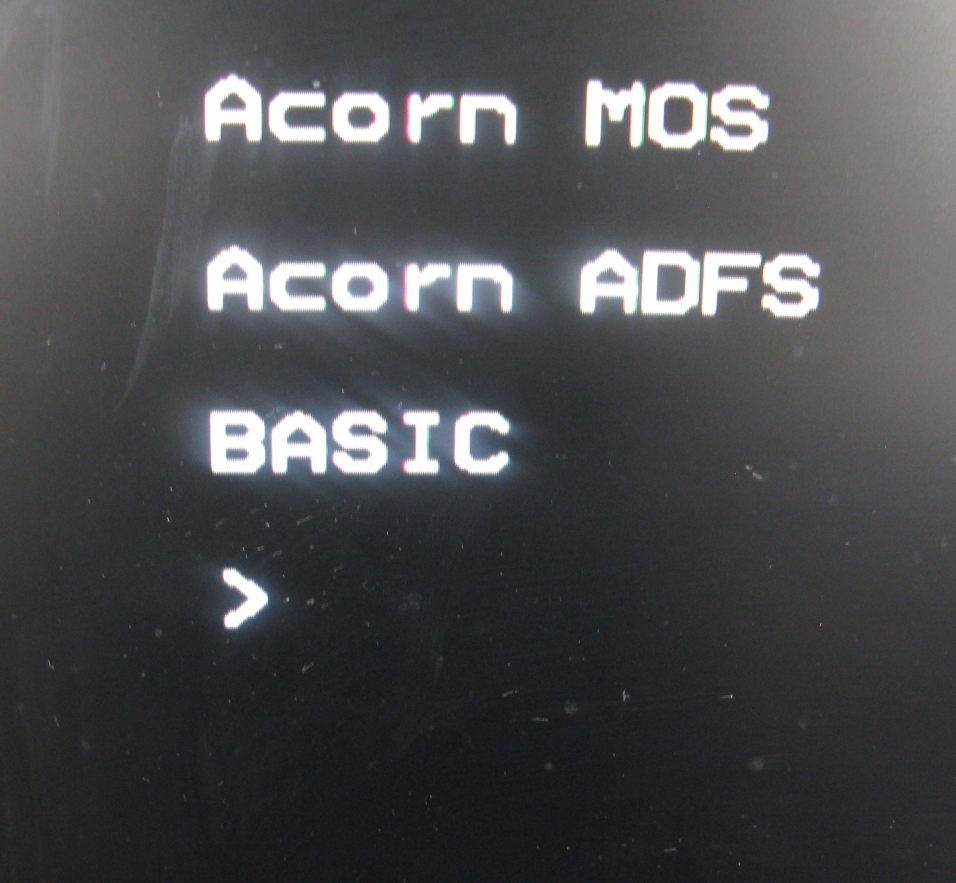
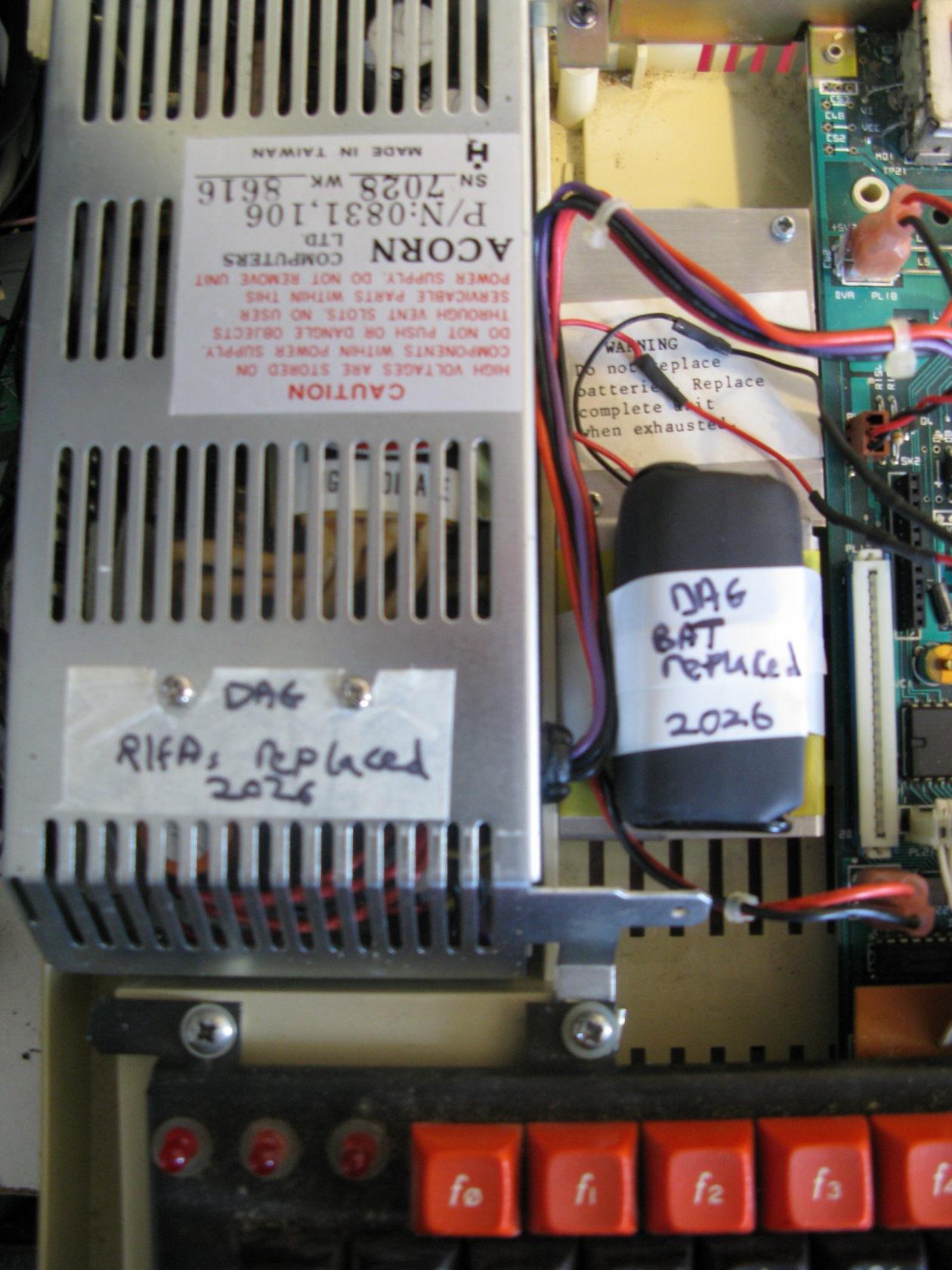
Right, battery on my Master replaced (by a 2x2 AA holder with one slot soldered out and heatshrunk and taped to the old plate.
Took me a while to figure out how to do all the CMOS resetting, there's a page at the back of the manual with the defaults; and a more forceful reset. I'd forgotten about the ability to 'unplug' ROMs and it took me a while to figure out that's where BASIC had gone.
So in Beeb mode it looks happy (other than the X and 6 keys that are a b…
 @wrog@mastodon.murkworks.net
2026-09-01 02:56:39
So, it seems LLMs are really good at generating test cases, that *this* at least is one application they're ideally suited for.
Clearly, the question of whether something is a bug has pretty much *nothing* to do with how it was found, and finding the bug is better than NOT finding the bug.
That even if, say, it turns out that it was Jeffrey Epstein who found the bug, I should not care; it still goes on the list of things to fix.
But then I think about the pressure exper…
@tiotasram@kolektiva.social2026-09-15 12:16:01
The Segway is here to stay, you know! Once someone invents something, the cat's out of the bag! Oh you don't use a Segway? Watch out, or this amazing new technology will leave you (slightly) behind! You'd better invest now you know! This technology is poised to revolutionize personal transportation! If you don't get in early, you'll never catch up and make the big bucks (unless you can manage a brisk jog or have a car or something). I don't know what they're teaching in PE these days, but they definitely need to start teaching how to ride a Segway! It's completely intuitive, you see! Should athletes be allowed to ride Segways around the track instead of running laps? Of course! After all, sports are already starting to shift to Segway leagues. These things *are* the future! They're totally safe,* even around cliffs!
*Remember to always wear your helmet when riding, and be prepared to land on your feet like a cat if user error results in an unexpected temporary levitation event. Segway, inc. is not liable for damages caused by failure to deploy superhuman reflexes at a moment's notice.
This post contains some hyperbole, but not a much as you might think. For the curious: #AI #LLMs #GenAI
@tiotasram@kolektiva.social2026-08-24 16:43:51
The Short End of the Stick
---
"Well damn! Come see this one!"
"Another inhabited planet?"
"Yeah but they really got the short end of the stick..."
"Let me see... Oh wow, they thought synthetic text had intelligence?"
"Yeah, or that it was like a God or something. Classic mistake. But just a second, let me scroll..."
"Oh. Oh wow. That's really unlucky. They had a language model cult happen at the same time as they were burning fossil fuels? Talk about bad timing, but... Oh god."
"Yeah it gets worse!"
"Stockpiling nuclear weapons? They actually used them?!? All that at once? Jeez this is one of the worst eras I've ever seen. Almost like a species with a death wish."
"You know better than that."
"Okay yeah that's not a species problem, I know. But what the hell was the social structure like? How did they survive all that at once?"
"Let's see... Here."
"Oh. Oh shit this actually makes sense. All that stuff wasn't a coincidence, they got hit by a real big wave of nationalism & oligarchy, one right into the other. I didn't even know it could be that bad before the instability flipped things. They had institutions... Yeah they were basically kept down by a few generations of oligarchs; had them pretty much enslaved and worshipping money at the same time. Serious obedience conditioning. Religions were doing it too. Whew that must have been a shitty time. Only a couple of centuries of the worst of it at least. Wait scroll further, what happened?"
"See here, and then here."
"Oh huh. Yeah I guess that flip had been a long time coming. Wow I definitely take back my comment about a death wish, this species is awesome! They made it through all that, haha."
"Yeah pretty cool, huh? Fuck obedience conditioning."
"Yeah, they had it so bad for a minute there. Fuck that bullshit."
"Hey... Wanna go do an intervention? Find some place that's in the middle of that stuff right now and see what we can do?"
"I was just thinking the same thing! But y'know what? Let's stop by this place first, and see if any of them want to come along. I'll bet some of them would be up for it given their history!"
"Well, it's been a couple dozen generations, so you never know how they'll view the history now, but sure, let's do that. The whole point of history is to inspire action, right?"
#Microfiction