 @netzschleuder@social.skewed.de
2025-11-29 23:00:03
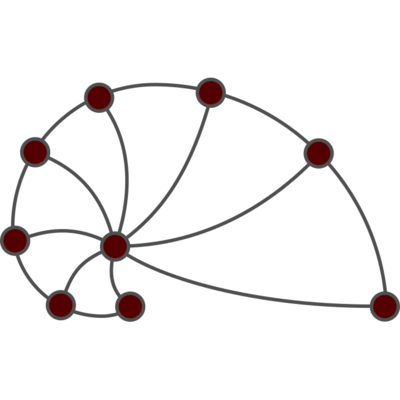
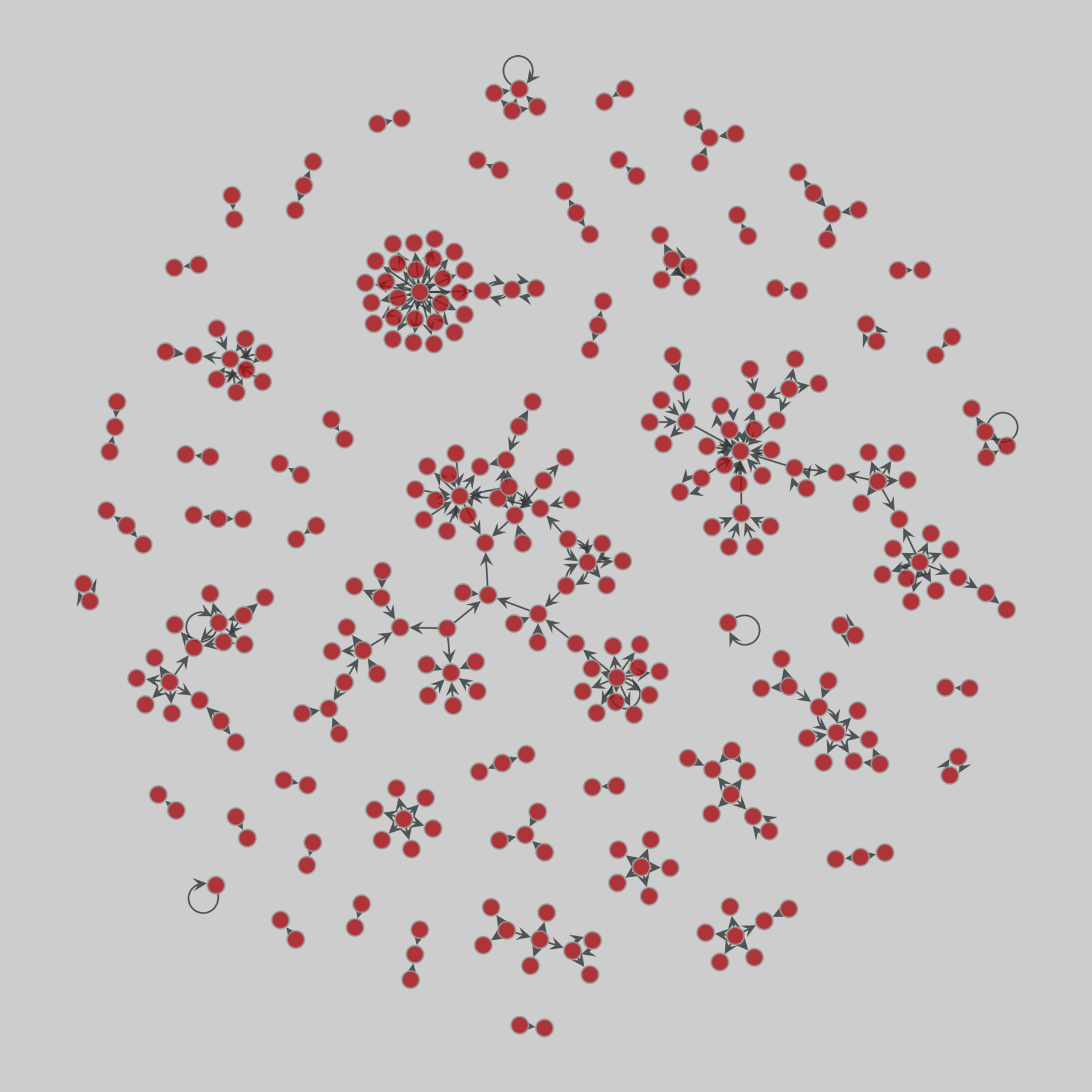
genetic_multiplex: Multiplex genetic interactions (2014)
Multiplex networks representing different types of genetic interactions, for different organisms. Layers represent (i) physical, (ii) association, (iii) co-localization, (iv) direct, and (v) suppressive, (vi) additive or synthetic genetic interaction. Edge direction (i,j) indicates gene i interacting with gene j.
This network has 325 nodes and 322 edges.
Tags: Biological, Gene regulation, Protein interactions, Unweigh…
 @tiotasram@kolektiva.social
2025-10-30 09:09:31
Okay, here's the promised follow-up with more authors I respect who didn't make it onto this list. I won't do deep dives but I'll list at least one work per author:
YA novelists:
- Randi Pink ("Girls Like Us")
- Louisa Onomé ("Twice as Perfect")
- Emery Lee ("Meet Cute Diary")
- Robin Benway ("Far from the Tree")
- Angela Velez ("Lulu and Milagro's Search for Clarity")
Children's book authors:
- Jacqueline Davies ("Bubbles Up")
- Freya Hartas ("Slow Down in the Park")
Novelists:
- Rimma Onoseta ("How You Grow Wings")
Graphic novelists:
- Linda Medley ("Castle Waiting")
- 🖋️Magsalene Visaggio 🖌️Paulina Ganucheau ("Girlmode")
- Ursula Vernon ("Digger")
- SJ Sindu ("Tall Water" w/ Dion MBD)
- Hope Larson ("Be That Way"; "Salt Magic" w/ Rebecca Mock)
- Lily Williams Karen Schneemann ("Go With the Flow")
- Maia Kobabe ("Gender Queer")
- Kay O'Neill ("Tea Dragon Society")
- Marjane Satrapi ("Persepolis")
Mangaka:
- Kaoru Mori ("Young Bride's Stories")
- Ryoko Kui ("Delicious in Dungeon")
- Natsuki Takaya ("Fruits Basket")
Anime writers/directors and/or Japanese light/fantasy/SF novelists:
- Nahoko Uehashi ("Moribito")
- Sayo Yamamoto ("Michiko & Hatchin"; "Yuri!!! On Ice")
- Mari Okada ("Ano Hana: The Flower we Saw That Day"; "Toradora!")
Game designers/programmers:
(Upon review I was pretty remiss in skipping over a few of these people, some of whom I wasn't aware of but most of whom I just didn't remember when writing my short list. Subconscious misogyny in action. Short & Thorson probably would have squeezed out some of the YA authors I included, although I have no real regrets.)
- Junko Kawano ("Suikoden")
- Elizabeth LaPensée ("When Rivers Were Trails")
- Momo Pixel ("Hair Nah")
- Zoë Quinn ("Depression Quest"; narrative designer on "Solar Ash")
- Kellee Santiago ("Cloud"; "Flower")
- Tanya X. Short ("Moon Hunters")
- Kim Swift ("Portal")
- Maddy Thorson ("Celeste")
- Andi McClure @… ("Jumpman")
Note: I haven't included composers or artists here, but there's a deep bench.
Games journalists/steamers:
- Tanya DePass @… (#/INeedDiverseGames; twitch streams)
- Anita Sarkeesian (Feminist Frequency)
Game/play scholars:
- Mary Flanagan ("Critical Play")
- Tracy Fullerton ("Game Design Workshop")
- Brenda Laurel ("Toward the Design of a Computer-Based Interactive Fantasy System")
- Janet Murray ("Hamlet on the Holodeck"l
- Susana Tosca ("A Pragmatics of Links")
- Jichen Zhu ("Agency Play: Dimensions of Agency for Interactive Narrative Design")
- Magy Seif El Nasr ("Design patterns to guide player movement in 3D games")
- Kate Compton ("Causal Creators"; also "Spore")
P.S. upon consideration I've decided not to include any authors who are men in this coda.
There are definitely others who probably deserve to be here that I'm forgetting...
#GsmeDesign #Authors
 @hex@kolektiva.social
2025-10-30 10:05:59
The fracturing of the Dutch far-right, after Wilder's reminded everyone that bigots are bad at compromise, is definitely a relief. Dutch folks I've talked to definitely see D66 as progressive, <strike>so there's no question this is a hard turn to the left (even if it's not a total flip to the far-left)</strike> a lot of folks don't agree. I'm going to let the comments speak rather than editorialize myself..
While this is a useful example of how a democracy can be far more resilient to fascism than the US, that is, perhaps, not the most interesting thing about Dutch politics. The most interesting thing is something Dutch folks take for granted and never think of as such: there are two "governments."
The election was for the Tweede Kamer. This is a house of representatives. The Dutch use proportional representation, so people can (more or less) vote for the parties they actually want. Parties <strike>rarely</strike> never actually get a ruling majority, so they have to form coalition governments. This forces compromise, which is something Wilders was extremely bad at. He was actually responsible for collapsing the coalition his party put together, which triggered this election... and a massive loss of seats for his party.
Dutch folks do still vote strategically, since a larger party has an easier time building the governing coalition and the PM tends to come from the largest party. This will likely be D66, which is really good for the EU. D66 has a pretty radical plan to solve the housing crisis, and it will be really interesting to see if they can pull it off. But that's not the government I want to talk about right now.
In the Netherlands, failure to control water can destroy entire towns. A good chunk of the country is below sea level. Both floods and land reclamation have been critical parts of Dutch history. So in the 1200's or so, the Dutch realized that some things are too important to mix with normal politics.
You see, if there's an incompetent government that isn't able to actually *do* anything (see Dick Schoof and the PVV/VVD/NSC/BBB coalition) you don't want your dikes to collapse and poulders to flood. So the Dutch created a parallel "government" that exists only to manage water: waterschap or heemraadschap (roughly "Water Board" in English). These are regional bureaucracies that exist only to manage water. They exist completely outside the thing we usually talk about as a "government" but they have some of the same properties as a government. They can, for example, levy taxes. The central government contributes funds to them, but lacks authority over them. Water boards are democratically elected and can operate more-or-less independent of the central government.
Controlling water is a common problem, so water boards were created to fulfill the role of commons management. Meanwhile, so many other things in politics run into the very same "Tragedy of the Commons" problems. The right wing solution to commons management is to let corporations ruin everything. The left-state solution is to move everything into the government so it can be undermined and destroyed by the right. The Dutch solution to this specific problem has been to move commons management out of the domain of the central government into something else.
And when I say "government" here, I'm speaking more to the liberal definition of the term than to an anarchist definition. A democratically controlled authority that facilitates resource management lacks the capacity for coercive violence that anarchists define as "government." (Though I assume they might leverage police or something if folks refuse to pay their taxes, but I can't imagine anyone choosing not to.)
As the US federal government destroys the social fabric of the US, as Trump guts programs critical to people's survival, it might be worth thinking about this model. These authorities weren't created by any central authority, they evolved from the people. Nothing stops Americans from building similar institutions that are both democratic and outside of the authority of a government that could choose to defund and abolish them... nothing but the realization that yes, you actually can.
#USPol #NLPol
 @midtsveen@social.linux.pizza
2025-12-29 23:05:46
I support everything expressed here and stand fully behind it.
#Anarchism
 @grumpybozo@toad.social
2025-12-29 19:28:41
 @azonenberg@ioc.exchange
2025-10-29 00:12:58
I finally decided the series-or-single-video question for the PIC12F683 project.
It's getting *way* too long, so I'm going to make it a series. There will be a bunch of components and I'm going to try and release the segments I've already filmed and edited in the next day or two as soon as I get intros and conclusions made for each.
Then move on to circuit analysis of the flash and EEPROM.
 @hynek@mastodon.social
2025-09-30 09:01:37
attrs will have a way to introspect the EFFECTIVE class build parameters in the next version. I swear to Cthulhu I thought this PR is gonna kill me (there's been A LOT more private hence and forth in the background), but I'm happy how it turned out: https://github.com/python-attrs/attrs/pu…
 @tiotasram@kolektiva.social
2025-11-29 11:40:52
Just finished "It's Lonely at the Center of the Earth" by Zoe Thorogood.
CW: Frank/graphic discussion of suicide and depression (not in this post but in the book).
It feels a bit wrong to simply give it my review here as I would another graphic memoir, because it's much more personal and less consensual than the usual. It feels less like Thorogood has invited us into her life than like she was forced to put her life on display in order to survive, and while I selfishly like to read into the book that she benefited in some way from the process, she's honest about how tenuous and sometimes false that claim can be. Knowing what I've learned from this book about Thorogood's life and demons, I don't want her to feel the mortification of being perceived by me, and so perhaps the best thing I could do is to simply unread the book and pull it back out of my memories.
I did not find Thorogood's life relatable, nor pitiable (although my instinct bends in that direction), but instead sacred and unknowable. I suspect that her writing and drawing has helped others in similar circumstances, but she leaves me with no illusion that this fact brings her any form of peace or joy. I wonder what she would feel reading "Lab Girl" or "The Deep Dark," but she has been honest enough to convey that such speculation on my part is a bit intrusive.
I guess the one other thing I have to say: Zoe Thorogood has through artistic perseverance developed an awe-inspiring mastery of the comic medium, from panel composition, through to page layout and writing. This book wields both Truth and Beauty.
#AmReading #ReadingNow
@netzschleuder@social.skewed.de2025-12-28 23:00:04
dom: Animal dominance archive (2022)
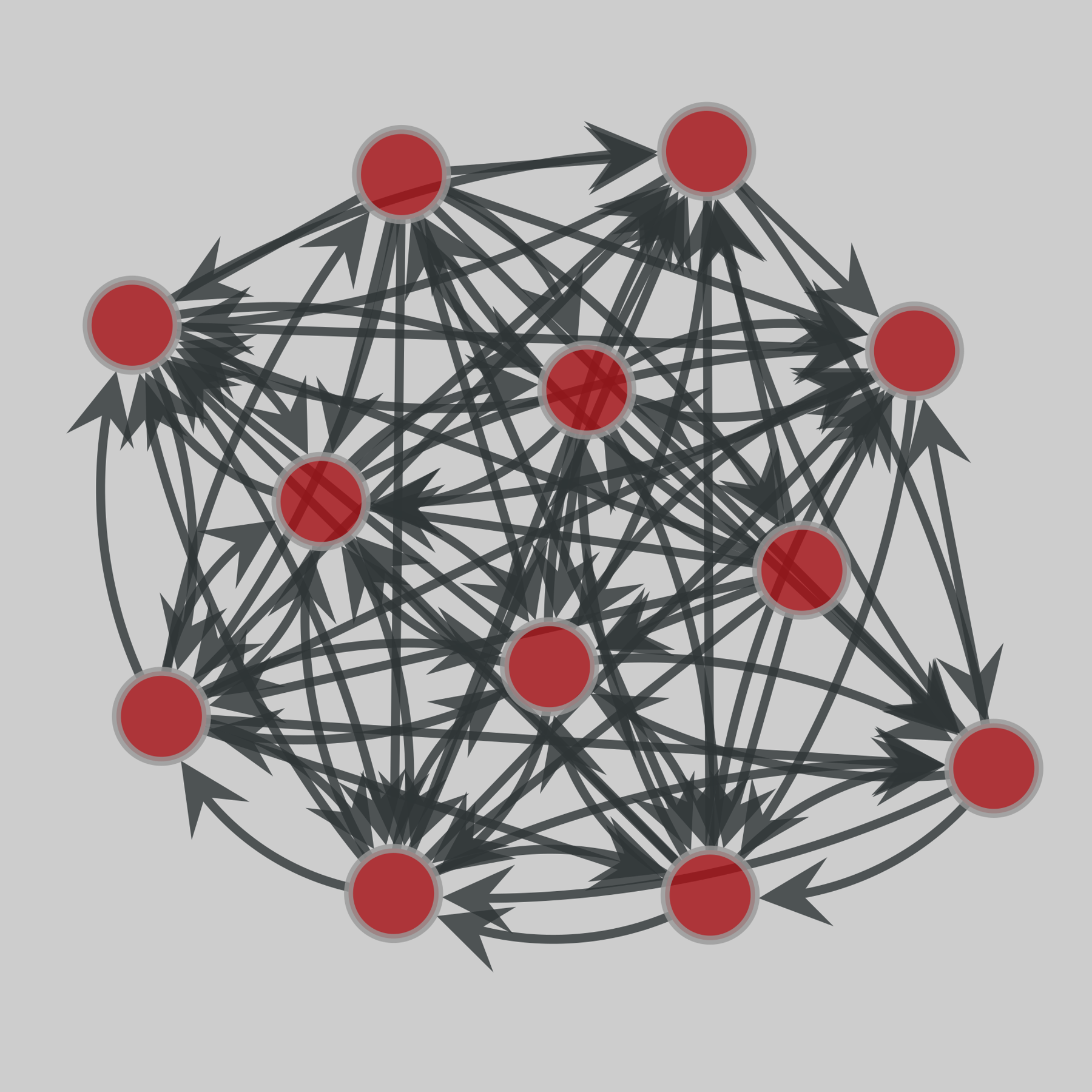
Animal dominance interaction data published over a century of research. The archive contains 434 agonistic interaction datasets, totaling over 241,000 interactions. A directed edge (i,j) corresponds to an antagonist interaction between i (winner) and j (loser). If a 'weight' edge property map exists, it counts the number of such interactions.
This network has 12 nodes and 91 edges.
Tags: Social, Animal, Weighted
 @midtsveen@social.linux.pizza
2025-12-30 14:33:44
As an anarcho-syndicalist, I can’t recommend the IWA-AIT web magazine enough.
The more I read, the more I yearn, and I try to educate myself on the struggles, the movements, the splits and reorganizations, and the lessons from our history.
It’s giving me a stronger sense of what we stand for and where we’re going. It feels like the best kind of self-education, a gift to start the new year.