 @fanf@mendeddrum.org
2026-10-18 08:42:02
from my link log —
fast_template: really easy blogging with GitHub Pages.
https://www.fast.ai/2020/01/16/fast_template/
saved 2020-01-18 https://…
@fanf@mendeddrum.orgfrom my link log —
fast_template: really easy blogging with GitHub Pages.
https://www.fast.ai/2020/01/16/fast_template/
saved 2020-01-18 https://…
 @stsquad@mastodon.org.uk
This worked surprisingly well for generating a cutout template based on a picture from the manual and some basic measurements. I was able to download the final #scad file to render locally before mashing it's negative into a #gridfinity base:
@fanf@mendeddrum.orgfrom my link log —
fast_template: really easy blogging with GitHub Pages.
https://www.fast.ai/2020/01/16/fast_template/
saved 2020-01-18 https://…
 @Schrank@phpc.social
A colleague once wrote {% break %} in a Shopware template and I called foul in code review — except it worked. Turns out Shopware quietly teaches Twig a pile of PHP tricks, everywhere, and it's documented for exactly one edge case that isn't this one.
http://wink…
 @nobodyinperson@fosstodon.org
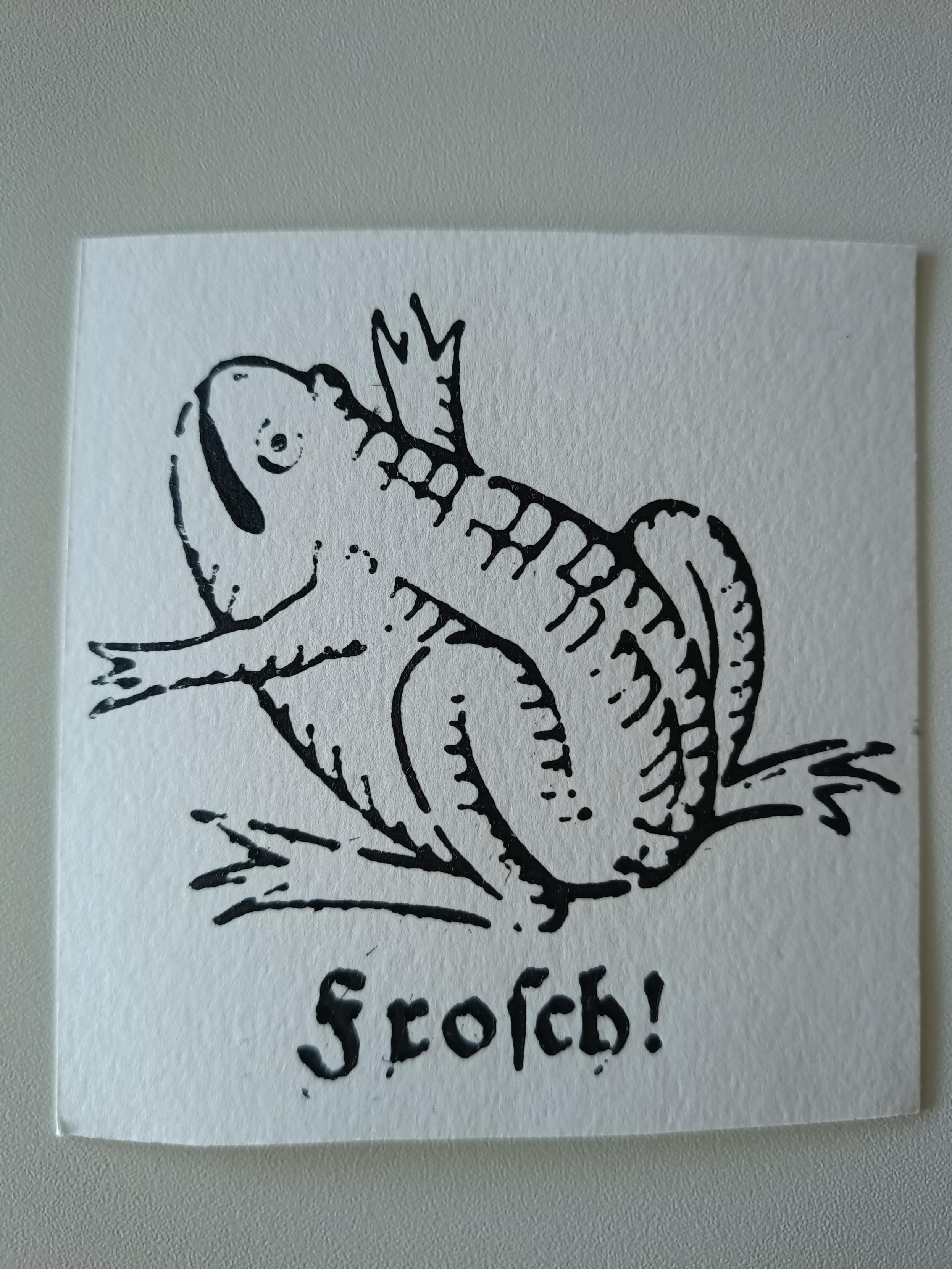
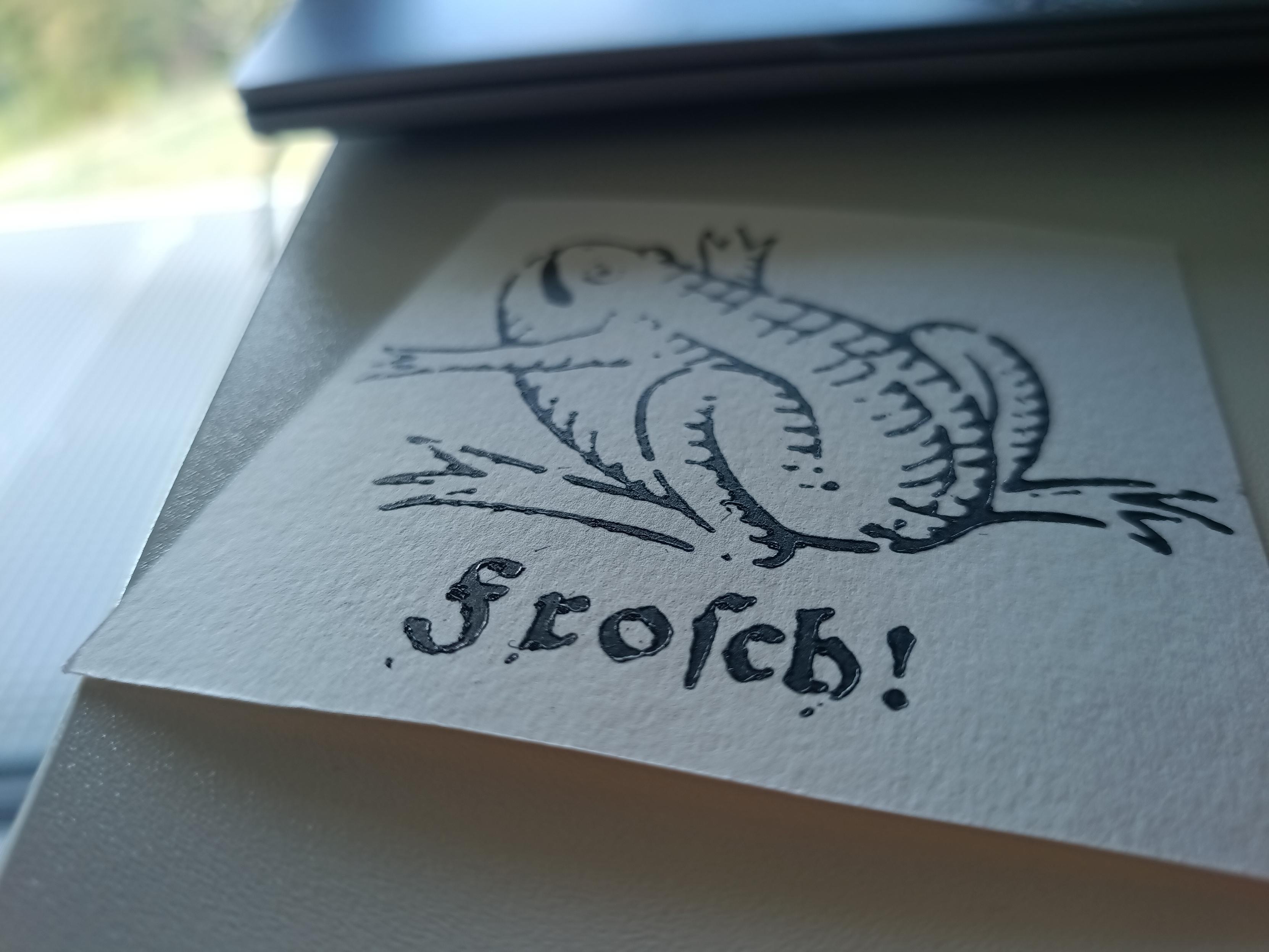
My colleague has built himself a press from wood, dowels, glue and two aluminum plates. The press has a lever you can sit on to exert the pressure onto a 3D printed inked template. This is one of his first results and I love it! 🤩
[Yes, at first I also read the word as "Storch!" (stork) 😅]
#frog #3dPrinting
 @philip@mastodon.mallegolhansen.com
@… As a general policy template that sounds good, for a specific implementation of it, I’m torn on:
Should you be a bit more clear about how to “talk to the maintainer who rejected your contribution”?
On one hand, if it’s an honest mistake, it’s frustrating not to know how or where to engage. On the other, specifying would just give more ammunition to…
 @sketchnotesAG@norden.social
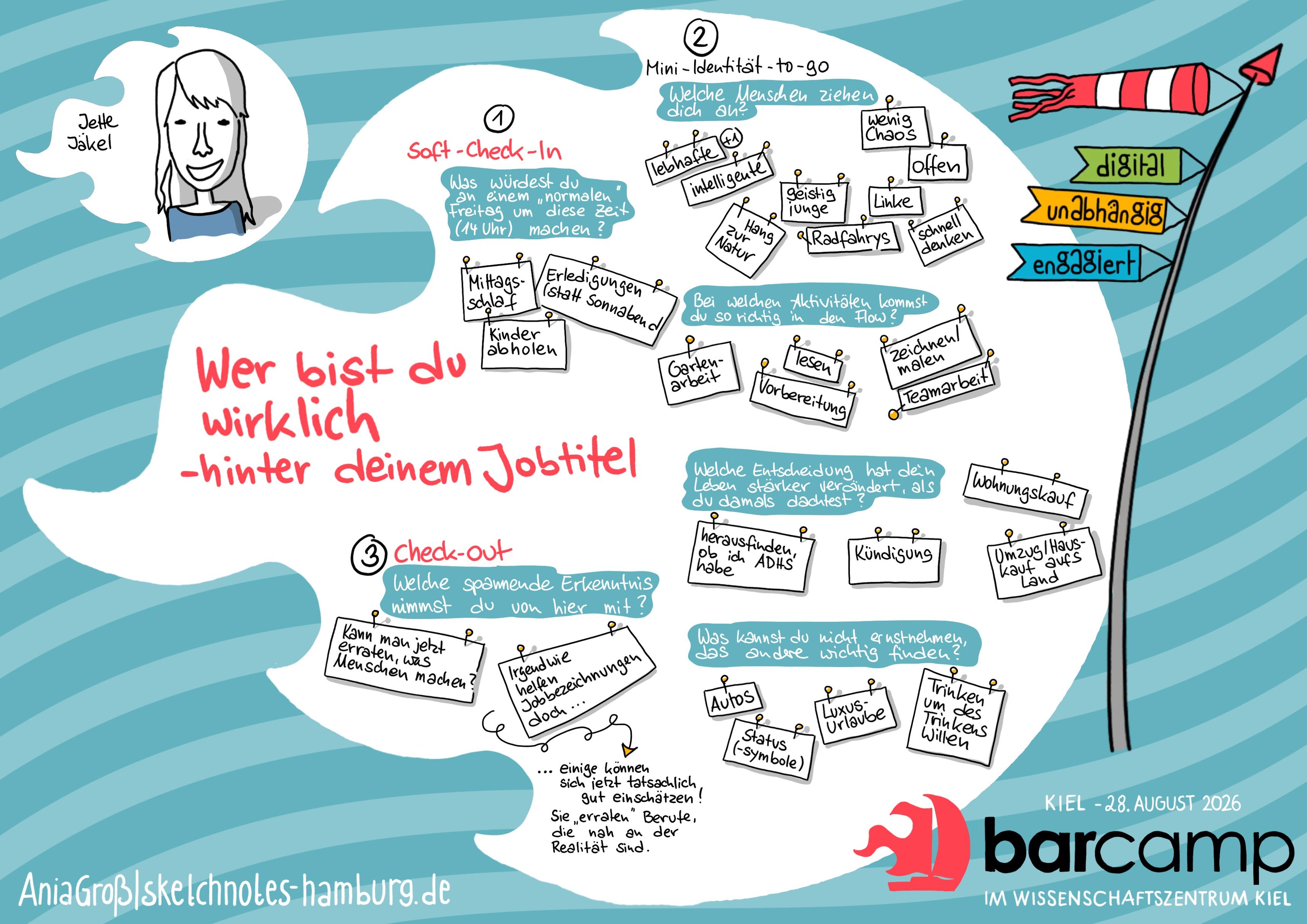
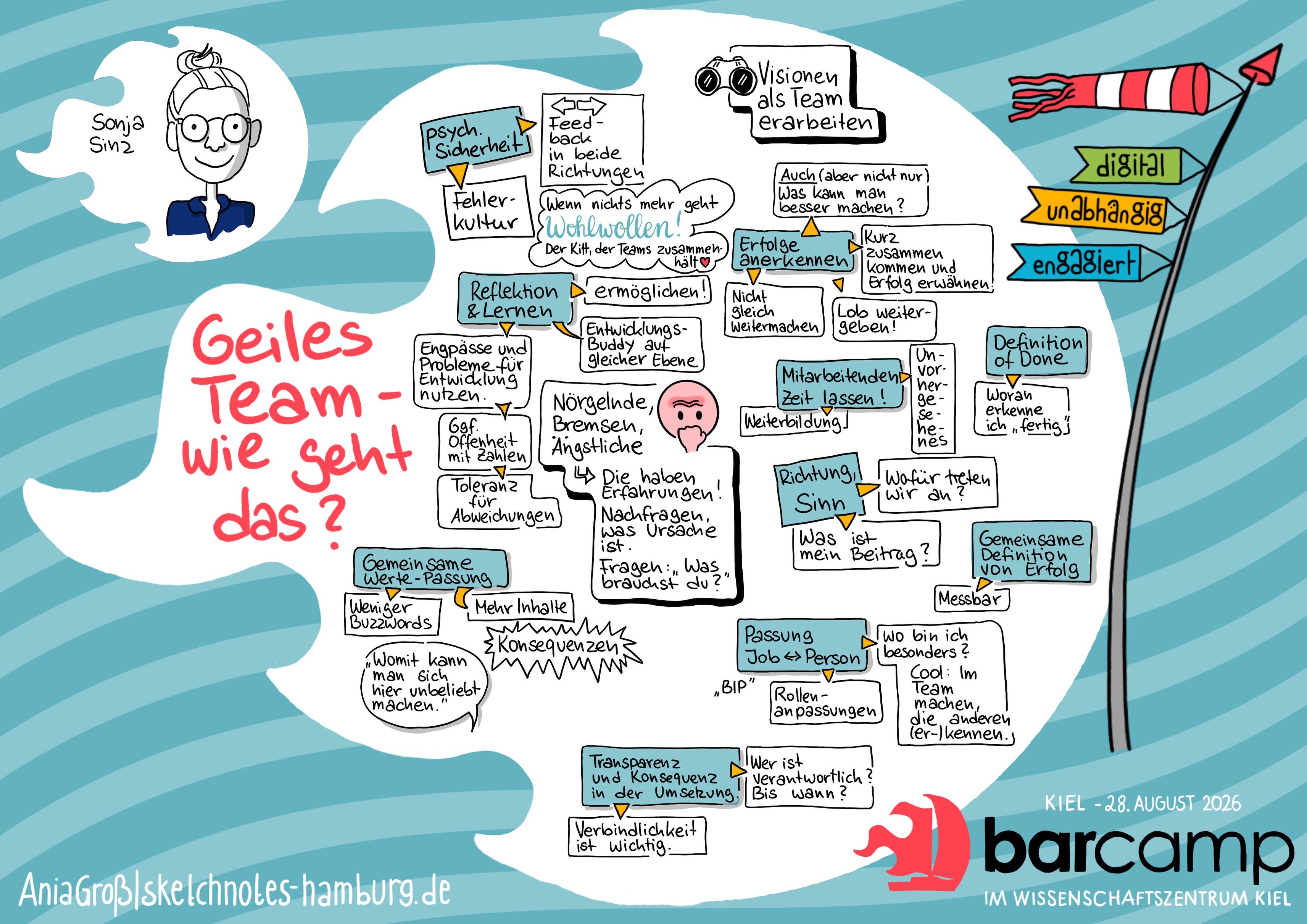
Letzten Freitag gabs wieder das Barcamp Kiel, #BCKI26.
Diesmal hatte ich viel mehr begeisterte TN im Workshop als im letzten Jahr (keine Hypnose-Session parallel 😉 ).
Einen wertvollen Tipp von @… hab ich abseits vom Schufa-Thema noch bekommen.
Wenn…
 @SketchnotesAG@norden.social
Letzten Freitag gabs wieder das Barcamp Kiel, #BCKI26.
Diesmal hatte ich viel mehr begeisterte TN im Workshop als im letzten Jahr (keine Hypnose-Session parallel 😉 ).
Einen wertvollen Tipp von @… hab ich abseits vom Schufa-Thema noch bekommen.
Wenn…
 @cdarwin@c.im
With elections scheduled across Europe next year,
the striking success of the Alternative for Germany, could be a harbinger of further far-right victories,
according to analysts,
as well as a template for how they can be engineered.
Its populist, anti-immigrant message echoes those of nationalist leaders in Britain, France, Italy and Spain,
all countries where voters harbor many of the same grievances as those in Germany.
French voters will elect a new pr…
@Schrank@phpc.socialShopware 6: "I need this variable in every storefront template" — and every solution you've seen for it is worse than it needs to be: Twig extensions, decorated page loaders, header-subscriber hacks. Shopware's own core uses one clean mechanism for exactly this, and it's never mentioned in the docs.
 @michabbb@social.vivaldi.net
🧬 Generics: bidirectional type narrowing analyses code around new Collection(...) multiple times and infers the template type from how the object is used. Scalars are no longer generalized (1 stays 1, not int). Closes 17 issues at a 1-3% performance cost. Funded by the #SovereignTechFund
 @toxi@mastodon.thi.ng
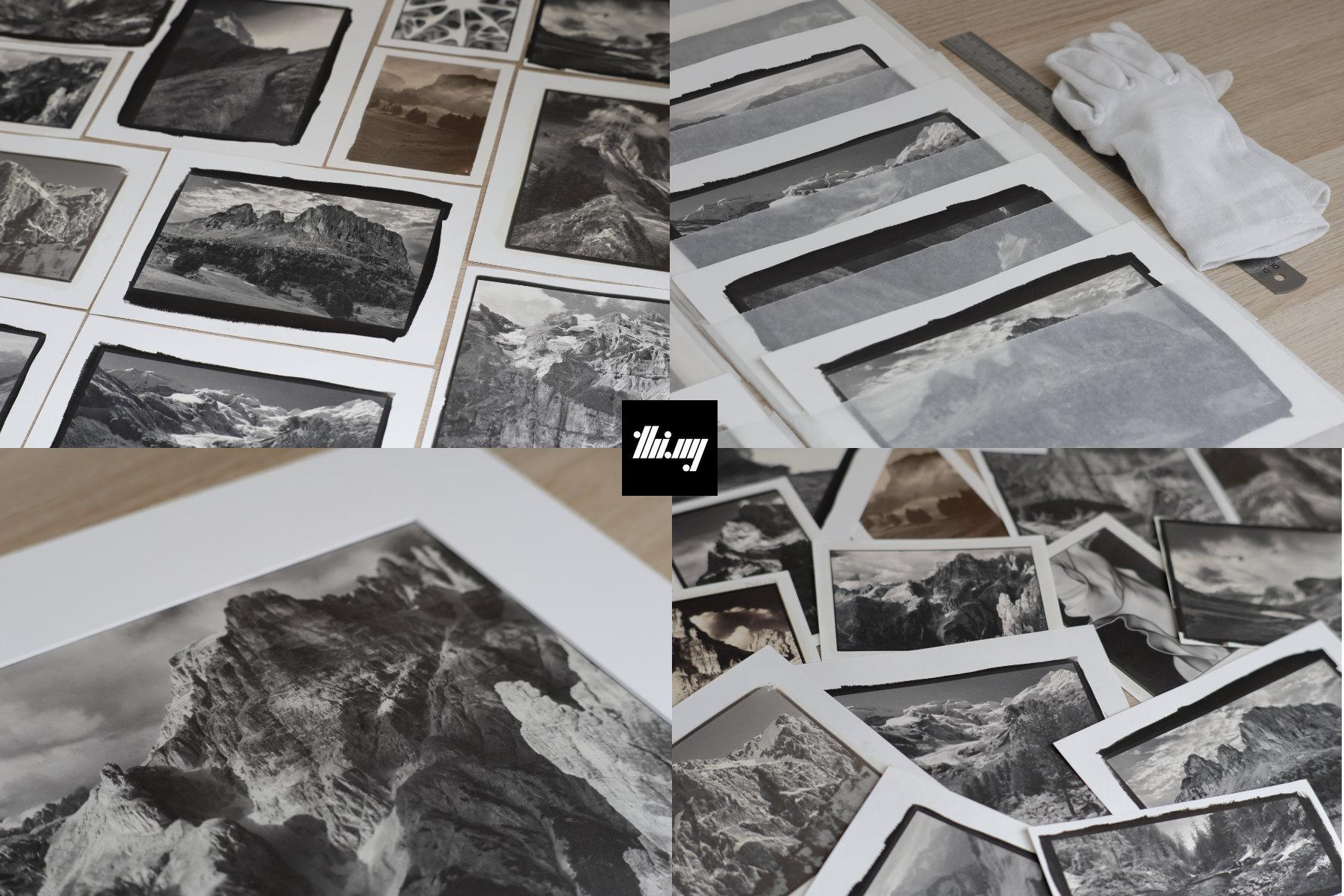
A tiny sampling of images from this weekend's photo shoot for my upcoming online shop. The majority of work was actually about creating/staging and taking photos of template setups of different frames and mattes/passepartouts (not shown here, and instead of using LLMs to generate fake interiors).
#Photography
 @fanf@mendeddrum.org
from my link log —
Mangling dependent parameter types in C , or, what happened to std::default_order.
https://quuxplusone.github.io/blog/2019/08/08/why-default-order-failed/
saved 2019-09-04
 @mxp@mastodon.acm.org @mxp@mastodon.acm.org
 @grist@fosstodon.org
You've vibe-coded an app, but can it become a template? With Grist, it's a single click. https://www.getgrist.com/blog/why-is-grist-an-ideal-vibe-coding-platform-its-file-format/
 @shochdoerfer@phpc.social
Missed my talk on #DDEV & #FrankenPHP in Lille last week? 🤔
No worries! I wanted to follow up on a FrankenPHP feature that I think deserves more attention: Hot Reload.
This brings JavaScript's Hot Module Replacement (HMR) to PHP: Change a Twig template or PHP class, save the file, and s…
 @Kingu@sakurajima.moe
I have tried in the past to use AI to have a picture of my RPG character but always failed miserably. Never got an image that was not a eight fingered sloppy mess that I would never show other playersw and even less identify to!
But I tried again for this new campaign I am joining. and the result is not that bad.
I used a real person as a template so it's also a deep fake :-)
 @toxi@mastodon.thi.ng
How to spot a psychopath
"Mitchell built a template of 20 attributes, divided into four clusters, and 25 tactics that would identify a high-functioning persistent predatory personality type. Cluster one includes a need for control; a grandiose sense of self; pathological inner response to challenge; vengefulness; refusal to compromise. Cluster two includes being predatory or exploitative; sadistic and cruel; having a low regard for laws, agreements, social and moral codes; no boundarie…
 @tomkalei@machteburch.social
My first attempt at a template rejection message for #AI generated papers where the introduction and text are mostly unedited with typical OK sounding but essentially meaningless phrases. "Undigested results" submitted straight to the journal as @… would maybe say.
Still very uneasy about all editorial decisions in this new time...
 @toxi@mastodon.thi.ng
Some incredible shots in this year's International Aerial Photographer contest:
https://www.internationalaerialphotographer.com/
Awards book (preliminary):
 @saraislet@infosec.exchange
More importantly, I wanted to make sure that Cloud Glider *continued* operating as expected, and that's the part that became increasingly overengineered
It started with this: well, we want to make sure that the propagation launch template used by the glider daemon hasn't mutated, right? So we should bundle that and pin a SHA for the script and AMI, and trigger EmergencyHold if they don't match
But if you give a mouse a cookie, they'll also want to check that the glider daemon itself hasn't mutated, so we'll need to tarball the glider daemon and pin a SHA for that too
 @arXiv_csPL_bot@mastoxiv.page
Generalized Constraint Projection: Four-Dimensional Type Inference for Dynamic Languages
Qunhui Zhang
https://arxiv.org/abs/2607.19693 https://arxiv.org/pdf/2607.19693 https://arxiv.org/html/2607.19693
arXiv:2607.19693v1 Announce Type: new
Abstract: Type inference for dynamically typed languages must reconcile four distinct sources of evidence for function parameters: internal assignments, explicit declarations, contextual requirements, and structural operations. Existing systems often merge these sources into one constraint set, causing spurious conflicts or requiring redundant annotations. We present Generalized Constraint Projection (GCP), a zero-annotation inference framework that stores the four sources in separate monotone slots on a stable definition-time template and checks each call in a fresh projection session. Ordinary calls verify concrete arguments and specialize return types without modifying the template, while currying produces residual projected functions. GCP uses Outline Equational Matching (OEM), a structural compatibility preorder with an open bidirectional delegation protocol, and future this, a receiver-preserving extension for subtype-refining fluent APIs. On the strict success fragment of a finite-height type preorder, we prove monotonicity, local and global convergence in $O(Nh_T)$ effective updates, conditional projection-obligation soundness, projection termination, multi-module convergence, and order independence under fair monotone iteration. For the pure, recursion-free core Outline0, we additionally prove big-step evaluation definedness, type preservation, runtime receiver retention, and projection-evaluation coherence. We instantiate GCP in the Outline dynamic language as a typed substrate for ontology worlds and apply it to unannotated Python source to recover PEP 484 annotations for downstream compilation.
toXiv_bot_toot
 @mgorny@social.treehouse.systems
 @arXiv_physicsmedph_bot@mastoxiv.page
Portable surrogate-free 4D MRI from standard fast multi-slice 2D MRI via implicit neural representations
Muheng Li, Xinyang Wu, Xia Li, Orso Pusterla, Philippe C. Cattin, Sairos Safai, Antony J. Lomax, Ye Zhang
https://arxiv.org/abs/2607.17906 https://arxiv.org/pdf/2607.17906 https://arxiv.org/html/2607.17906
arXiv:2607.17906v1 Announce Type: new
Abstract: Four-dimensional MRI (4D MRI) characterizes respiratory organ motion, yet existing reconstruction pipelines are tightly coupled to specific acquisition platforms (e.g., non-Cartesian trajectories with self-gating, vendor-specific navigators, or external respiratory hardware), limiting broad adoption across diverse clinical and research settings, including low-field, open-bore, and non-supine imaging. We present SIMPLE-4D (Surrogate-free, IMplicit, PortabLE 4D MRI), a software-first portable workflow that operates entirely on reconstructed slices from standard fast multi-slice 2D MRI and requires no pulse-sequence modification, no non-Cartesian trajectory, no navigator, and no external hardware. SIMPLE-4D combines an acquisition-agnostic front end consuming standard 2D protocols, a surrogate-free variational motion encoder that extracts a compact motion code directly from each 2D slice, and a physics-aware continuous spatio-temporal reconstruction based on a hash-encoded implicit neural representation (INR) with a SIREN deformation network producing bidirectional cycle-consistent DVFs and motion-dependent Gauss-Legendre thick-slice quadrature. Bidirectionality yields a complete inter-frame motion model by composition, supporting downstream tasks such as dose accumulation without retraining. We validate the identical pipeline on two contrasting datasets: a 1.5 T clinical bSSFP dataset (5 volunteers, 3 sessions each) and a 0.5 T open-bore HASTE dataset (5 volunteers, supine and upright). To our knowledge, this is the first per-frame 4D volumetric respiratory MRI reconstruction on a weight-bearing upright open-bore low-field scanner from reconstructed 2D Cartesian slices alone. On low-field data the INR template additionally acts as an implicit denoiser, yielding 132% SNR. Systematic ablations isolate each component's contribution.
toXiv_bot_toot
@arXiv_csPL_bot@mastoxiv.pageWeakly Non-Negative Supermartingales for Omega-Regular Verification
Toru Takisaka, Hongjie Qing, Libo Zhang
https://arxiv.org/abs/2607.17798 https://arxiv.org/pdf/2607.17798 https://arxiv.org/html/2607.17798
arXiv:2607.17798v1 Announce Type: new
Abstract: Martingale-based methods are central to probabilistic program verification, but strong global non-negativity requirements can exclude simple certificates from tractable template classes. Relaxing this requirement enlarges the search space for automated synthesis, but naive relaxations are unsound in the probabilistic setting. We introduce lazy Streett supermartingales and their lexicographic extension, showing that weak non-negativity can nevertheless be used soundly to certify almost-sure satisfaction of $\omega$-regular properties with polynomial templates under a broad class of sampling distributions, including all bounded-support distributions. This extends prior weakly non-negative methods from termination to general $\omega$-regular verification. We further give a compositional account of lexicographic certificates in terms of one-dimensional ones. Experiments on 170 polynomial probabilistic-program benchmarks show increases of 20.0-23.5 percentage points in verification success over the strongly non-negative baseline.
toXiv_bot_toot