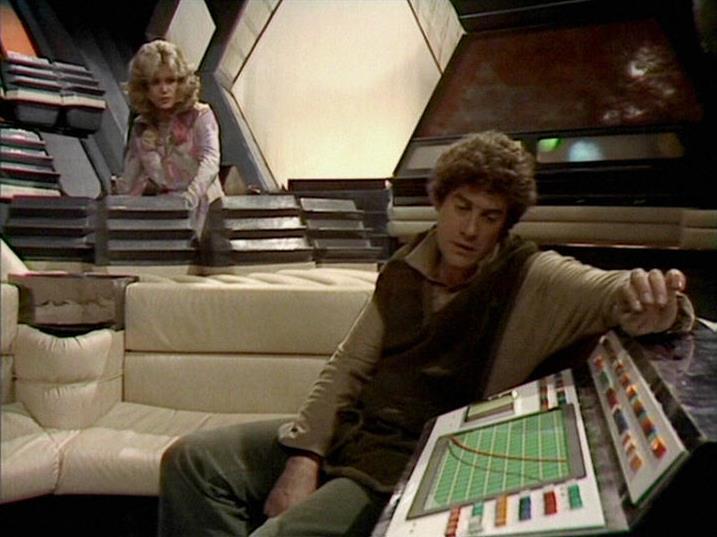
Series A, Episode 04 - Time Squad
BLAKE: How long has it been registering?
JENNA: Couple of minutes. Signal's getting stronger.
BLAKE: Zen, visual detector scan and computer analysis on grid one one five, please.
https://blake.torpidity.net/m/104/48 B7B2
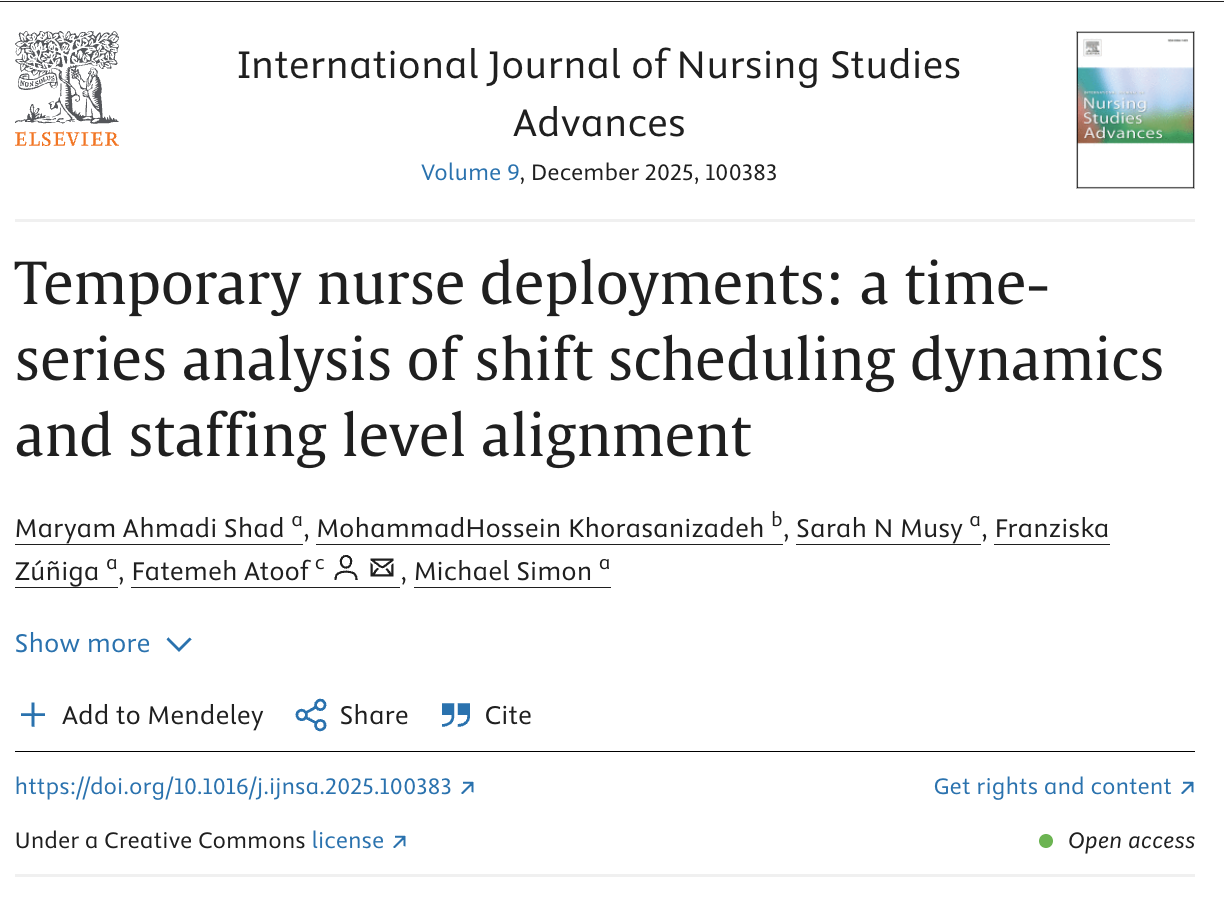
Warum und wie setzen #Spitäler #Temporärkräfte ein? 🏨🤔
In Zusammenarbeit mit dem TAILR-Team im Iran haben wir unsere Analyse dazu in IJNS Advances veröffentlicht. 🥳🤓
Was haben wir dabei gelernt?👇
💡 Temporärkräfte und Pflegehelfer wurden in 12,…
Modeling, Segmenting and Statistics of Transient Spindles via Two-Dimensional Ornstein-Uhlenbeck Dynamics
C. Sun, D. Fettahoglu, D. Holcman
https://arxiv.org/abs/2512.10844 https://arxiv.org/pdf/2512.10844 https://arxiv.org/html/2512.10844
arXiv:2512.10844v1 Announce Type: new
Abstract: We develop here a stochastic framework for modeling and segmenting transient spindle- like oscillatory bursts in electroencephalogram (EEG) signals. At the modeling level, individ- ual spindles are represented as path realizations of a two-dimensional Ornstein{Uhlenbeck (OU) process with a stable focus, providing a low-dimensional stochastic dynamical sys- tem whose trajectories reproduce key morphological features of spindles, including their characteristic rise{decay amplitude envelopes. On the signal processing side, we propose a segmentation procedure based on Empirical Mode Decomposition (EMD) combined with the detection of a central extremum, which isolates single spindle events and yields a collection of oscillatory atoms. This construction enables a systematic statistical analysis of spindle features: we derive empirical laws for the distributions of amplitudes, inter-spindle intervals, and rise/decay durations, and show that these exhibit exponential tails consistent with the underlying OU dynamics. We further extend the model to a pair of weakly coupled OU processes with distinct natural frequencies, generating a stochastic mixture of slow, fast, and mixed spindles in random temporal order. The resulting framework provides a data- driven framework for the analysis of transient oscillations in EEG and, more generally, in nonstationary time series.
toXiv_bot_toot
 @blakes7bot@mas.torpidity.net