 @primonatura@mstdn.social
2026-06-23 18:00:30
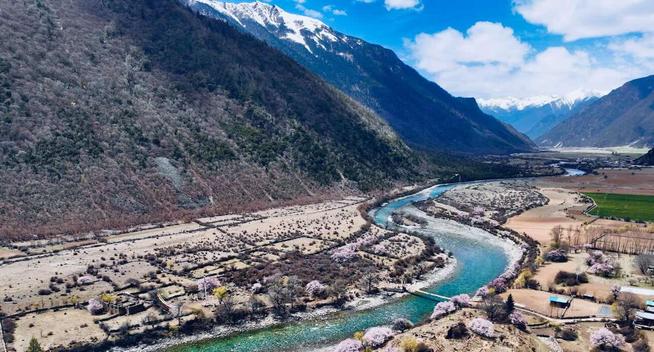
"Thawing Permafrost Not Only Emits CO2, It Absorbs it Too, Shows Landmark Study"
#Emissions #Climate #ClimateChange
 @arXiv_csCR_bot@mastoxiv.page
2026-07-24 07:36:29
Deepfake News Detection: A Multimodal Framework Integrating LipNet, DeepSpeech and ResNET for Enhanced Audio-Visual Analysis
Ameena Khan, Muhammad Ahsan Aziz, Muhammad Junaid Asif, Naeem Akhter, Rana Fayyaz Ahmad
https://arxiv.org/abs/2607.20579 https://arxiv.org/pdf/2607.20579 https://arxiv.org/html/2607.20579
arXiv:2607.20579v1 Announce Type: new
Abstract: Deepfake news refers to AI-generated (or AI ma-nipulated) multimedia content intentionally generated to deceive audiences by manipulating the facial expressions, or speech while maintaining the realistic appearance. The rapid progress of generative AI has made the synthesis of highly realistic fake videos and cloned voices widely accessible, posing a serious threat to the authenticity of digital news media. This paper presents a multi-modal framework that discerns the authenticity of video content by jointly exploiting audio and visual cues, thereby addressing the challenge of detecting the deepfake videos. We proposed a framework that involves features extraction from lip movements, audio content and video frames. Lip movements and speech content are encoded using the LipNet and DeepSpeech2 models, while facial features are extracted by leveraging the use of BlazeFace and represented with ResNet18. The extracted feature vectors are concatenated into a holistic video representation and classified with an ensemble of machine learning and deep learning models, including Random Forest (RF), Multi-layer Perceptron (MLP) and Long Short-Term Memory (LSTM) networks. Exten-sive experiments performed on the FakeAVCeleb dataset shows that the proposed approach attains an accuracy of 94% using augmented audio features, outperforming a state-of-the-art multi-modal ensemble baseline. The results confirm the robustness and practical potential of the proposed framework for deepfake news detection.
toXiv_bot_toot
 @arXiv_statCO_bot@mastoxiv.page
2026-08-07 07:58:56
Learning Latent Memory States from Longitudinal Athlete Monitoring Data
Dae-Jin Lee
https://arxiv.org/abs/2608.06290 https://arxiv.org/pdf/2608.06290 https://arxiv.org/html/2608.06290
arXiv:2608.06290v1 Announce Type: new
Abstract: We propose a new unit of analysis for longitudinal data: the Latent Memory Table. The scientific contribution is not the encoder. It is that table, treated as a reusable statistical object on the same footing as a matrix of principal-component scores, a table of estimated random effects, or a table of predicted probabilities. We estimate a statistical table that summarizes recent longitudinal history and is intended to be stored, queried, analysed and reused throughout the statistical workflow. A memory operator maps each masked windowed history to a finite-dimensional state; collecting those states with uncertainty yields the Latent Memory Table. Validation is organized around six properties---recoverability, personalization, temporal coherence, interpretability, stability and reusability---summarized by a composite quality index \(Q\); the Transformer, the SoccerMon case study and the simulations exist to argue that this table deserves that status. Classical exponentially weighted moving averages and related short- and long-horizon scalar summaries arise as restricted, typically univariate special cases of the same operator class. A simulation study with known memory mechanisms shows that \(Q\) and rotation-invariant recovery scores discriminate genuine multivariate or personalized memory from negative controls and from misspecified windows, whereas regime classification accuracy alone does not. SoccerMon serves as an empirical case study: a constructed Latent Memory Table attains \(Q\approx 0.73\) versus about \(0.40\) for classical and lagged principal-component baselines, with incremental held-out value for some wellness targets and Procrustes ensembles for row-wise reliability.
toXiv_bot_toot
 @@arXiv_physicsatomph_bot@mastoxiv.page@mastoxiv.page
2026-09-02 08:09:03
Collective dressed states for inelastic light scattering by atomic ensembles
S\'ebastien Lucas, David Wilkowski, Christian Miniatura, Sergey E. Skipetrov
https://arxiv.org/abs/2609.00138
@@arXiv_physicsatomph_bot@mastoxiv.page@mastoxiv.page2026-08-26 09:05:15
Replaced article(s) found for physics.atom-ph. https://arxiv.org/list/physics.atom-ph/new
[1/1]:
- Engineering Zeeman-manifold quintets using state-dependent light shifts in neutral atoms
Heizenreder, Gerritsen, Fouka, Spreeuw, Schreck, Naini, Urech