 @brichapman@mastodon.social
2026-09-15 01:42:07
Pause before you agree, renew, or continue. Compare the request with everything your budget must cover. Pressure can make a request feel urgent. It cannot create more hours, money, or attention.
Choose one change for each commitment you no longer want to fund.
 @oekologisch_unterwegs@mastodon.online
2026-07-06 07:16:01
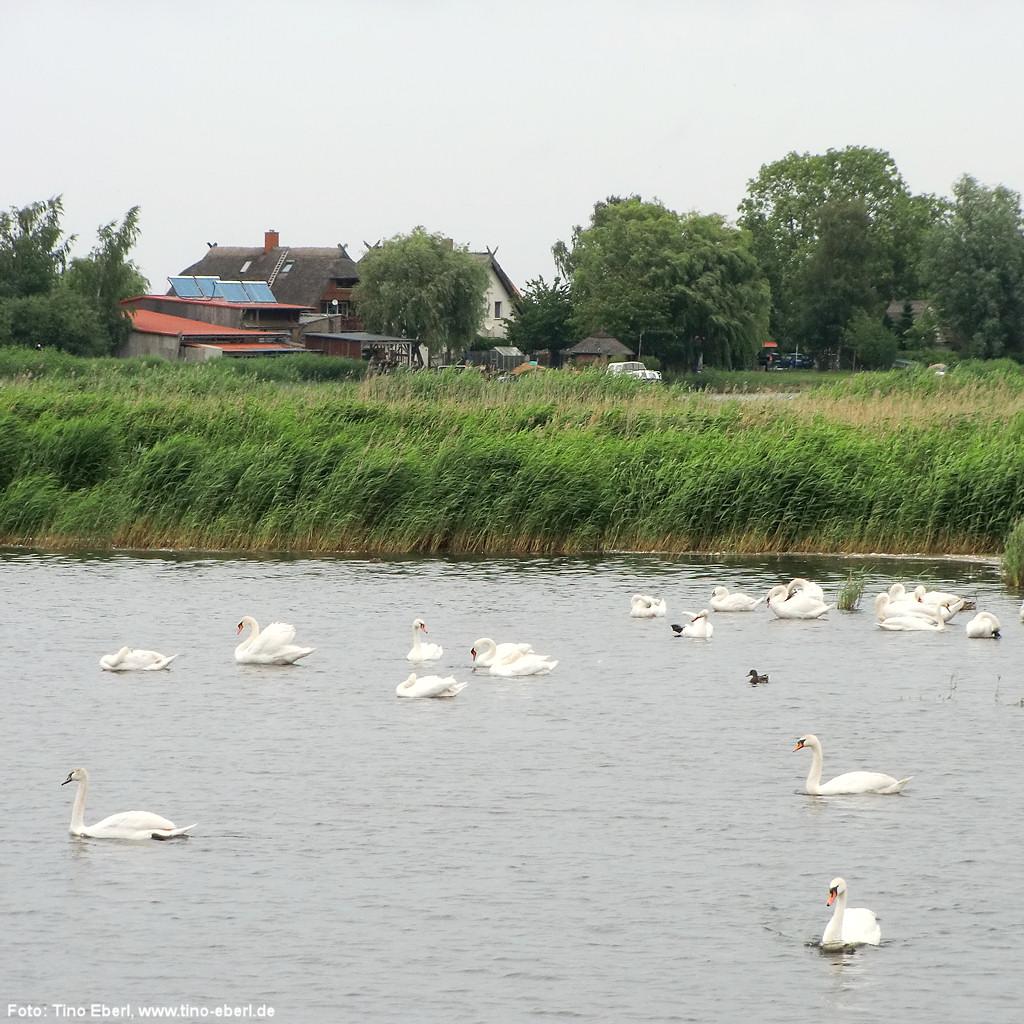
#Schwäne auf einem #Binnengewässer an der #Ostsee. Ich müsste echt mal wieder ans Wasser fahren. Wobei ich eher für
 @degrowthuk@mstdn.social
2026-07-30 09:37:36
Manchester Climate Scientists call on the new PM not to drill for oil
Kevin Anderson and colleagues at the University Tyndall Centre have written an open letter to Andy Burnham calling on him not to agree drilling in the Rosebank and Jackdaw marine oil fields. They point out his leadership in commissioning work from them that led to setting of Greater Manchester’s ambitious, Paris-compliant carbon budget. They say that allowing more oil extraction would betray that…

 @steadystatemcr@mstdn.social
2026-07-30 09:37:32
Manchester Climate Scientists call on the new PM not to drill for oil
Kevin Anderson and colleagues at the University Tyndall Centre have written an open letter to Andy Burnham calling on him not to agree drilling in the Rosebank and Jackdaw marine oil fields. They point out his leadership in commissioning work from them that led to setting of Greater Manchester’s ambitious, Paris-compliant carbon budget. They say that allowing more oil extraction would betray that…
 @hex@kolektiva.social
2026-06-22 04:44:36
The first record of the parable commonly known as the "Blind Men and the Elephant" showed up around 2500 years ago, in a Buddhist text from India. At this point it's pretty commonly known. I assume that most folks reading this will be familiar with some variation of it.
If not, it's essentially a story about people who have limited information making assertions about something: one man grabs a tail and says, "it's like a rope," another the trunk and says, "it's like a snake," a third the leg saying, "it's like a tree," and so on. Later variations are less kind to the men, having them not simply report their findings, but fight over them. The first English translation draws a parallel to religion.
This comes to mind for me, because social media has a tendency to incentivize us to make those hard assertions, to dig in, to argue our perspective as part of a spectacle. Free and federated social media isn't structurally that different from corporate media, so the incentive models built to maximize engagement by maximizing conflict tend to leak through the similarities in the user experience and the conditioning of other platforms.
I didn't really come here to critique the fediverse, but rather to remind everyone, "no one sees the whole fucking elephant." We are limited and there are necessarily some things so big they will never be individually comprehensible. Any system that relies on us all agreeing cannot possibly respond to those big things.
We can see that concretely if we look at the difference between "democratic unity" and "diversity of tactics." In the first model, everyone either agrees or gets forced to behave as though they agree (at least on some issues). That's how liberal democracy works. Diversity of tactics (which systematically described, for example, in the "St Paul Principles"), on the other hand, let's people align on goals without needing to agree on exactly how to achieve them. The reality being that often there are multiple "correct" paths, and sometimes those paths can only work if multiple paths are taken in unison.
No one sees the whole elephant. We won't even see the elephant later. People will still be arguing about the elephant long after it's gone. But if you want to get rid of the elephant, you're gonna need to accept that you can't comprehend it all and you're gonna have to figure out a way to work together that doesn't require a unified approach.
@oekologisch_unterwegs@mastodon.online2026-08-01 14:17:28
#Radtour 050: #Brandenburg: #Birkenwerder - #Briese -