 @DieGesellschafterinLang@swiss.social
2026-08-08 14:47:33
"Der Zustand ist nicht deshalb so schlecht, weil das System unterfinanziert war, sondern weil die Vorstände der Deutschen Bahn fast alles konnten ausser Eisenbahn in Deutschland. "- Lokführer und Gewerkschafter Claus Weselsky
#DeutscheBahn

 @cdarwin@c.im
2026-10-01 16:59:14
Donald Trump refused to rule out demolishing the Kennedy Center without the consent of Congress.
Amid the ongoing high-stakes legal battle over the institution’s name and proposed renovations, the president told Time:
“I’m not committing to anything.
We’re going to see how it plays out in court.”
He added: “But if I build it, and if I agree that for the rest of my life, I’m going to be putting up $100 million to have it open to people … then I think the Trump adminis…

 @arXiv_astrophCO_bot@mastoxiv.page
2026-08-05 08:17:32
Fisher Forecasting for the DESC with $\texttt{Augur}$
Paul Rogozenski, Sankarshana Srinivasan, Javier S\'anchez, Nora Elisa Chisari, Arthur Loureiro, Marc Paterno, Rebekah Polen, Heather Prince, Biancamaria Sersante, An\v{z}e Slosar, Sandro Vitenti, Carlos Garc\'ia-Garc\'ia, Eric Gawiser, Christos Georgiou, C. Danielle Leonard, Ayan Mitra, Jeremy Neveu, The LSST Dark Energy Science Collaboration
https://arxiv.org/abs/2608.03876 https://arxiv.org/pdf/2608.03876 https://arxiv.org/html/2608.03876
arXiv:2608.03876v1 Announce Type: new
Abstract: The Vera C. Rubin Observatory Legacy Survey of Space and Time (LSST) has begun its ten-year survey of the entire visible southern hemisphere. To ensure robust cosmological measurements, computationally inexpensive investigations of modeling choices must be made to gauge the performance of proposed cosmological analyses. In this paper, we introduce the $\texttt{Augur}$ tool of the Dark Energy Science Collaboration (DESC), which provides Fisher forecasts for cosmological inference for the LSST using software frameworks designed for DESC science. We test the pipeline by comparing it to forecasts produced by external code and direct sampling of the posterior via nested sampling methods, finding good agreement between all methods. We additionally investigate a range of modeling and hyperparameter choices for a 3$\times$2pt investigation in harmonic space, providing users with diagnostics to obtain reliable forecasts. $\texttt{Augur}$ will be continually updated to be compatible with the other tools in the DESC software ecosystem as additional probes and functionality become available.
toXiv_bot_toot
 @primonatura@mstdn.social
2026-09-23 15:00:47
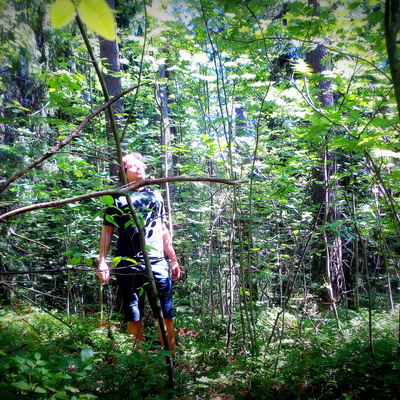
"Rescuers race against time as fires ravage orangutan habitat inside Indonesian oil palm concession"
#Indonesia #Environment #Orangutan

 @Dragofix@veganism.social
2026-09-24 22:04:41
Rescuers race against time as fires ravage orangutan habitat inside Indonesian oil palm concession https://news.mongabay.com/2026/09/rescuers-race-against-time-as-fires-ravage-orangutan-habitat-inside-indonesian-…

 @matematico314@social.linux.pizza
2026-07-26 18:07:32
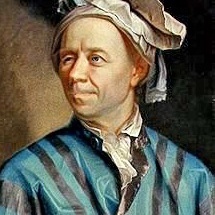
Estava dentro de um livro de matemštica que comprei em um sebo. Tenho certeza de que se trata de um desses bilhetes premiados cujo prêmio jamais é resgatado pelo ganhador rs.

 @arXiv_astrophGA_bot@mastoxiv.page
2026-07-22 08:03:31
Vz-GAL Dusty Star-Forming Galaxies: Revisiting the CO-H2 Conversion Factor Tension
Prachi Prajapati, Axel Weiss, Dominik Riechers, Tom J. L. C. Bakx, Leindert A. Boogaard, Diana Ismail, Pierre Cox, Andrew J. Baker, Roberto Neri, Matthew Lehnert, Chentao Yang, Emilio Romano-Diaz, Hiddo S. B. Algera, Stefano Berta, Edoardo Borsato, Kirsty M. Butler, Asantha Cooray, Bethany Jones, Amelie Saintonge, Paul van der Werf
https://arxiv.org/abs/2607.18440 https://arxiv.org/pdf/2607.18440 https://arxiv.org/html/2607.18440
arXiv:2607.18440v1 Announce Type: new
Abstract: The CO luminosity-to-H$_2$ mass conversion factor ($\alpha_{CO}$) remains a debated uncertainty in determining molecular gas masses of high-redshift dusty star-forming galaxies (DSFGs). Dynamical mass constraints have often favored $\alpha_{CO}=0.8$~$M_{\odot}~{(K~km~{s}^{-1}~{pc}^{2})}^{-1}$, whereas dust- and radiative-transfer-based methods imply higher values. We revisit this ``tension" using the largest homogeneous sample of 21 unlensed $z\sim1-4$ DSFGs, with securely measured \coonezero luminosities from the VLA \vzgal survey and resolved ($\sim{0.1}^{\prime\prime}$) ALMA 1~mm dust continuum imaging. For 12 galaxies with robust modeling constraints, we derive molecular gas masses using dust spectral energy distribution modeling and the TUNER LVG framework, adopting a solar-metallicity gas-to-dust mass ratio of 100. Although not fully independent due to shared assumptions on dust properties, these approaches yield mutually consistent gas masses corresponding to $\alpha_{CO}\sim1.5-11.5$, with a median near the Galactic $\alpha_{CO}=4.3$. Isotropic virial dynamical masses agree with these gas masses when realistic molecular gas sizes are adopted, while our proposed ``mixed" (rotating, pressure-supported, thick-disk) estimator systematically underestimates dynamical masses, producing low $\alpha_{CO}$ limits. Using GN20 ($z=4.055$) as a case study, we show that resolved gas geometry and kinematics reconcile the discrepancy with LVG-derived $\alpha_{CO}$. Our results suggest that current data do not require $\alpha_{CO}=0.8$, and intermediate to near-Galactic values remain dynamically viable given uncertainties in gas geometry, dust properties, and gas-to-dust ratios. Further progress in calibrating $\alpha_{CO}$ in the early universe will require resolved molecular gas observations, physically motivated ISM modeling, and stringent constraints on dust properties.
toXiv_bot_toot
 @arXiv_csGR_bot@mastoxiv.page
2026-07-23 07:56:41
A Splitting Architecture for Exact Reduced Coulomb Friction
Hongcheng Song, Ye Fan, Uri M. Ascher, Dinesh K. Pai
https://arxiv.org/abs/2607.19599 https://arxiv.org/pdf/2607.19599 https://arxiv.org/html/2607.19599
arXiv:2607.19599v1 Announce Type: new
Abstract: Existing approaches to frictional contact dynamics typically either modify the Coulomb law to improve numerical robustness or solve the exact law in a fully coupled monolithic form. However, in its reduced form, exact Coulomb friction can be written as a cone complementarity problem with an augmented velocity, which reveals a natural split between a cone-constrained linear response and a scalar non-associated coupling induced by tangential velocity. We exploit this structure in the solver design. Our method uses an outer iteration to update the non-associated coupling explicitly, and an inner solve for a strongly convex cone-constrained quadratic program. This separation also makes the inner solver modular, so different numerical schemes can be used without changing the outer iteration. We evaluate the method on rigid-body benchmarks with stick-slip transitions and frictional stacking, and show that it reproduces exact Coulomb complementarity without smoothing or relaxing the friction law.
toXiv_bot_toot