 @Dragofix@veganism.social
2026-05-04 21:36:20
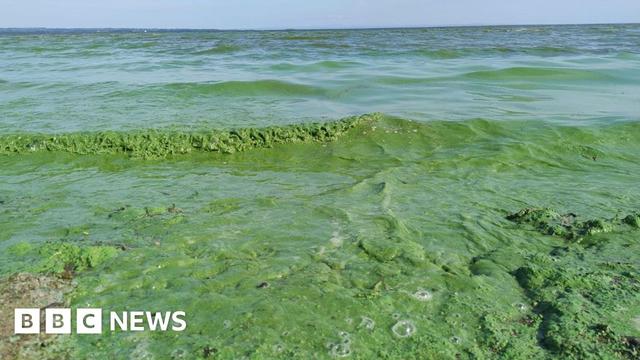
'Significant change' needed to tackle agri pollution #environment
 @usul@piaille.fr
2026-06-14 13:40:29
En Birmanie, la guerre recomposée par Pékin dans l’Etat Shan
https://www.lemonde.fr/international/article/2026/06/14/en-birmanie-la-guerre-recomposee-par-pekin-dans-l-etat-shan_6702232_3210.html…

 @trezzer@social.linux.pizza
2026-06-11 17:46:33
Let me get this straight. Xbox leadership believes the way to winning back people with great exclusives is by firing the people who make them — the people whose expertise they already paid billions to acquire? Sure. Seems really smart! https://www.eurogamer.net/xbox-layoffs-business-reset
 @strbrgr@social.linux.pizza
2026-06-17 13:08:13
312 GitHub contributions so far this year, Chicago represent! Would be significantly more, if I wouldn't ship to repos on Azure...
 @arXiv_csGT_bot@mastoxiv.page
2026-06-04 07:33:46
Improved Approximation Guarantees for Groupwise Maximin Share Fairness
Georgios Amanatidis, Anna Korfiati, Evangelos Markakis, Christodoulos Santorinaios
https://arxiv.org/abs/2606.04731 https://arxiv.org/pdf/2606.04731 https://arxiv.org/html/2606.04731
arXiv:2606.04731v1 Announce Type: new
Abstract: We study the problem of fairly allocating a set of indivisible goods to a set of $n$ agents with additive valuation functions. We focus on the very demanding notion of \textit{groupwise maximin share fairness} (GMMS), which requires that each agent $i$ receives value comparable to their maximin share, where the latter is computed \textit{with respect to any subset of agents that contains $i$}. We show that it is possible to compute $(\phi-1)$-approximate GMMS allocations in polynomial time, where $\phi \approx 1.618$ is the golden ratio). This improves on the previously known guarantee of $4/7$ of Chaudhury et al. [SICOMP; 2021] and Amanatidis et al. [TCS; 2020]. We propose a simple algorithm that maintains the same main properties as the Draft-and-Eliminate algorithm of Amanatidis et al. [TCS, 2020] and we improve on the approximation guarantee analysis by carefully bounding the relevant value within any subinstance induced by the restriction of our allocation to a subset of agents. Our analysis is asymptotically tight for algorithms that share these properties and has the additional benefit of giving improved guarantees for restricted settings; in particular, when the agents agree on the top $n$ goods or when the number of agents is small. To illustrate the challenges of going beyond the guarantees of our algorithm, we also present a variant with an improved approximation of $(\sqrt{10}-1)/3 \approx 0.72$ for the case of three agents. To achieve this improvement we partially characterize the maximin share guarantees of short picking sequences for a small number of goods.
toXiv_bot_toot