@Techmeme@techhub.social
2026-08-17 17:20:51
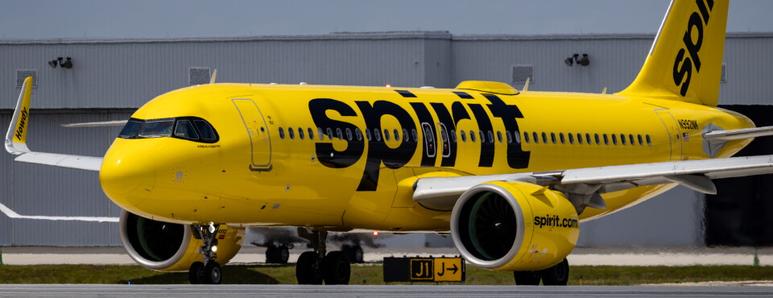
Google wins a bankruptcy auction with a $10M bid to acquire deidentified business data, software code, and more from Spirit Airlines to improve its AI models (James Nani/Bloomberg Law)
https://news.bloomberglaw.com/business-an…
 @krone@frawas.de
2026-09-17 20:45:15
Chaos bei Jubiläum - Wirt schmiss Musikanten und Pilger aus Gasthaus #News #Nachrichten
 @tiotasram@kolektiva.social
2026-07-12 16:28:07
Since it was relevant to a discussion I just had on here and is something most people probably haven't thought about much (unless you've taken one of a handful of philosophy classes), I thought I'd try to lay out a key piece of Descartes' Meditations (#philosophy
 @Mediagazer@mstdn.social
2026-07-06 12:25:37
Versant agrees to acquire Full Swing, a sports tech company best known for its advanced golf simulators, tracking, and analytics software for $530M in cash (Alex Weprin/The Hollywood Reporter)
https://www.hollywoodreporter.com/business

 @metacurity@infosec.exchange
2026-08-17 15:24:26
Never a weekend slowdown in cybersecurity news, so check out today's Metacurity for the most critical infosec developments you might have missed since Friday, including
--Alibaba’s Qwen races past Meta, Google with 3 billion AI model downloads,
--AI agent exploits Snowflake flaw introduced by Copilot,
--US tells allies to pick sides in AI race with China,
--China pushes to reshape the world’s AI training data,
--China’s Zhipu claims AI edge over Anthropic in cyber test,
--Pentagon scrambles to keep pace with AI’s military risks,
--France holds crisis meeting over massive tax agency hack,
--Iran targets Israeli journalists with phishing attacks,
--Election officials blast CISA over lack of cyber support,
--AI deepfake scams surge in Australia,
--SafePal breach exposes data of nearly 40k customers,
--Bits of Gold breach exposes customer data,
--Hackers exploit Mac flaw to mine cryptocurrency,
--Seven arrested over $35m German bank hack,
--Hong Kong university probes ransomware breach claims,
--Fake GitHub site spreads Mac infostealer,
--US courts to disclose government spyware use,
--Sogang University breach exposes 180k people,
--DDoS attacks hammer secure messaging service Threema,
--Hackers hawk millions of records stolen from Azure tenants,
--London police expose emails of Al Fayed accusers,
--Microsoft kills Windows tool long abused by malware,
--French court blocks social media ban for children,
--AI can’t seem to produce any tech heroes,
--AI makes data breaches even more expensive,
--Amazon used to sell books, not destroy them
https://www.metacurity.com/alibabas-qwen-races-past-meta-google-with-3-billion-ai-model-downloads/
 @curiouscat@fosstodon.org
2026-08-14 11:57:21
"If you’re someone who somehow lost their inner voice along the way (maybe without even realizing it) give yourself a shot. Don’t play anything in the background, don’t turn on your favorite show. Just sit in silence for a moment and see what happens. You might actually like it."
I agree. I do this by default. I am more likely to let myself think than fill my attention with some noise.
I do also rest my mind with mindless but enjoyable streaming... at times.

 @david_colquhoun@mstdn.social
2026-09-09 22:06:57
Please read this superb post by @deevybee.bsky.social
I agree with every word of it.
Science is endangered by the demand for speed and by AI slop.
https://deevybee.blogspot.com/2025/10/a-leap-into-future-or-off-cliff.html
 @matematico314@social.linux.pizza
2026-07-11 23:01:19
Do jeito que esta #Copa derrete nossos sonhos sempre no último momento, é provšvel que a #Inglaterra faça um gol agora nesses últimos momentos.
#Copa2026
 @hikingdude@mastodon.social
2026-06-28 15:33:21
Shelves, reading activity etc | decisions.joinbookwyrm.com
"Looking through our Issues log, one of the most consistent sources of both confusion and frustration seems to be both the user interface and the mental model for the related concepts of shelves and readthroughs."
-- Hugh
https://
 @Techmeme@techhub.social
2026-06-29 14:15:49
Rocket Lab plans to acquire Iridium for $8B and combine Rocket Lab's launch services with Iridium's satellite-based communications network to rival SpaceX (Emma Roth/The Verge)
https://www.theverge.com/science/958891/rocket-lab-iridium-…