 @cdarwin@c.im
2026-06-25 15:36:03
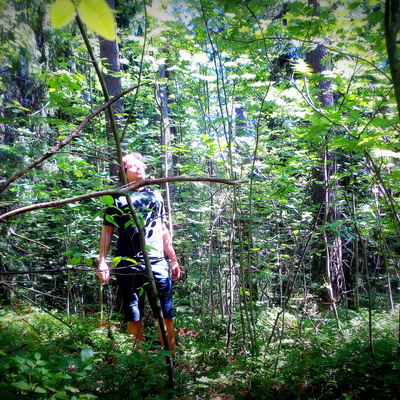
True to the promise of
“drill, baby, drill,”
leaders in Washington are doubling down on attacks
against Alaska’s wildlands
and the clean water, wildlife and ways of life they sustain.
Here’s how the administration is advancing drilling and mining attacks on public lands:
->> Opened every acre of the Arctic National Wildlife Refuge’s fragile coastal plain to oil and gas leasing
->> Approved and reissued permits to move forward on the cont…

 @Dragofix@veganism.social
2026-09-25 18:15:44
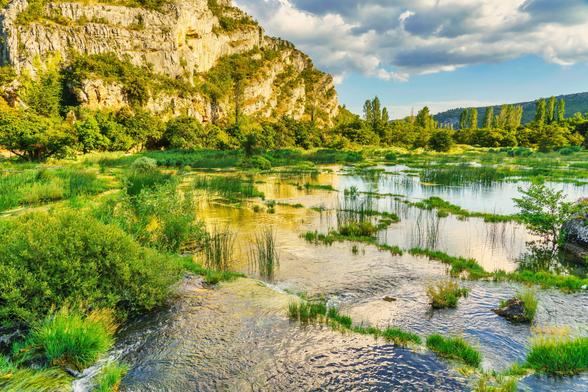
Global water report reveals drying rivers and erratic swings between too little and too much #environment
 @arXiv_csCR_bot@mastoxiv.page
2026-07-24 07:36:29
Deepfake News Detection: A Multimodal Framework Integrating LipNet, DeepSpeech and ResNET for Enhanced Audio-Visual Analysis
Ameena Khan, Muhammad Ahsan Aziz, Muhammad Junaid Asif, Naeem Akhter, Rana Fayyaz Ahmad
https://arxiv.org/abs/2607.20579 https://arxiv.org/pdf/2607.20579 https://arxiv.org/html/2607.20579
arXiv:2607.20579v1 Announce Type: new
Abstract: Deepfake news refers to AI-generated (or AI ma-nipulated) multimedia content intentionally generated to deceive audiences by manipulating the facial expressions, or speech while maintaining the realistic appearance. The rapid progress of generative AI has made the synthesis of highly realistic fake videos and cloned voices widely accessible, posing a serious threat to the authenticity of digital news media. This paper presents a multi-modal framework that discerns the authenticity of video content by jointly exploiting audio and visual cues, thereby addressing the challenge of detecting the deepfake videos. We proposed a framework that involves features extraction from lip movements, audio content and video frames. Lip movements and speech content are encoded using the LipNet and DeepSpeech2 models, while facial features are extracted by leveraging the use of BlazeFace and represented with ResNet18. The extracted feature vectors are concatenated into a holistic video representation and classified with an ensemble of machine learning and deep learning models, including Random Forest (RF), Multi-layer Perceptron (MLP) and Long Short-Term Memory (LSTM) networks. Exten-sive experiments performed on the FakeAVCeleb dataset shows that the proposed approach attains an accuracy of 94% using augmented audio features, outperforming a state-of-the-art multi-modal ensemble baseline. The results confirm the robustness and practical potential of the proposed framework for deepfake news detection.
toXiv_bot_toot
 @bici@mastodon.social
2026-08-24 21:22:07
" ...Mr. Carney did not simply reject a trade offer on Friday. He was openly defiant of the new breed of American aggression. “We will not allow any nation to determine our future,” he said.
It was a unique statement for any leader in Canada to make. The country has long defined itself through its participation in global systems, seeing itself as a node in the larger orders of the world, the postwar trans-Atlantic order and, before that, the British Empire. "
 @sauer_lauwarm@mastodon.social
2026-08-23 06:12:24

 @arXiv_physicsinsdet_bot@mastoxiv.page
2026-08-24 07:50:05
Reconstruction Bias in Timepix4 Subpixel Centroiding for Electron Imaging
Nina Dimova, Richard Plackett, Daniela Bortoletto
https://arxiv.org/abs/2608.21072 https://arxiv.org/pdf/2608.21072 https://arxiv.org/html/2608.21072
arXiv:2608.21072v1 Announce Type: new
Abstract: Subpixel centroiding is widely used to improve the spatial resolution of hybrid pixel detectors for electron imaging by estimating the true interaction position within an entry pixel. Existing centroiding strategies are typically optimised using localisation accuracy. However, observations show that improved localisation does not necessarily translate into improved modulation transfer function (MTF) or reliable virtual-pixel rebinning. This work proposes a unified interpretation of these observations based on the ambiguity of the centroid reconstruction problem. We show that observable-based centroid estimators solve an intrinsically non-unique inverse problem using deterministic reconstruction rules, which can introduce entry-phase-dependent reconstruction bias that governs the spatial distribution of reconstructed subpixel coordinates. This framework explains why localisation accuracy alone is insufficient to predict imaging performance and identifies approximate intra-pixel translational symmetry as a prerequisite for faithful virtual-pixel imaging. The proposed interpretation is evaluated using simulated 200 keV and 300 keV electron data together with measured 200 keV data acquired with a Timepix4 detector. Comparisons of charge-weighted, timing-based, and morphology-dependent centroiding strategies demonstrate that estimators with similar localisation performance can exhibit markedly different MTFs and rebinned flat-field behaviour. The results suggest that future centroid optimisation should consider subpixel phase bias and rebinnability alongside localisation accuracy.
toXiv_bot_toot
@arXiv_csCR_bot@mastoxiv.page2026-07-24 07:31:44
PhantomSeal: Proactive Deepfakes Defense with Identity/Context Protection and Forensic Tracing
Liangqin Ren, Zeyan Liu, Ye Wang, Yuxin Chen, Fengjun Li, Bo Luo
https://arxiv.org/abs/2607.20564 https://arxiv.org/pdf/2607.20564 https://arxiv.org/html/2607.20564
arXiv:2607.20564v1 Announce Type: new
Abstract: Deepfakes, especially face-swapping attacks, pose significant challenges to authenticity, security, and ethics across science, engineering, and society. While most existing detection/tracing approaches operate post hoc, proactive defenses that aim to intervene before deepfake generation remain limited in terms of real-world effectiveness. In this paper, we present PhantomSeal, the first proactive defense to simultaneously protect both the identity and the context of users' images from being used in face-swapping attacks, while supporting forensic tracing. We present a novel cloaking technique that embeds a selected identity as a stealthy identifier. This mechanism steers the deepfake generation process toward producing content that resembles the chosen cloak identity, thereby preventing successful face-swapping while enabling effective feature-based forensic analysis. The effectiveness and robustness of PhantomSeal is demonstrated in extensive experiments across different face-swapping architectures and models. For example, it reduces the attack success rate of SimSwap, an advanced deepfake model, to 0.30%, and correctly identifies 97.97% of manipulated content. Codes can be found at https://github.com/LiangqinRen/PhantomSeal
toXiv_bot_toot
@arXiv_csCR_bot@mastoxiv.page2026-07-24 07:50:41
Enhancing Attack Detection Capabilities in BACnet/IP Networks Using Machine-Learning Models
Derek Manzella, John D. Hastings
https://arxiv.org/abs/2607.20686 https://arxiv.org/pdf/2607.20686 https://arxiv.org/html/2607.20686
arXiv:2607.20686v1 Announce Type: new
Abstract: Building Automation Systems (BAS) manage critical building functions using protocols such as BACnet/IP, yet defenders have limited tooling and few labeled datasets for detecting BACnet-specific attacks. This work addresses these gaps through three contributions. First, CISA's Zeek BACnet parser is modified to produce a unified per-packet log, simplifying feature engineering for machine-learning (ML) pipelines. Second, a simulated BACnet/IP testbed is developed using bacpypes3 to model a small commercial HVAC system with physics-based device behavior, schedule-aware controller logic, and per-packet attack labeling. Third, five unsupervised anomaly detection models are evaluated using baseline traffic and six BACnet attack types, including denial of service, reconnaissance, property tampering, and false data injection. Results show that One-Class SVM achieved the strongest overall performance, with an average F1 score of 0.864 across all attacks and F1 scores above 0.99 for high-volume denial-of-service and reconnaissance attacks. Detection is much stronger for high-volume attacks, such as DoS attacks and reconnaissance, than stealthier techniques such as tampering and false data injection, which scored around 77%.
toXiv_bot_toot
@cdarwin@c.im2026-07-06 16:16:28
 @cdarwin@c.im
2026-07-17 02:37:12
Grand Staircase-Escalante’s stunning slot canyons and dramatic vistas make it instantly recognizable.
Bears Ears’ red-rock canyons house culturally significant petroglyphs and ancient dwellings that have endured for centuries.
Right now they are facing unprecedented attacks–again.
Donald Trump just took executive action to virtually eliminate both of these iconic Utah national monuments,
slashing their boundaries by more than 90%.
Vital wildlife habitats,
