 @jom@social.kontrollapparat.de
2026-08-15 16:45:12
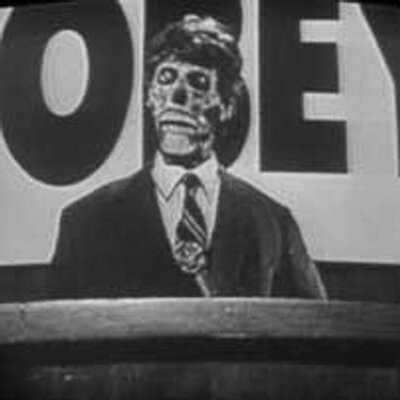
Baby, we can never kill excel. Long live spreadsheets
Source: https://hachyderm.io/@liztai/117097082760512046 (Forked due to the lack of proper alt text for the image in the original toot.)

 @cdarwin@c.im
2026-08-03 18:53:28
The cover of Newsweek International bears the text:
“TRUMP WAS RIGHT (ABOUT VENEZUELA),”
with a cartoon depiction of a giant Trump wearing a safari-style outfit
while holding a fuel pump.
The White House joined Trump in sharing the image on X, along with the caption “TRUST IN TRUMP.”
The cartoon depiction of Trump mirrors almost exactly a famous 1892 illustration of Cecil Rhodes,
who in the cartoon is seen in a near-identical position and size,
sta…

 @davidaugust@mastodon.online
2026-06-18 16:37:12
According to Justice Department’s own account, 15 arrested by federal government in Minneapolis this week are responsible for denting gov F-150 (by kicking), & tipping tailer (owned by accused). That’s it.
Why hasn’t potus nuked Minneapolis from space? /s
Attack on Americans & 1st Amendment makes me think we’re not free country I thought we were & realize perhaps never were, I was “lucky” not to notice before.
 @cdarwin@c.im
2026-07-25 07:11:39
The U.S. Justice Department is prosecuting an American
for allegedly providing U.S. border authorities with a passcode that wiped the contents of his phone,
according to an indictment and media reports.
This is thought to be the first known case in the United States where federal prosecutors have charged someone for the alleged destruction of data using a “duress” password built into a phone’s software.
According to The Guardian, which covered the story earlier this …

 @mlawton@mstdn.social
2026-06-23 17:00:12
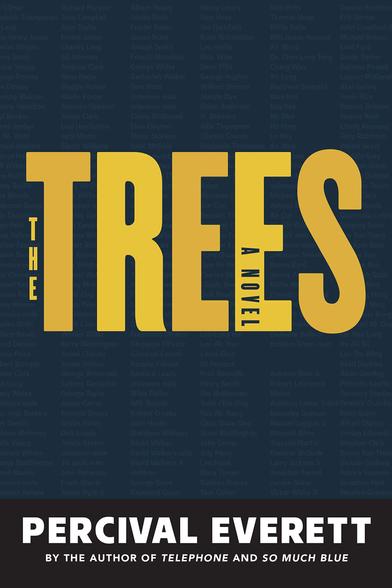
Finished reading "The Trees" by Percival Everett.
Absurdist crime fiction as a vessel for some of American history's worst crimes.
In Money, Mississippi, a series of murders targets white residents, each leaving behind a corpse resembling Emmett Till. Two black MBI detectives investigate as the killings spread nationwide.
Detectives Jim & Ed's dry humor keeps it light enough for the horror to land harder. Haunting & thought provoking.
4/5 st…
 @tiotasram@kolektiva.social
2026-08-11 16:22:46
Random thought that goes interesting places:
There are a lot of cheap ways to spend money to drastically improve the quality of life for lots of people (UBI, mosquito nets, digging wells, etc.). Those people almost invariably become way more economically productive in aggregate when this happens, far above the costs involved, if you measure from the perspective of the affected group. So for billionaires looking for outsized returns on investments, why not simply spend on some of these programs, then invest in a broad index of socks that are going to go up as a result?
The answer could be "billionaires by their nature are too evil to think of this," which, could be true....
But I think there's a deeper answer, which is that there *is no* bundle of stocks that goes up as humans flourish. This is directly contrary to neoliberal economic doctrine/propaganda, but it also has an explanation that's obvious from the neoliberal doctrine itself: the stock market is a gambling arena for bets on corporate profits. Corporate profits are money taken in in excess of costs. But the value of a corporation is not produced abstractly by the mere existence of the organization; it's produced by the labor of humans working for the organization, with raw materials that the organization purchases. So to make a profit, an organization has to do some combination of paying its workers less than the value the create, and/or paying less for it's raw materials than they are really worth. The more it does these two things, the more profit it can generate.
Notice that these two profit-generating activities directly and indirectly immiserate humans, *and* that reducing human misery by means other than reducing these activities makes them harder. People who have other means of income won't sell their labor for less than it's worth, nor will they sell their resources below their fair value. Only desperate people will agree to terms that corporations require to be profitable.
This is not a "Marxist analysis" by the way; it's the direct application of the basic principles taught in any neoliberal introductory macroeconomics class.
In any case, once we understand that the stock market is "gambling on how much corporations can exploit their employees/suppliers/customers", it's clear why you can't make money from stock investments in companies that profit from flourishing humans: profit is by construction made of human misery.
It also explains a lot of other things, like why private US employers who pay huge amounts of payroll towards health insurance for their employees would be *against* public health insurance that would offload those costs onto all taxpayers: the amount they're able to lower wages as a result of desperation for access to health care is more than worth the direct costs.
This is the central reason why capitalism (defined as: a system where money equals power) is inimical to human happiness: it allows profits built on suffering to be converted into the power to maintain the system of suffering and even extend and intensify it, creating a feedback loop of extractive domination.
Now I'm sure some people might read this and think: what about the good companies? The ones that pay their workers and suppliers a fair wage, and sell their products at fair prices? Even putting aside the fact that such a thing seems less believable than a unicorn these days, such a company by definition does not make a profit. The fair wage for its workers is the value they add to the raw materials it buys, and the fair price for those is the selling price of the finished product minus the value the company adds. The balance sheet will read exactly zero at the end of the day if compensation is actually fair. You can still run a company like this in theory, and even grow it, but of course under capitalism it will just get bought out by an unethical company that is profitable. Could you in some kind of utopian dream world run a tightly regulated series of markets where you have most of what people think capitalism is, without the bad parts? Maybe, but it definitely wouldn't involve actual capitalism, and it wouldn't have a stock market.
#anarchy #capitalism #econimics
@tiotasram@kolektiva.social2026-08-20 22:28:10
So about that discomfort...
In the end, we have basically "hooray, national park declaration will protect the endangered species, whose traditional guardians, effectively extinct, will move into a new formal structure."
Celeste isn't Indigenous-coded, but this is *way* to close to several layers of colonialist myth that we have in America. The real story of our national parks, after all, is that we genocided the original inhabitants and forced them to move out of the parks, including banning culturally-important religious ceremonies at sacred sites in parks like Yosemite (in a country that's supposed to be very serious about freedom of religion...). Then we mostly erased those tribes from officially-taught history, pretending that they had tragically disappeared (they're still around; I could probably go look up their websites right now if I wanted to), and said "look at the majesty of this *wild*, *untamed*, *remote* wilderness. Isn't its completely *natural* beauty, untouched by humans, so wonderful?" Then just like the original tribes we do a bunch of human intervention to maintain the ecosystems there, and start charging camping and parking fees to support that work.
Yeah, it's a really fucked-up history.
So that's why it bothers me that the book ends with this as a positive resolution. In the book, the dragons' guardians are actually extinct, down to just Celeste. The prophecy-bending pretty much ensures that they won't actually make a comeback as a culture... But in real life, the descendants of the tribes that were forced out of Yellowstone, Yosemite, and other national parks are still around. The portrayal of genocides of indigenous peoples as completed is actually one big part of the colonialist myth: if they're all dead already, it might be tragic, but it's history, and there's no reason to give the land back or pay reparations or anything like that (Hollow Knight is sadly another extremely popular example of this myth-making). Then there's the idea that humans and nature are separable, the idea that the colonizers are trustworthy stewards of the land they stole, etc. When you set these things up to be true in your fictional world, you're helping acclimate readers to the idea that they're true in the real world, and that's bad.
I don't think that Matrin necessarily did this with malice: she's probably just reflecting back the myths she was taught. Special order tasked with sacred duty now almost extinct? Great way to give a character a tragic backstory and some powerful motivations, right? Etc.
TL;DR: I wish Martin had been as conscious of and clever in undermining colonialist myths as she was in dealing with standard fantasy racism.