 @Mediagazer@mstdn.social
2026-09-15 23:40:54
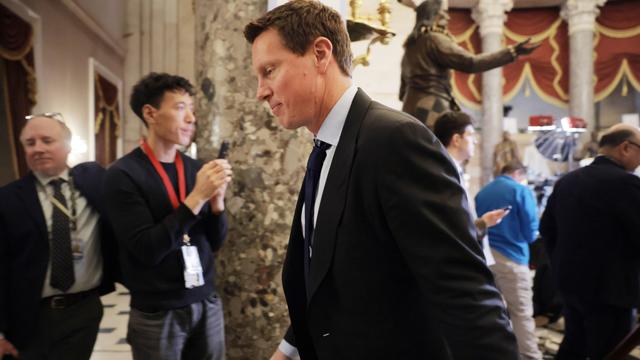
Filing: the DOJ says states suing to block the WBD deal must post a "proper bond" to cover potential damages, backing Paramount's request for a $1.88B bond (Winston Cho/The Hollywood Reporter)
https://www.hollywoodre…
 @tiotasram@kolektiva.social
2026-07-12 16:28:07
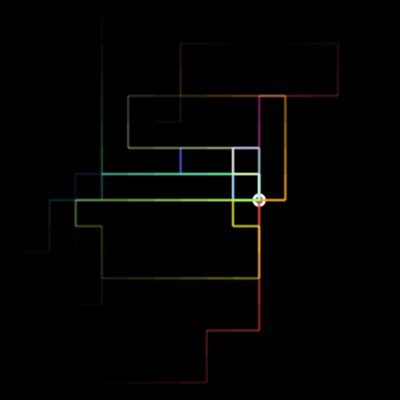
Since it was relevant to a discussion I just had on here and is something most people probably haven't thought about much (unless you've taken one of a handful of philosophy classes), I thought I'd try to lay out a key piece of Descartes' Meditations (#philosophy
 @jom@social.kontrollapparat.de
2026-08-15 16:45:12
Baby, we can never kill excel. Long live spreadsheets
Source: https://hachyderm.io/@liztai/117097082760512046 (Forked due to the lack of proper alt text for the image in the original toot.)

 @cheryanne@aus.social
2026-08-14 09:24:36
Talkin Country With Rick
Join Rick as he sits down with Australia's biggest country stars, rising artists and international guests to uncover the stories behind the songs, the inspiration behind the music and the journeys that shaped their careers...
Great Australian Pods Podcast Directory: https://www.

 @cowboys@darktundra.xyz
2026-09-15 20:19:20
 @arXiv_csHC_bot@mastoxiv.page
2026-08-12 09:04:18
Replaced article(s) found for cs.HC. https://arxiv.org/list/cs.HC/new
[1/2]:
- Music Interpretation and Emotion Perception: A Computational and Neurophysiological Investigation
Lyberatos, Kantarelis, Zioga, Anagnostopoulou, Stamou, Georgaki
https://arxiv.org/abs/2506.01982 https://mastoxiv.page/@arXiv_csHC_bot/114623887921808883
- Selective Prediction Reduces the Negative Effects of Automation Bias Overall but Increases False ...
Jabbour, Fouhey, Banovic, Shepard, Kazerooni, Sjoding, Wiens
https://arxiv.org/abs/2508.07617 https://mastoxiv.page/@arXiv_csHC_bot/115015501954907821
- Sighted by Default: Addressing Implicit Vision Assumptions in Real-Time VLM Assistance for BLV Users
Yi Zhao, Siqi Wang, Qiqun Geng, Erxin Yu, Jing Li
https://arxiv.org/abs/2511.00945 https://mastoxiv.page/@arXiv_csHC_bot/115490927925171769
- UXCascade: Scalable Usability Testing with Simulated User Agents
Steffen Holter, Eunyee Koh, Mustafa Doga Dogan, Gromit Yeuk-Yin Chan
https://arxiv.org/abs/2601.15777 https://mastoxiv.page/@arXiv_csHC_bot/115943802965989174
- Does Explanation Correctness Matter? Linking Computational XAI Evaluation to Human Understanding
Gregor Baer, Chao Zhang, Isel Grau, Pieter Van Gorp
https://arxiv.org/abs/2603.25251 https://mastoxiv.page/@arXiv_csHC_bot/116300187728326082
- Beyond Screenshots: Evaluating VLMs' Understanding of UI Animations
Chen Liang, Xirui Jiang, Naihao Deng, Eytan Adar, Anhong Guo
https://arxiv.org/abs/2604.26148 https://mastoxiv.page/@arXiv_csHC_bot/116492495199874264
- Quieting the Cobwebs: Browser Interaction for Visual Floaters
Kenneth Ge, Jinglin Li, Shikhar Ahuja
https://arxiv.org/abs/2605.12739 https://mastoxiv.page/@arXiv_csHC_bot/116571803728109358
- Patients With Personality: Realistic Patient Simulation through Controlled Diversity and Selectiv...
Moritz Schlager, et al.
https://arxiv.org/abs/2606.17441 https://mastoxiv.page/@arXiv_csHC_bot/116764285920198987
- TailVis: Expressive Chart Refinement Preserving Data-Binding Integrity
Yumin Song, Seokhyeon Park, Soohyun Lee, Aeri Cho, Hyeon Jeon, John Joon Young Chung, Jinwook Seo
https://arxiv.org/abs/2607.25386 https://mastoxiv.page/@arXiv_csHC_bot/117002258150815192
- How Usable Are Geospatial Foundation Models? A Systematic Evaluation of 89 Models
Robin Young, Artyom Gabtraupov, Kenzy Soror, Srinivasan Keshav
https://arxiv.org/abs/2608.03804 https://mastoxiv.page/@arXiv_csHC_bot/117041905504697955
toXiv_bot_toot
 @stargazersmith@social.linux.pizza
2026-08-11 00:49:37
 @arXiv_mathDG_bot@mastoxiv.page
2026-09-15 08:57:14
Stability of Einstein 4-manifolds satisfying a chiral curvature condition
Diego Artacho
https://arxiv.org/abs/2609.15159 https://arxiv.org/pdf/2609.15159 https://arxiv.org/html/2609.15159
arXiv:2609.15159v1 Announce Type: new
Abstract: Let $(M,g)$ be a compact oriented Einstein four-manifold with Einstein constant $E$ and let $\widehat{R}^ $ denote the action of the Riemann curvature tensor on self-dual two-forms. We show that if $\widehat{R}^ < 0$, then $g$ is strictly linearly stable for the Einstein-Hilbert functional, thus giving a chiral criterion for stability. Our result is stronger than the one by Fine-Krasnov-Singer, who conclude local rigidity from $\widehat{R}^ < 0$ by proving stability for a different action functional. Our proof proceeds by showing that $(M,g)$ admits a natural spin$^h$ structure carrying a non-zero parallel spin$^h$-spinor. We then apply a lower bound on the Lichnerowicz Laplacian on traceless symmetric two-tensors in the presence of such a spinor.
toXiv_bot_toot
 @azonenberg@ioc.exchange
2026-09-11 07:41:05
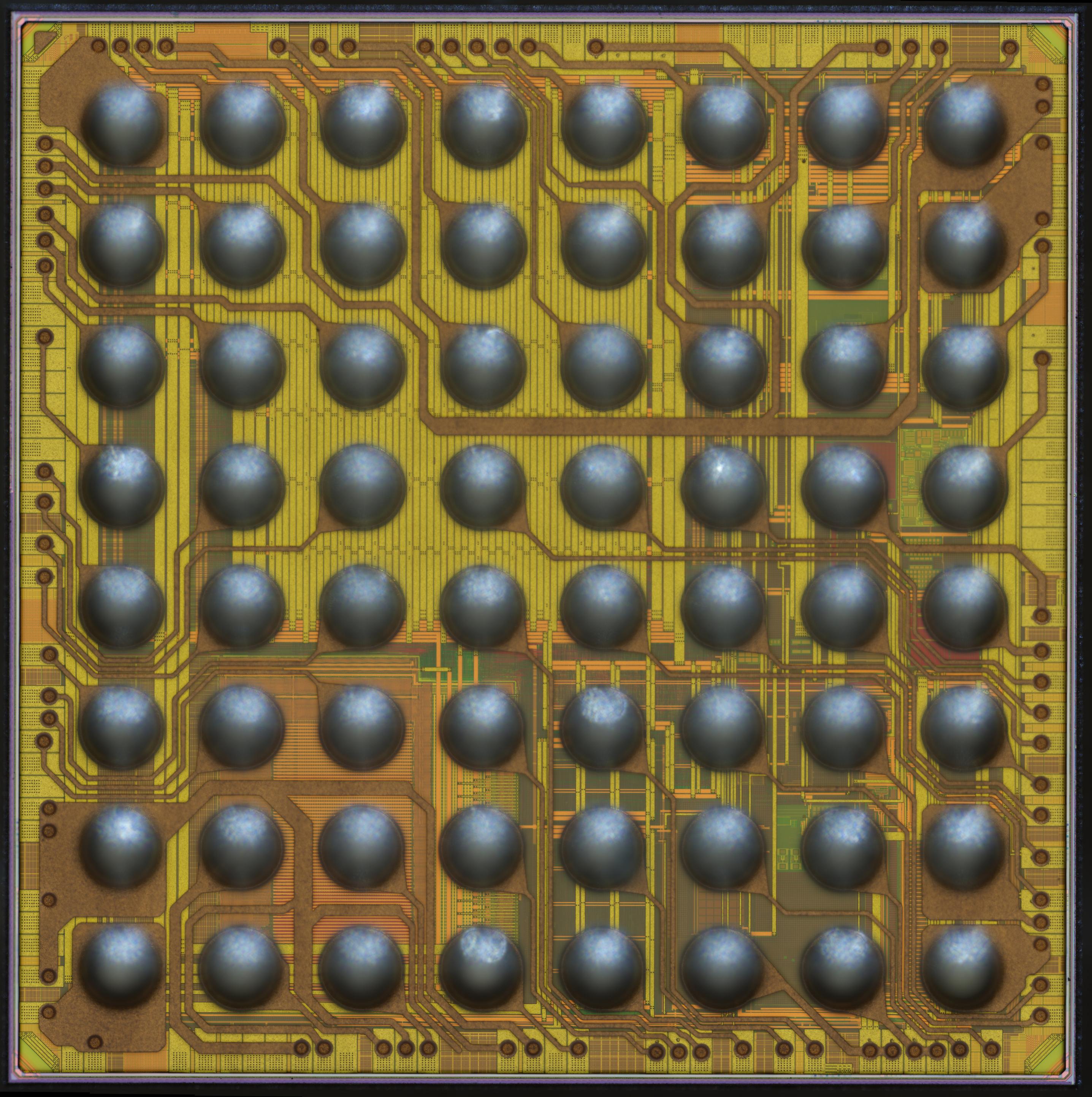
STM32L431 in the WLCSP64 package.
I've already got plenty of both top metal and delayered shots of the die so nothing special here, but this was a really good view of the copper and polyimide RDL showing the connections from signal, power, and ground bumps to the bond pads around the periphery of the die
Full resolution: htt…
 @Mediagazer@mstdn.social
2026-07-13 00:30:38
Memo: NYT CEO Meredith Kopit Levien says the five reporters subpoenaed by the DOJ, and the whole newsroom, have the "full weight of The Times" supporting them (Natalie Korach/Status)
https://www.status.news/p/new-york-times-donald-trump-subpoena