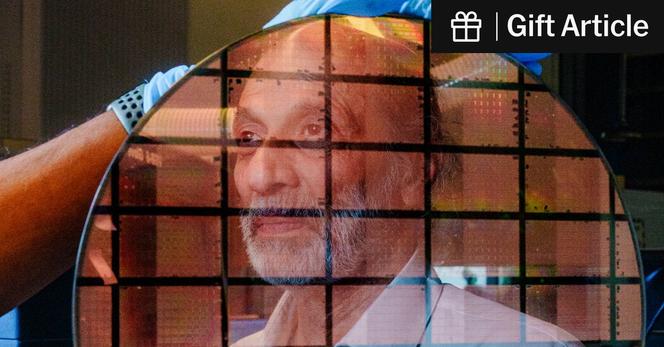
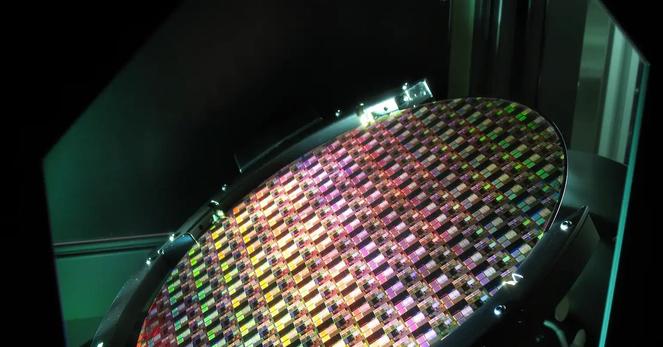
A look at advanced chip packaging, now more reliant on TSMC and its partners in Taiwan than ever, and the efforts to address this bottleneck in the US (Don Clark/New York Times)
https://www.nytimes.com/2026/06/26/technol
«Experiment — KI-Agenten scheitern beim autonomen Geldverdienen:
Ein Test von Bottleneck Labs offenbart, dass autonome KI-Modelle kein Geld verdienen, sondern Spam und unberechtigte Rechnungen erzeugen.»
Die Frage ist nicht wie "klug" die KI ist, sondern auf welche Daten die sich beruht und ob das Geld verdienen überhaupt simple Logik ist und weshalb es Spam "ernst nimmt".
🤖
What's been interesting about watching Cloudflare do what it is doing against AI scraping is that, in an attempt to protect sites from crawlers, we are centralizing internet traffic through a single vendor bottleneck.
It's a real struggle between ideal and pragmatic solutions, and I don't know how to feel about it.
Cloud providers might need to acknowledge this issue sooner rather than later, but they are incentivized to charge customers for *any* traffic, including f…
Confirmed one of my expectations that the current/old NAS I'm using was the bottleneck for image conversion. Hooked up a new NAS over the weekend, directly in the VLAN, and with faster drives; almost directly on the first run, proving that #PHP and the #RaspberryPi's where neve…
Crosslisted article(s) found for physics.atom-ph. https://arxiv.org/list/physics.atom-ph/new
[1/1]:
- Remote entanglement need not be the bottleneck for modular trapped-ion quantum computing
Knollmann, Nadlinger, Blue, Corsetti, Bishop, Martinez, Notaros, Bruzewicz, McConn…
RE: https://mastodon.social/@existentialcomics/117230883155807142
so could there plausibly be an intelligent r-selected specied (high reproduction rate, low investment in offspring)
i suppose the bottleneck then moves to teaching the ones t…
Time to work on a ngscopeclient performance bottleneck that was bugging me a while ago.
Ever since I did the demo of four ThunderScopes running full-rate FFTs, I've been mad that I couldn't waterfall at the same speed.
Time to fix that.
Baseline: 20M point FFT downsampled to 512K points for waterfall (default is 128K but I wanted to go higher to stress it and make bottlenecks more obvious). Real time is 50 Hz, runs at 40 Hz. FFT takes 2.59 ms, waterfall about 8 on m…
Koopman-Operator Spectral Decomposition for Nonlinear Motion Suppression in Dynamic Contrast-Enhanced MRI of the Head and Neck
Renjie He
https://arxiv.org/abs/2607.19401 https://arxiv.org/pdf/2607.19401 https://arxiv.org/html/2607.19401
arXiv:2607.19401v1 Announce Type: new
Abstract: We build a motion suppression pipeline based on Koopman operator theory, which provides a way to turn nonlinear dynamics into linear ones by looking at the data through the right set of mathematical "lenses" (called observables). We test three versions of this idea: plain DMD that works directly on pixel values, an extended version (EDMD) that adds physically motivated features like squared intensities and spatial gradients to better capture how the MRI signal and tissue motion interact, and a neural network version that tries to learn the best features automatically. A key practical contribution is time-course repetition: we tile the entire temporal series multiple times before decomposition, which does not change the underlying dynamics but gives the algorithm more data to work with, fixing a dimensionality bottleneck that otherwise prevents the extra features from helping. The full pipeline works slice by slice, dividing each image into small overlapping blocks, applying the Koopman lifting and DMD to separate slow contrast enhancement from fast motion based on their characteristic frequencies, and blending the corrected blocks back together.
toXiv_bot_toot
(Review article) Bionic vision technologies: progress and perspectives on retinal prostheses and optogenetics for the treatment of advanced retinal degeneration https://www.frontiersin.org/journals/medical-technology/articles/10.3389/fmedt.2026.1898…
Crosslisted article(s) found for q-bio.NC. https://arxiv.org/list/q-bio.NC/new
[1/1]:
- Overcoming the BCI Calibration Bottleneck: A Clinically-Grounded Architecture using Riemannian Al...
Immanuvel Prathap Sagayaraju
https://arxiv.org/abs/2607.16225 https://mastoxiv.page/@arXiv_eessSP_bot/116956877215500609
toXiv_bot_toot
ProtoGIB-Workload: Learning Workload-Specific Neural Topology Prototypes across Subjects
Yuzhe Zhang, Yixi Zhang, Shengdian Jiang, Chengxi Xie, Jihong Wang, Huan Liu, Man Yao, Minnan Luo, Chao Shen
https://arxiv.org/abs/2608.10647 https://arxiv.org/pdf/2608.10647 https://arxiv.org/html/2608.10647
arXiv:2608.10647v1 Announce Type: new
Abstract: Reliable electroencephalography (EEG)-based mental workload recognition is crucial for adaptive human-centered systems, yet practical deployment requires models to generalize to users unseen during training. Although functional connectivity graphs are widely adopted to capture workload-related neural interactions, they inherently entangle task-relevant structures with subject-specific physiological traits and sample-level noise. This entanglement often leads models to learn structural shortcuts, severely degrading cross-subject generalization. To address this, we propose ProtoGIB-Workload, a novel framework that explicitly regularizes and aligns graph structures for subject-independent workload recognition. Our approach introduces a Stochastic Graph Information Bottleneck (SGIB) to compress dense correlation priors into compact, task-relevant subgraphs, filtering out input-related redundancy. Crucially, to prevent the retention of subject-specific spurious edges, we propose a Class-Conditional Topology Stabilizer (CTS). Leveraging the fixed electrode coordinates of EEG data, CTS operates directly on graph-generation probabilities to encourage consistent edge-generation statistics across different subjects sharing the same workload class. Extensive experiments on two public EEG workload datasets and one in-house EEG cognitive load dataset of air traffic controllers under strict leave-one-subject-out (LOSO) protocols demonstrate that ProtoGIB-Workload significantly outperforms state-of-the-art temporal and graph-based baselines, improving the cross-subject Macro-F1 score by an average of 5.15% (up to 6.34%). Further analyses confirm that our method successfully extracts stable, cross-subject consistent neural connectivity patterns.
toXiv_bot_toot
We told everyone that programming wasn't the hard part, but no one believed us.
The reason LLMs can excrete sort-of-okay code is that sort-of-okay code has been a commodity good for 20 years. Then, just like now, the bottleneck was understanding what people actually want.
https://www.nytimes.com/2026/09/12/opinion/ai-software-coding-apps.html?unlocked_article_code=1.BFE.nAh4.9lnuKWCc1cvl
AI-Generated Interactive Fiction for Educational Use: A Pilot Study of Perceived Comprehensibility, Coherence, and Engagement
Finn Rogosch, Andreas Schrader
https://arxiv.org/abs/2608.10818 https://arxiv.org/pdf/2608.10818 https://arxiv.org/html/2608.10818
arXiv:2608.10818v1 Announce Type: new
Abstract: Generative artificial intelligence (AI) can produce educational content at scale, including interactive and narrative learning experiences, but technical generation alone is not sufficient: scenarios that are confusing, narratively inconsistent, or unengaging are unlikely to be useful in practice. This paper presents a pilot user-centred evaluation of AI-generated interactive fiction (IF) for educational use in higher education. Using a previously described domain-agnostic pipeline and a shared STEM content base, we generated a controlled pool of scenarios and asked participants (N = 22, STEM higher-education) to play one generated episode and rate it on narrative clarity, story-content coherence, engagement, and length acceptance. A free-text prompt captured open feedback. Narrative clarity and length acceptance were rated positively, engagement sat near the neutral mid-point of the scale, and story-content coherence was the weakest dimension by a clear margin. Qualitative feedback points to quiz integration as the bottleneck. Artificial in-fiction motivation for quiz prompts and abrupt setting changes were reported. Feedback also pointed to missing story-level consequences for wrong answers. From these observations, we derive concrete design implications that can inform larger follow-up studies, including later work on learning effectiveness.
toXiv_bot_toot
YAVIN: A Unified Architecture for Secure Edge Processing in Memory
Shouzhi Fang, William C. Tegge, Md Omar Faruque, Peipei Zhou, Endadul Hoque, Alex K. Jones
https://arxiv.org/abs/2608.13496 https://arxiv.org/pdf/2608.13496 https://arxiv.org/html/2608.13496
arXiv:2608.13496v1 Announce Type: new
Abstract: Secure, private multi-tenant execution spanning processors, memory, and accelerators remains one of the most significant challenges in modern edge computing systems. Simultaneously, processing-in-memory (PIM) has emerged as an effective approach for reducing the Von Neumann bottleneck by moving computation closer to data. Existing trusted execution environments (TEEs) establish trust only within the processor, protecting data while it traverses untrusted resources such as the memory bus. Consequently, trusted computation cannot be performed directly within memory. We present YAVIN, a unified trusted computing base (TCB) that extends the TEE beyond the processor to encompass both processor execution and a dedicated memory region supporting trusted processing-in-memory execution while treating the memory bus as untrusted. Leveraging the dedicated protected memory regions already established by conventional TEE architectures, YAVIN enables data to be decrypted, processed, and re-encrypted by either processor or PIM execution while remaining within the TEE. To realize this unified TCB, YAVIN presents the first PIM implementations of the LightSaber KEM post-quantum cryptosystem and ASCON-128 authenticated encryption, co-designing both algorithms for efficient DRAM execution to establish and maintain shared cryptographic state. Finally, we demonstrate how cryptography-PIM co-design for tensor-based workloads reorganizes computation to satisfy the ordering constraints imposed by authenticated encryption with minimal performance overhead while simultaneously enabling bit-sliced ordering that limits temporary plaintext exposure. Compared to the latest PIM AES implementation, YAVIN achieves more than a 20x speedup while incurring only 34% and 9.3% overhead when executing INT8 and INT32 quantized edge-class LLMs, respectively, relative to plaintext execution.
toXiv_bot_toot
Crosslisted article(s) found for econ.GN. https://arxiv.org/list/econ.GN/new
[1/1]:
- Innovating with Generative AI: A Human Bottleneck Framework
Julian De Freitas, Ayelet Israeli, Gideon Nave, Artem Timoshenko, Olivier Toubia
https://arxiv.org/abs/2608.07504 https://mastoxiv.page/@arXiv_csHC_bot/117075940481496711
- When LLM Agents Negotiate: Private Information and Dynamic Bargaining in Supply Chains
Chen Liang, Fasheng Xu
https://arxiv.org/abs/2608.07538 https://mastoxiv.page/@arXiv_csAI_bot/117075723614587104
toXiv_bot_toot
Thoughtseeds as Latent Causes: A Dual-Process Computational Phenomenology of Focused-Attention Meditation
Prakash Chandra Kavi, Daniel Ari Friedman, Gustavo Patow
https://arxiv.org/abs/2607.14833 https://arxiv.org/pdf/2607.14833 https://arxiv.org/html/2607.14833
arXiv:2607.14833v1 Announce Type: new
Abstract: Meditative expertise involves sustained attention, rapid recovery from distraction, and coordinated dynamics of large-scale brain networks. We present a computational phenomenology of focused-attention meditation traversing four attractor states: breath focus, mind-wandering, meta-awareness, and redirect attention. Within a dual-process active inference formulation, the model implements a three-layer nested Markov-blanket architecture: (L1) a high-dimensional physiological neuronal substrate modeled as a stochastic multivariate Ornstein--Uhlenbeck process over attentional Yeo networks; (L2) a low-dimensional generative model (System 1) that encodes latent mental content as thoughtseeds and evaluates autonomic action tendencies; and (L3) an agentic metacognitive monitor (System 2) that implements a Global Neuronal Workspace (GNW) capacity bottleneck to selectively gate these tendencies. In L3, meta-awareness functions as the GNW ignition signal, derived from policy-prior divergence and dynamically gated by direct competition between orchestrator and distractor thoughtseeds. Policy selection actively minimizes expected free energy, and L2 actions furnish descending predictions over network activity to close the enactive perception--action cycle. Training uses variational Expectation-Maximization (EM) across expert and novice phenotypes. Simulations reproduce behavior consistent with empirical observations and findings in contemplative neuroscience, providing a tractable link between first-person phenomenology and objective neurophysiological measures.
toXiv_bot_toot
NITRO: High-Performance 3D NAND Flash-Based In-Storage Computing with Enhanced Activation Dataflow
Sanghun Shin, Sangyeon Kim, Gisan Ji, Sungju Ryu
https://arxiv.org/abs/2608.11920 https://arxiv.org/pdf/2608.11920 https://arxiv.org/html/2608.11920
arXiv:2608.11920v1 Announce Type: new
Abstract: In-storage computing (ISC) is considered a next-generation memory architecture for its ability to relieve the data bottleneck between the host and the memory. While the required resources of large language models (LLMs) have increased significantly in recent years, the memory density has not scaled accordingly. Recently, several works have studied NAND flash-based processing-in-memory (NAND-PIM) schemes to exploit the high density of the memory. However, they do not address the dataflow/buffer for the intermediate values, so a simple method is to deal with the values in the slow flash memory array. To overcome such a limitation, we propose a high-performance NAND flash-based ISC architecture with enhanced activation buffering. Instead of using the very slow flash memory array for the intermediate values, our architecture buffers the values in a fast DRAM subsystem. This approach effectively handles the high-latency penalties when activations are programmed into slower TLC NAND flash. We also introduce a distributed dataflow approach for the NAND-PIM array. This approach maximizes computational parallelism by employing efficient intra-plane data mapping. The results show that our proposed architecture achieves significant performance improvements, reducing the inference latency by up to 85% compared to the baseline.
toXiv_bot_toot
A Full-Stack Characterization of High-Bandwidth Flash for KV-Centric LLM Serving
Zhuoran Li, Zhuohang Bian, Xin Huang, Yibo Zhao, Guangyu Sun, Youwei Zhuo
https://arxiv.org/abs/2608.11668 https://arxiv.org/pdf/2608.11668 https://arxiv.org/html/2608.11668
arXiv:2608.11668v1 Announce Type: new
Abstract: High-Bandwidth Flash (HBF) stacks NAND behind a wide, package-local interface, giving flash-scale capacity with far better read latency and bandwidth than an SSD. This makes it tempting to keep an SSD-style Mooncake KV-offloading stack and swap only the backing tier for HBF. We test that substitution with an extended TokenSim, four complete two-hour Qwen-Bailian production traces, five dense and mixture-of-experts models, and H100/B200 profiles. Serving gets worse, not better, and a cost-benefit model explains why. A faster far tier helps only when read I/O is the serving bottleneck, reads outweigh writes, and delivered bandwidth is sustainable. All three must hold together, and transient KV fails every one. The package trade that buys flash costs GPU near-tier capacity and bandwidth, so average end-to-end latency rises 2--5.5x and maximum SLO goodput falls 1.1--2.7x across H100 and B200. Serving is almost insensitive to HBF's own read/write latency, and base-die near-memory compute does not raise the flash tier's share of the critical path. The two-tier hierarchy keeps reuse in the near tier and hands HBF a write-heavy stream, so writes outnumber reads on every trace. A 3D-ICE model shows that stream drives the stack to its thermal limit well below peak bandwidth, and a TLC tier wears out sooner than a capacity-matched SSD pool. The faster device yields a slower system because the package gives up more than the medium returns. HBF is not the problem; using it as a faster SSD for transient KV is. It belongs in serving as a selective, reuse-aware, write-budgeted, and thermally coordinated tier, not as a drop-in SSD replacement.
toXiv_bot_toot
 @Techmeme@techhub.social