 @jake4480@c.im
2026-08-16 20:01:31
All this Sonic talk lately, figured it was time to fire up Mania on my Deck as I've had it on Steam for quite a while. And I'm gonna grab Origins Plus, as it has a ton of Sonic games on it, and it's on sale for just $12 right now. Mania has such a cool intro. 🔵
#Sonic #SonicMania


 @Techmeme@techhub.social
2026-09-15 15:41:38
DoorDash agrees to acquire Wonder's Grubhub Campus Dining business, formerly Tapingo, for $300M, and will add $125M to Wonder's $650M Series D announced in July (Amanda Silberling/TechCrunch)
https://techcrunch.com/2026/09/15/wond

 @mszll@datasci.social
2026-09-15 12:47:15
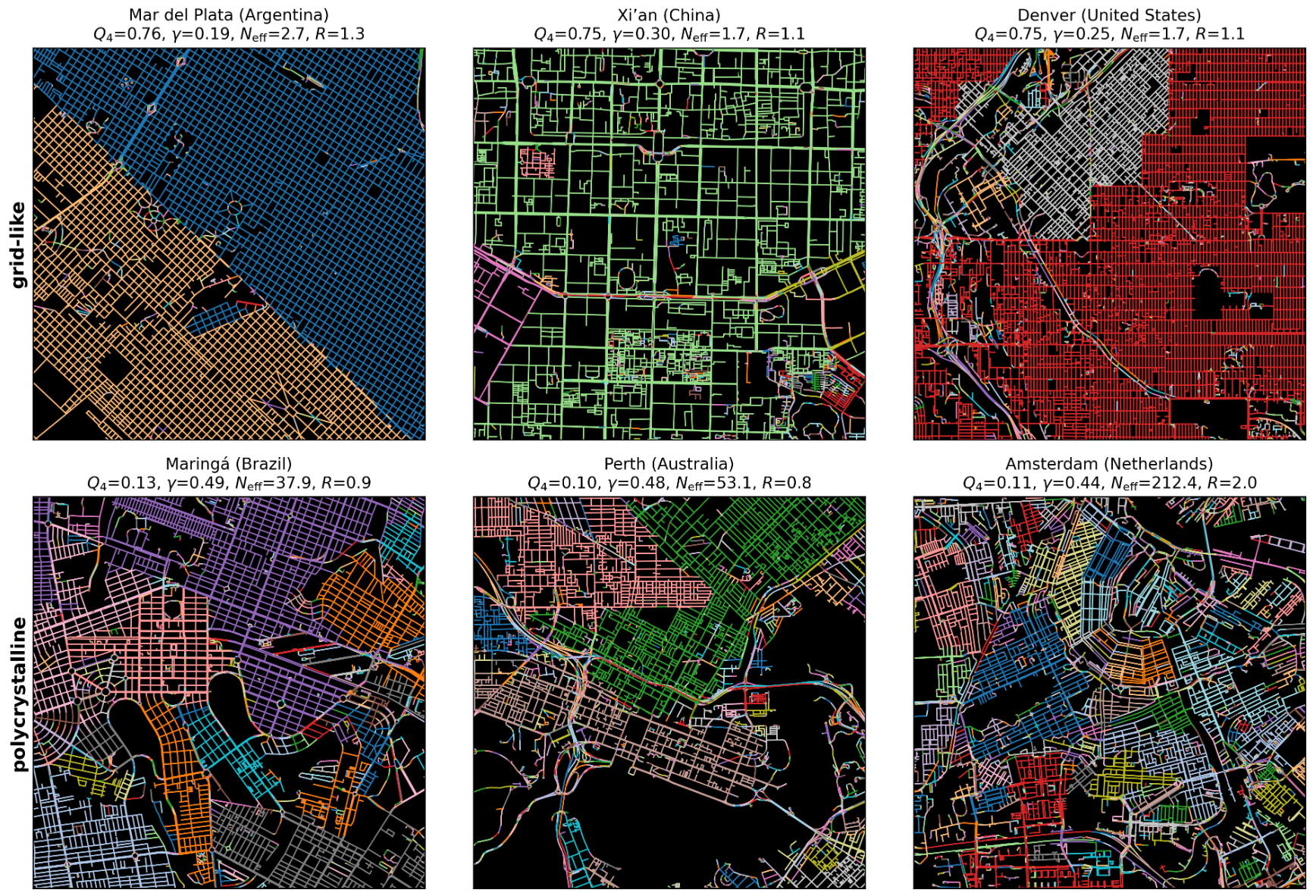
Cool looking paper! Geometry of Urban Order
https://arxiv.org/abs/2609.13029
 @hikingdude@mastodon.social
2026-08-15 14:13:59
'Detailfotografie' #FotoVorschlag
Oh I posted this one recently but I think it also fits very well for the 'details' topic. And it has some waterdrops to cool your timeline during the heat ;)
Happy Saturday my #photography friends

 @cdarwin@c.im
2026-08-11 01:00:16
“We believe physics is the third modality for AI models,
after text and pixels,”
says MIT PhD student and CSAIL researcher Minghao Guo,
a co-lead author on a paper introducing GeoPT.
“Our general-purpose model has the versatility to help build a world model for physics.
Many models, such as those that generate robotics data and videos, are already well-versed in textual and visual data,
but with physical accuracy, they’ll get more-realistic results.”

 @Mediagazer@mstdn.social
2026-07-06 12:25:37
Versant agrees to acquire Full Swing, a sports tech company best known for its advanced golf simulators, tracking, and analytics software for $530M in cash (Alex Weprin/The Hollywood Reporter)
https://www.hollywoodreporter.com/business

 @arXiv_csHC_bot@mastoxiv.page
2026-08-12 08:22:14
MazzikaAI: A knowledge-based performance-to-prompt compiler for real-time Arabic maqam accompaniment with a streaming text-to-music model
Jiaxin Du, Boulbaba Abdeljaouad, Yong Zhuang, Haoyu Li
https://arxiv.org/abs/2608.10360 https://arxiv.org/pdf/2608.10360 https://arxiv.org/html/2608.10360
arXiv:2608.10360v1 Announce Type: new
Abstract: Arabic maqam music microtonal, modal, and built on ornamented call and response is among the traditions most underserved by generative music models, whose training frameworks remain predominantly Western and equaltempered. Real time accompaniment sharpens this gap: an AI partner must listen, adapt dynamically, and respect idiomatic microtonal structures. Streaming text to music models provide strong generative capabilities but lack precise control interfaces. We present MazzikaAI, a knowledge based system that uses natural language as the actuator of a realtime control loop. By compiling live MIDI, gesture, and inferred harmony into continuously updated text prompts, MazzikaAI steers an unmodified streaming generator, Google Lyria RealTime, without requiring model finetuning. The system embeds expert knowledge of six core maqamat, characteristic ornaments, and ensemble dynamics, maintaining realtime responsiveness with subsecond keytoaudibleupdate latency. Empirical evaluations demonstrate that dynamic prompt compilation reliably grounds generation in microtonal scales, significantly increasing offgrid quartertone content over baseline generation. Beyond its core implementation, MazzikaAI illustrates how deterministic knowledgebased rules can effectively bridge expert, nonWestern musical traditions and unfinetuned foundation models. This architecture establishes a scalable paradigm for realtime humanAI cocreation, offering a generalizable blueprint for interactive accompaniment, adaptive music education, and culturally inclusive generative audio across diverse global idioms.
toXiv_bot_toot
@cdarwin@c.im2026-08-30 05:02:09
A wildfire in California’s Big Sur region doubled in size overnight,
forcing the evacuation of nearby residents,
in a coastal region where firefighters have battled another blaze for weeks.
The #PlaskettFire, which sparked on Tuesday, had swept through more than 5,900 acres (2,400 hectares) in Monterey county as of Friday,
and remained un-contained, according to Cal Fire. Its c…
 @cdarwin@c.im
2026-07-03 02:38:53
Nearly 39,000 Acres of Land Returned to California Tribes
The California Natural Resources Agency,
in partnership with the CAL FIRE and the Ocean Protection Council
awarded $107.7 million to fund 33 projects
and support the return of approximately 38,950 acres of land to California Native American tribes
through the Tribal Nature-Based Solutions grant program.
Funding will support the return of ancestral lands to tribal ownership and stewardship,
pla…
