 @Techmeme@techhub.social
2026-07-15 20:25:58
Apple publishes a policy for upcoming Maps ads, says home services ads are banned, medical services ads will be "evaluated on a case-by-case basis", and more (Sarah Perez/TechCrunch)
https://techcrunch.com/2026/07/15/apple-quietly-…

 @Mediagazer@mstdn.social
2026-07-15 20:25:49
Apple publishes a policy for upcoming Maps ads, says home services ads are banned, medical services ads will be "evaluated on a case-by-case basis", and more (Sarah Perez/TechCrunch)
https://techcrunch.com/2026/07/15/apple-quietly-…

 @aardrian@toot.cafe
2026-08-12 18:03:29
“Should a Dialog Close When Clicked Outside?”
https://adrianroselli.com/2026/08/should-a-dialog-close-when-clicked-outside.html
This post is not exactly a shrug emoji (because I offer reasoning), but really, it’s probably not as clear-cut as …
 @aardrian@toot.cafe
2026-08-13 12:39:20
If you have a dialog on your page / screen and are trying to figure out whether it should close when a user clicks / taps outside (or hits Esc), I tried for some guidance:
https://adrianroselli.com/2026/08/should-a-dialog-close-when-clicked-outside.html

 @ckent@urbanists.social
2026-07-13 07:48:46
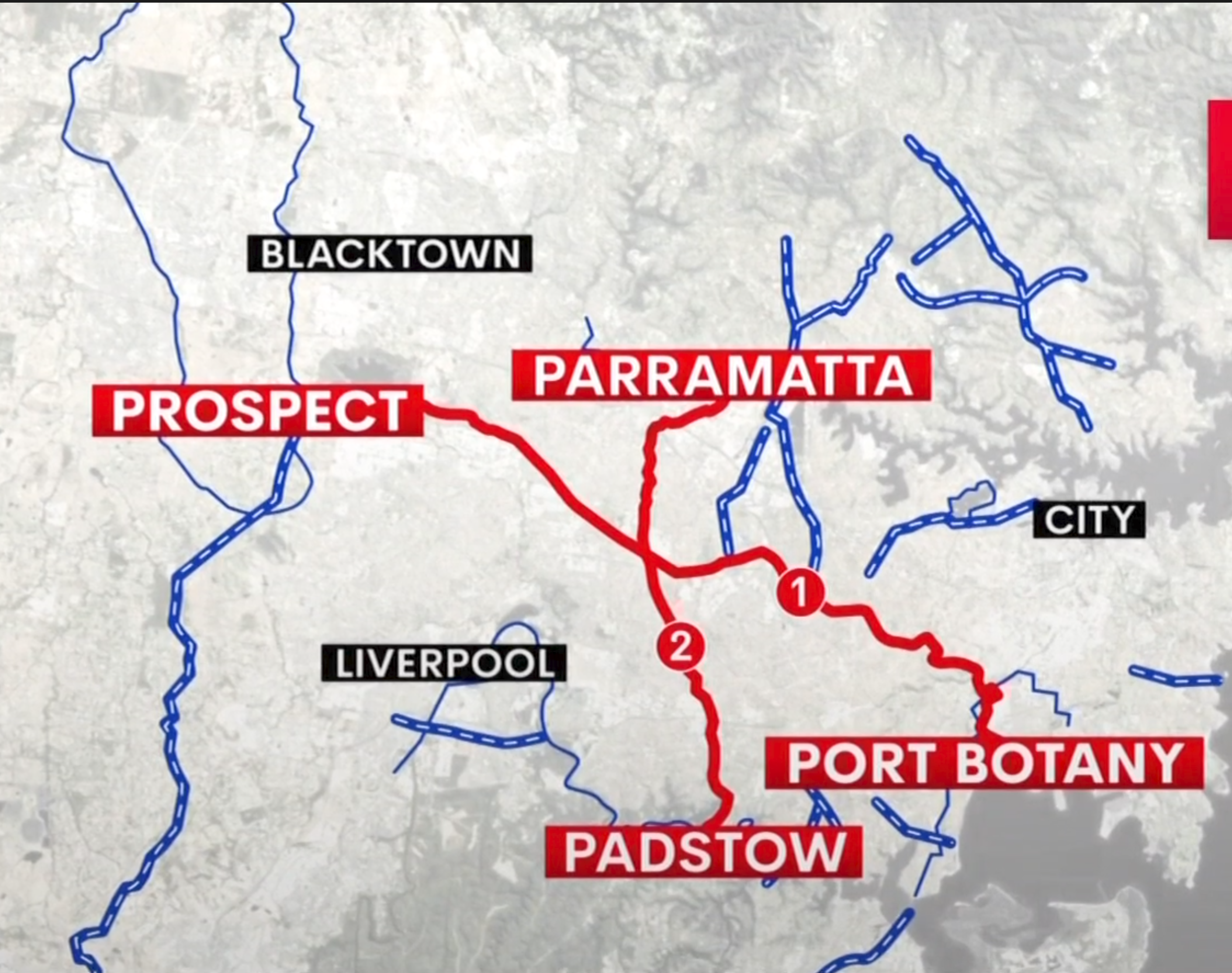
Core Urbanism: "Committee for Sydney" is proposing a greenways network across the city, in the "nice things" category because it's away from cars and amongst the fields or rivers or trees
Never forget — cycleways cost about 1% per kilometre as much as roads … and we never talk about what we spend on roads
https://www.…
 @sakhavi@aoir.social
2026-08-08 18:35:31
I must be unusual in that sometimes I find a book hard to read because of how *good* it is. E.g. when so many sentences send me off in a million directions with connections / correlations / inspirations that it takes me a half-hour to finish a page. @… 's The Psychology of Software Teams is officially in this category.
 @arXiv_hepth_bot@mastoxiv.page
2026-08-07 08:25:53
GLSM monodromy on quantum period lattice of Calabi-Yau fourfold flops
Ban Lin
https://arxiv.org/abs/2608.06280 https://arxiv.org/pdf/2608.06280 https://arxiv.org/html/2608.06280
arXiv:2608.06280v1 Announce Type: new
Abstract: We establish an integral basis for the B-brane central charges of certain Calabi-Yau fourfold flops and derive exact expressions for their monodromies using the grade restriction rule and window categories of the associated gauged linear sigma models. The monodromy is interpreted as an EZ twist associated with the contraction of an exceptional surface onto a curve of conifold singularities. We further illustrate a decomposition of the EZ twist into spherical twists for families of splitting configurations of the sixtic Calabi-Yau fourfold and a complete intersection in grassmannian.
toXiv_bot_toot
 @tiotasram@kolektiva.social
2026-09-02 22:26:27
Earth's futures can be divided into two categories: futures which support human life and those that don't.
The IPCC reports have avoided framing things this way, but burn enough fossil fuels quickly enough and you tip over into the later.
Note that this logic applies to any sub-region of the Earth too: some unknown number of years ago, thanks to ExxonMobil's sales of oil and duplicity about the known risks, the tipping point into "unlivable future" was crossed with respect to a segment of the Trishuli river in Nepal, and just this year that future was realized quite suddenly. In individual apartments across North America and Europe this summer thousands of people found themselves in unlivable futures due to heat waves, and millions more avoided that fate narrowly through the use of air conditioning which could well fail in future heat waves...
What the IPCC reports have been detailing for literally more than three decades is what it would take to tip things the other way. They report this in various forms, but usually at the level of how much CO2 emissions can be permitted on what schedule in order to prevent (locally-)unlivable futures (abstracted as a number of degrees of warming relative to a baseline).
The IPCC reports of emissions and mitigations can be translated into actions: what kind of policy would have to be enacted when by which government in order to avoid an unlivable future. In general however, hierarchical nation-states have proven collectively incapable of meeting *any* of these targets, and so indeed, translating emissions targets into policy actions is increasingly impossible, and has always been an improbable path towards survival. The longer nation states fail to meet the necessary emissions goals (or even accelerate oil drilling), the more drastic action is necessary. We can continue to talk about what kind of national policies might avoid unlivable futures, even as those futures are realized for more and more people, but national policies are not the only kinds of actions that can change the future. Fire example, a national policy shutting down an oil pipeline might avert a certain amount of emissions, but the pipeline owner could also shut it down themselves, or an activist could sabotage it, and the effect would be the same. Lots of different actors have different kinds of actions they can take to create similar effects, and it's the effects that are necessary to avoid unlivable futures.
Effectively, assuming that we will not wind up in a totally unlivable future, this leads to a principle of action substitution. We know what effects are necessary, and if nation states refuse to enact those via policies and companies likewise refuse to make any voluntary changes, then the only actions that remain to be taken are drastic direct actions. Simply put: the longer nations and corporations refuse to do anything to create livable futures, the more people will simply take direct action to achieve the needed carbon emissions reductions, because the alternative for them is death and that alternative is becoming clearer with each climate casualty, so it will be increasingly impossible to threaten them into giving up their lives for corporate profits.
#ClimateChange #ClimateEmergency
 @inthehands@hachyderm.io
2026-08-20 21:44:07
OK, I guess I wasn't done after all.
Much of the opining about developer backlash to LLMs falls into two loose theoretical categories:
(1) Labor problem: developers now experience employment threat, loss of job security, layoffs, new levels of worry about the future
(2) Identity problem: developers used to feel special because generating code was placed on a cultural pedestal (sign of a special third brain lobe or whatever), that perceived specialness was a pillar of our personal identity, and now our egos are bruised because machines can do it and we don’t feel special anymore
While there’s doubtless truth to both of those in some / many cases, I posit a third theory:
(3) Purpose problem: contrary to popular belief, developers actually care quite a lot about the people who use our software and we derive a sense of purpose and meaning from doing what we believe to be good work; the current environment undermines that, not just LLMs but LLMs as part of a broader vortex of enshittification, and our world is effectively saying “everything you cared about doesn't matter, you can't hope to fight to make it matter, and you are stupid for caring”
I think there's evidence for that last theory in the kinds of despair you hear from developers: not just anxiety about paying the bills, not just angry feather-puffing, but a kind of existential despair that comes from the unraveling of one’s internal sense of purpose and meaning.
4/3
 @pixelpusher220@dmv.community
2026-06-28 19:44:06
US bus drivers, and all union employees should take notes.
Strike...but make it hurt the right people
Do the job, but refuse to collect fares.
#Union #Transit
https://japantoday.com/category/national/okayama-buses-strike-by-continuing-to-run-and-refusing-to-take-anyone’s-money