@Techmeme@techhub.social
2026-09-21 10:06:22
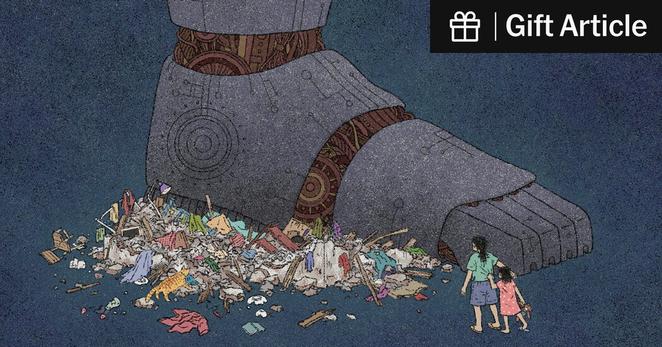
As Xi Jinping visits Washington, Chinese economists warn that Beijing's heavy focus on AI comes at the expense of addressing a severe broader economic crisis (Li Yuan/New York Times)
https://www.nytimes.com/2026/09/20/busines
 @arXiv_physicsappph_bot@mastoxiv.page
2026-07-23 07:45:38
Elastic Trapped States at Dislocation Defects in Scaled Coupling and Hofstadter Models
Yangkai Liu, Cheng Lin, Yuan Liu, Jiao Shen, Yifan Zhu, Haiyan Fan, Hui Zhang
https://arxiv.org/abs/2607.19890 https://arxiv.org/pdf/2607.19890 https://arxiv.org/html/2607.19890
arXiv:2607.19890v1 Announce Type: new
Abstract: Elastic topological dislocations provide a pathway for trapping elastic wave energy at internal defects, rather than being confined solely to external boundaries or corners, which are typically associated with topological insulators (TIs). However, two practical constraints persist. First, highly confined dislocation states based on conventional Su-Schrieffer-Heeger (SSH) dimerization usually require a large coupling contrast and a correspondingly enlarged bandgap, which may be challenging to realize. Second, some Hamiltonians with richer topological physics often contain complex hopping terms, synthetic gauge fields or nonlocal couplings, which substantially increase the geometric complexity of experimental samples. Here, dislocation-induced trapped states are demonstrated in both a scaled coupling (SC) model and a Hofstadter model (HM) within an elastic platform. In the SC model, the trapped mode is treated as a higher localized state in the continuum rather than an in-gap mode in the SSH model. Consequently, the SC-induced dislocation can trap an enhanced mode without the requirement of an enlarged bandgap. For the HM, Householder tridiagonalization is used to map the original tight-binding Hamiltonian with complex hopping terms onto a tridiagonal matrix with only positive-real-valued nearest-neighbour (NN) hopping terms. Truncation at a weak-hopping position preserves the topological phenomena and allows a dislocation defect to be constructed from the shortened aperiodic chain. The results establish a practical route for designing highly localized modes without relying solely on bandgap enlargement or complex couplings, which advance the topological physics of elastic wave systems and promise enhanced possibilities for elastic functional devices.
toXiv_bot_toot
 @cdarwin@c.im
2026-08-19 21:15:01
Since China offered a truce in the trade war last October following its threat to deprive the United States of rare-earth magnets,
the Trump administration has been happy to stop escalating.
After all, imports from China have been falling, down by 40% in the year to June, compared with the same period in 2024.
Best to declare victory and call it a day.
But the US hasn’t won this battle
– and there’s strong evidence to show it’s afraid to really try.
Last …

 @arXiv_csGR_bot@mastoxiv.page
2026-07-22 08:46:59
Replaced article(s) found for cs.GR. https://arxiv.org/list/cs.GR/new
[1/1]:
- Conformal tubular parameterization and toroidal bending of tube-like surfaces
Shunyu Yao, Gary P. T. Choi
https://arxiv.org/abs/2605.16305 https://mastoxiv.page/@arXiv_csGR_bot/116600097651538857
- SCALMU: Synthetically-trained Coupling of Adaptive Learned Multiplicative Updates for Hyperspectr...
Xinxin Xu, Yann Gousseau, Christophe Kervazo, Sa\"id Ladjal
https://arxiv.org/abs/2605.30973 https://mastoxiv.page/@arXiv_eessIV_bot/116673699236122120
- CNS-Edit : Category-Agnostic 3D Editing with Coupled Neural Shape Representation
Jingyu Hu, Weilong Yan, Zhengzhe Liu, Haipeng Li, Ka-Hei Hui, Hao Zhang, Chi-Wing Fu
https://arxiv.org/abs/2607.16577
toXiv_bot_toot
@Techmeme@techhub.social2026-07-14 14:40:48
Filing: Chinese chipmaker CXMT seeks to raise ~$9.8B in an IPO on Shanghai's chip-heavy STAR Board (David Morris/Bloomberg)
https://www.bloomberg.com/news/articles/2026-07-14/cxmt-prices-shanghai-star-board-ipo-at-8-66-yuan-pe…
@cdarwin@c.im2026-07-16 20:18:47
According to Xin Zhi Yuan reports,
the list of 2026 Fields Medal winners has been unexpectedly leaked.
Two Peking University alumni, Wang Hong and Deng Yu, are both on the list
— marking the first time Chinese mathematicians will claim the highest honor in mathematics in the same edition.
Someone discovered four Fields Medal laureate lecture fields marked “HIDDEN” in the front-end code of the ICM 2026 official schedule.
A single curl command generated by Codex c…
 @Techmeme@techhub.social
2026-07-10 10:02:11
Memo: MiniMax CEO Junjie Yan tells employees he will forgo his salary until MiniMax achieves AGI and promises to allocate personal shares to employee incentives (Juro Osawa/The Information)
https://www.theinformation.com/briefings/minimax-ceo-vows-forgo-s…
 @Techmeme@techhub.social
2026-09-01 09:40:45
Hong Kong-listed Z.ai reports H1 2026 revenue up 5x YoY to ~$142M, with "open platform and API revenue" up 28x to ~$122M, and net loss down 12% YoY to ~$308M (Juro Osawa/The Information)
https://www.theinformation.com/briefings/chines…
 @Techmeme@techhub.social
2026-07-07 11:01:15
Survey: Chinese companies plan to allocate 46% of their AI accelerator budget to domestic products in the next 12 months, up from 30% today, a shift from Nvidia (Gao Yuan/Bloomberg)
https://www.bloomberg.com/news/articles/2026…
@Techmeme@techhub.social2026-07-15 06:01:24
Sources: DeepSeek's annualized revenue recently reached $400M to $500M as it seeks to raise ~$7.4B at a ~$74B valuation, up from ~$50B after raising ~$7B in May (The Information)
https://www.theinformation.com/articles/de