 @matthiasott@mastodon.social
2026-08-25 16:24:40
InDesign is also falling apart now, it seems. Laggy af on an M1 Max with 32 GB of RAM, and the undo command is regularly breaking (!). And it’s always the same story: people report these bugs to Adobe, but they just persist for months and months. 🤨
https://community.adobe.com/questio…

 @geant@mstdn.social
2026-06-26 08:46:01
✨ SIG-Marcomms Meeting Recap ✨
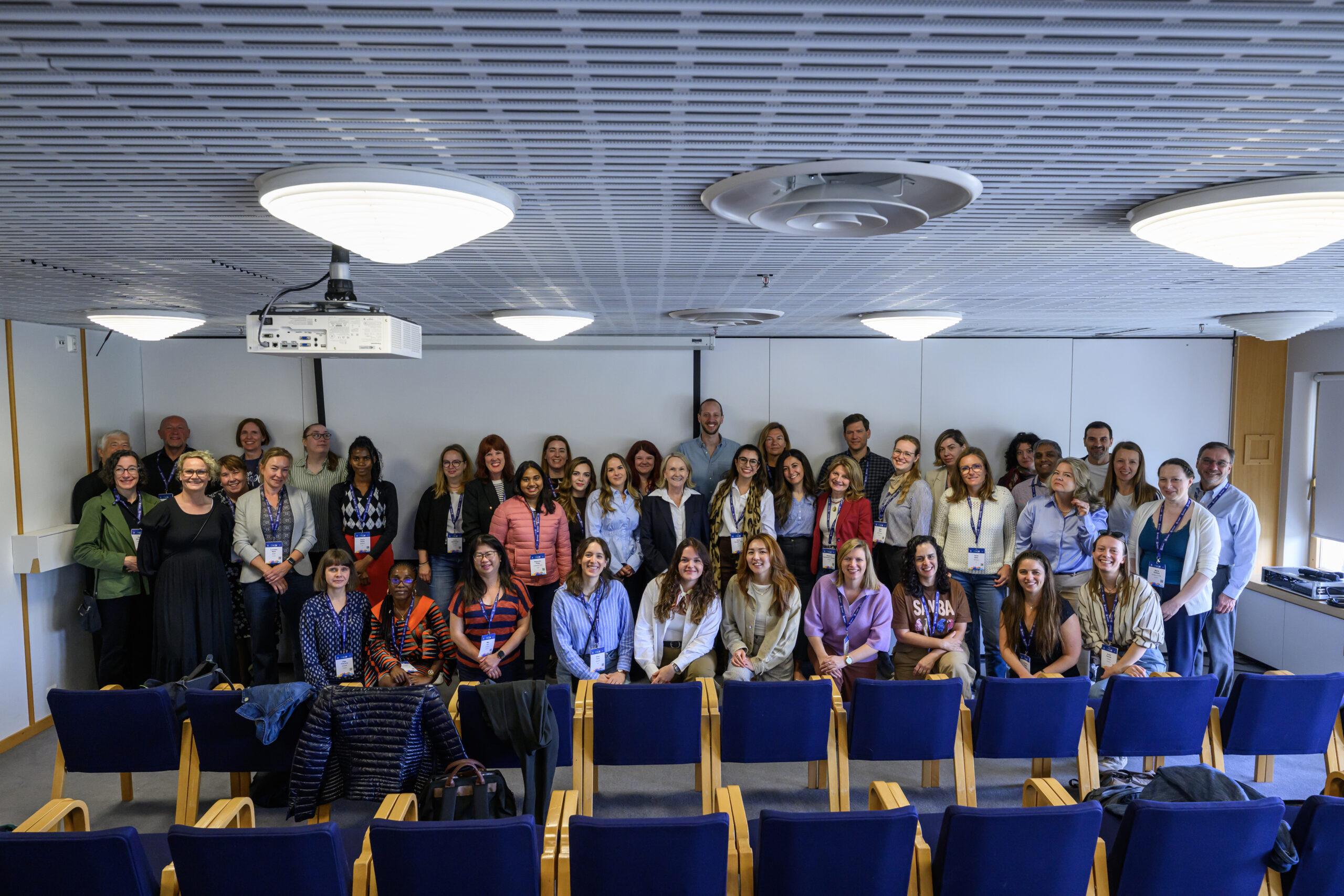
Our communications community gathered in Helsinki right before #TNC26 for a day of discussions and shared learning. One question was on everyone's mind: how do we move from communications as a reactive function to communications as a strategic force?
What followed were discussions on crisis communications, strategic influence and a round of Lightning…
 @ErikUden@mastodon.de
2026-06-18 15:13:31
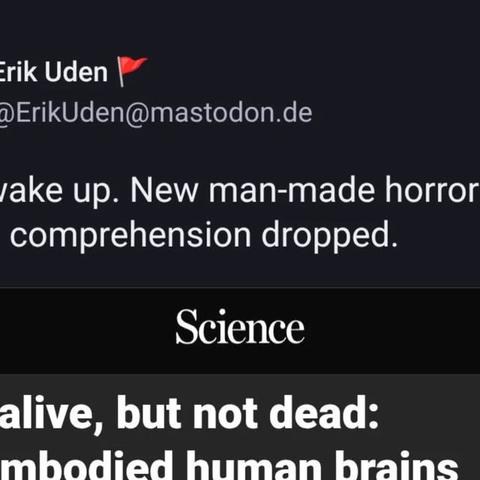
Hey folx! You probably see a lot of stuff from other social networks mirrored to Mastodon, how about we do it the other way around?
Recently, I've starred to mirror my posts to Instagram, Reddit, and other platforms, and I've had quite the success. My biggest post on Instagram, which is just one screenshot of a Mastodon post, has 44.5k likes and 256k views. My
 @cdarwin@c.im
2026-06-19 18:21:16
This is the most detailed picture of a human cell ever made 🧪
https://www.instagram.com/reel/DX1CGIZMKJs/?igsh=NTc4MTIwNjQ2YQ

 @frankel@mastodon.top
2026-08-12 17:57:03
Meet the Java Geek weekly 149
https://blog.frankel.ch/java-geek-weekly/149/
Design gotchas in JDK’s functional interfaces. syncthing. The Teal programming language. Ponytail Agent Skill Corrects Its Own Benchmark After Contributor Challenge. Eight Myths on Software Engineering…
 @hex@kolektiva.social
2026-06-27 04:05:41
Now, I don't especially like the term "church" so I may use something else... like "coven." You can do what you want. But I happen to have already mapped out an example. (It is exactly that, just an example, so take if it's useful, change if you need, and don't stick to anything too closely.) Oh, this mapping also means that you would, for religious reasons, only be allowed to work under capitalism 4 days a week instead of 5.
Given the increases in productivity over the last 100 years, a 4 day work week is a completely reasonable expectation. If we have to annex Monday for the weekend by force of religion, so be it. It is rightfully ours anyway. If enough people try it, this will probably work. If it doesn't work, it just needs more people.
The Practice of Worship:
It is recommended to break down worship in to three sections: the functional, the communal, and the spiritual. It is also recommended to break these across multiple days. A common structure for some Christian churches is to take 10-15 minutes for announcements (Functional), an hour or two for services (Spiritual), followed by (Communal) coffee, tea, and cookies for an unspecified time up to two hours after. When starting or working with limited time a single compressed model like this may work, but it's not optimal.
- The Functional
The purpose of this section is to address the functional needs of the coven. Block out time (less than 90 minute blocks is recommended) to go through reports and updates from those involved in the Dispensary, Library, Works Committee (infrastructure), and Services Committee (providing services internally and, potentially, externally). Talk through any additional announcements, including those from other covens you may be federated with.
It is helpful to include unstructured communal time, such as shared meals, during or after functional meetings. As the federation grows, more time will be needed. It is recommended to break functional meetings, work parties, and such across multiple days. When a federation becomes sufficiently large, it is recommended to take every Monday, on top of Saturday and Sunday, as a third day of community and worship.
The scope of the functional spans 3 realms (which may be more-or-less fluid): the personal or family, the coven and federation, and humanity itself. It is up to each coven and individual to negotiate how to allocate the three days of the weekend once we have liberated Monday from the work week, but it is important to reserve it for one of these three. However, some people must work on weekends. Medical personnel, for example, cannot conform to a standard work week. While the work week should be universally restricted, which specific days are used will be up to the specific coven and their members.
A functional meeting can start with an agenda like the following:
Functional Invocation
Announcements
Report Backs
Dispensary
Inventory Check
What is low
What is empty
What is expiring
What is needed
Funds status
Library
Inventory Check and Items needing return
Library acquisition requests
Funds status and budget check
Works Committee
Upcoming projects
Subcommittee updates (Following the Works Committee agenda)
New committee formations
Funds status
Services Committee
New capabilities announcements
New needs requests
Subcommittee updates (Following the Works Committee agenda)
New committee formations
Funds status
Task Check
Breaking the Circle
This agenda is a suggestion for those who don't know where to start. It can be adapted or ignored as appropriate.
- The Spiritual
Spirituality is necessarily an undefined space. It is deeply personal. Each individual taking time to share their own personal spiritual experiences can help each connect with each other. This experience of connection can itself be a spiritual experience. It may also be useful to read esoteric, mystical, or philosophical texts together as type of "book club" and share thoughts. Others may draw from their own knowledge or traditions. This is something that must be defined together within a group.
- The Communal
The communal aspect of the practice of worship bind the coven and federation together. Within the community we find joy and release, connection and comfort. The coven is where we turn in times of need, and where we share our hopes and dreams.
 @DieGesellschafterinLang@swiss.social
2026-07-14 12:34:31
#femizid #Offenburg #Stalker
Spendenaufruf für Spendenaufruf für Kateryna S. Sohn: junge-theaterakademie-offenburg.eu/2026/07/10/spendenaufruf-fuer-kateryna-sniedkovas-sohn/www.gofundme.com/f/spendenauf…
 @tiotasram@kolektiva.social
2026-06-11 15:00:02
Just finished "The Terraformers" by Annalee Newitz (@…). It was recommended as a "solarpunk" book, and I'm currently on a quest to find more speculative fiction as good as Le Guin or Butler, so I was eager to dig in. Having tagged the author (hi) I'll try to be polite here, but I'll admit I was disappointed.
Newitz clearly has a powerful imagination and there's lots of great stuff in the book, but it's not at all pushing boundaries in terms of imagining future societies. I think the message and intent was good in a lot of places, but off or self-contradictory in others. I absolutely adore the relatively small point made at the end about revolutions being complicated and not boiling down to heroes and battles, but despite the book's attempt to avoid that, I think it still falls into that pattern. Without too many spoilers, the way that some big problems are resolved near the end leans too much on a legal framework without questioning how it's enforced, and that resolution then means that a few heroic acts are enough to tip the balance, which undermines the point about messy histories.
The biggest contradiction of the book to my mind though is with a central theme. The book really explores a world in which "anyone of any species can be a person, as long as we just bioengineer them to be intelligent enough," and it tries to make a point about how engineering limited intelligences is cruel. At several points characters comment about how personhood shouldn't depend on intelligence. There's even a brief quote about how maybe rivers could be people... But... the point could have been "anyone can be a person, regardless of intelligence." This would have made for much more interesting philosophical territory to explore IMO (how do we then bound personhood; how do we reconcile predator/prey relations between persons, etc.). These are also questions that the indigenous traditions Newitz draws on (and consulted about, as mentioned in the acknowledgements) has interesting answers for, but we don't get to explore them through Newitz' world, and because the question of personhood regresses to the question of intelligence, it feels like the moral philosophy of the ERT folks isn't any better than the "InAss" they disparage.
It's not a bad book overall, even if it doesn't engage with the questions I'm hungry to see others engage with. Newitz' efforts to sketch out a more vibrant and diverse future are still monumental and inspiring in a lot of ways. I'm just still looking for something more. Ultimately, I think it lives up to the "solar" but not very much to the "punk."
#AmReading #ReadingNow #Bookstodon
 @brewsterkahle@mastodon.archive.org
2026-07-27 19:24:04
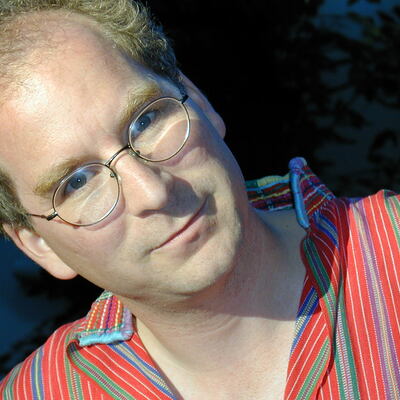
The Internet Archive San Francisco tours on Fridays at 1pm are getting more and more people. So fun. 300 Funston Ave.
Here are some other tiny bookie non-profits in San Francisco...
Letterform Archive https://letterformarchive.org/
Prelinger Library