 @raiders@darktundra.xyz
2026-09-17 00:24:26
Raiders’ Kirk Cousins craves In-N-Out victory meals, has appetite for deep shots https://www.reviewjournal.com/sports/raiders/raiders-kirk-cousins-craves-in-n-out-victory-meals-has-appetite-for-deep-shots-3887163/…
 @detondev@social.linux.pizza
2026-09-17 14:09:26


 @doktrock@toad.social
2026-08-18 12:41:35
#Minnesota Gov Walz issues executive order on copper-nickel PGE mining. May affect development of the Twin Metals deposit in the 1.1 billion yr old Duluth mafic Complex of the Midcontinent Rift. #geology

 @sncf_ligne_r@lepoulsdumonde.com
2026-08-17 04:27:53
Le train suivant voit son départ différé de 10 minutes environ :
- KUMO, départ Paris Gare de Lyon Š 06h46 - arrivée Montereau Š 07h46.
Pour plus d'informations sur cette perturbation, consultez le fil X de la ligne.
Motif : malaise voyageur (sur sa mission précédente).
🤖 17/08 06:27
 @krone@frawas.de
2026-08-17 16:39:20
„Eine teure Lektion“ - „Lungenkollaps!“ Ex-Ski-Ass nach Salto im Spital #News #Nachrichten
 @lpryszcz@genomic.social
2026-08-16 13:40:53
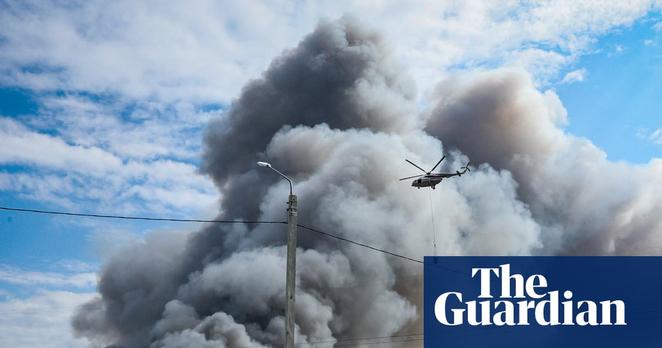
" the mayor of Moscow, Sergei Sobyanin, reported that 600 drones were launched towards the capital’s region, of which 201 were destroyed.
Ukraine has rapidly expanded its long-range, deep-strike missile and drone capabilities in 2026, allowing it to attack warehouses, oil refineries, ports and military facilities at distances of up to 1,500 miles (2,400km) from its border."
 @sncf_ligne_r@lepoulsdumonde.com
2026-08-17 04:51:14
Le train suivant voit son départ différé de 10 minutes environ :
- KUMO, départ Paris Gare de Lyon Š 06h46 - arrivée Montereau Š 07h46.
Pour plus d'informations sur cette perturbation, consultez le fil X de la ligne.
Motif : malaise voyageur (sur sa mission précédente).
🤖 17/08 06:51
 @donelias@mastodon.cr
2026-08-11 03:03:16
Sismo en Colombia: Miles necesitan ayuda ya.
https://ayuda.cruzrojacolombiana.org/?utm_source=mastodon&utm_medium=social
Sismo de magnitud 7.4 esta mañana en el Chocó.
Hay heridos, familias sin techo y equipos de rescate trabajando c…

 @heiseonline@social.heise.de
2026-07-07 07:24:00

 @heiseonline@social.heise.de
2026-09-03 10:34:04
