 @khalidabuhakmeh@mastodon.social
2026-07-20 18:03:56
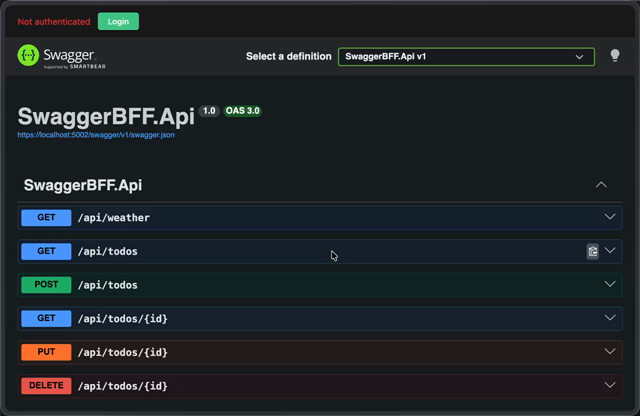
A post I wrote about securing an #OpenAPI scheme using Duende IdentityServer gets a decent amount of reads a month (https://duendesoftware.com/blog/202511
 @cdarwin@c.im
2026-09-17 15:48:34
A group of Jewish voters in Michigan
is urging support for Dr. Abdul El-Sayed, the state’s Democratic nominee for Senate,
in an open letter that acknowledges concerns among some Jewish voters about his candidacy and his criticism of Israel.
The letter, signed by more than 500 people who identify as Jewish leaders or voters in the state,
says that the election of Dr. El-Sayed, a staunch critic of Israel,
is “clearly the better choice for Jews” compared with his R…

 @arXiv_mathST_bot@mastoxiv.page
2026-08-14 08:10:08
Foundations of Independent Component Analysis
Patrick Forr\'e
https://arxiv.org/abs/2608.13229 https://arxiv.org/pdf/2608.13229 https://arxiv.org/html/2608.13229
arXiv:2608.13229v1 Announce Type: new
Abstract: We present the mathematical foundations of linear independent component analysis (ICA) models based on standard literature in a self-contained note. It is aimed at readers with a background in measure-theoretic probability theory. We first develop the theory of the characteristic functions of probability measures on $\mathbb{R}^d$, including their analyticity and the way in which they determine and characterise the distributions. We then focus on several identifiability results of ICA models with successively strengthened assumptions on the sources: from merely non-constant, to non-Gaussian, to Gaussian-free independent sources. Under the strictest assumptions, we show that the independent sources are identifiable up to translation, permutation, scales and signs, and this even in the presence of additive Gaussian noise. Furthermore, we present the online equivariant gradient descent ICA algorithm for recovering the independent sources from data, in the standard complete noiseless non-Gaussian ICA setting.
toXiv_bot_toot
 @arXiv_physicsmedph_bot@mastoxiv.page
2026-06-23 08:13:11
Dosimetric Quantification of a Commercial Dual-Tube kV X-Ray System for Preclinical FLASH Research
Luka Matej Devenica, Lixiang Guo, Mohammad Rezaee, Ken Kang-Hsin Wang
https://arxiv.org/abs/2606.23401 https://arxiv.org/pdf/2606.23401 https://arxiv.org/html/2606.23401
arXiv:2606.23401v1 Announce Type: new
Abstract: A kV dual tube system has been disseminated as a commercial research platform for preclinical FLASH radiotherapy (RT). Because the tubes are arranged in a parallel opposed geometry, both output symmetry and time resolved tube synchronization are critical for achieving sufficiently high dose rates (DR) and reproducible study results. We quantified tube output asymmetry observed in depth dose measurements as well as tube synchronization and evaluated their impact on FLASH studies. The dual-tube system defines dose per pulse as the combined single pulse output from both tubes, with DR given by dose per pulse/pulse length. 3D dose distributions were reconstructed from film measurements to assess the impact of output discrepancies. Pulse synchronization between tubes was characterized using a scintillator with 1 ms resolution. We showed >20% discrepancies in output at nominally equal mA/ms settings. After we compensated such discrepancy by decreasing the current of the tube with higher output, the inter tube output difference was reduced to <1%, restoring symmetrical depth dose. We further simulated an in vivo intestinal irradiation in which naive tube settings resulted in >22% of the organ volume receiving >102% of the prescribed dose, compared with <7% when output compensation was applied. We identified a 10.2 /- 7.0ms synchronization jitter between tubes, which disproportionately impacts the DR at low dose-per-pulse settings, particularly relevant for fractionated studies. Corresponding quality assurance (QA) was designed to monitor tube synchronization over time. We quantified the dosimetric impact of asymmetric output and synchronization and demonstrated implications for preclinical studies. The proposed methodology and QA would mitigate and monitor these effects, ensuring study reproducibility.
toXiv_bot_toot
 @arXiv_physicsgeoph_bot@mastoxiv.page
2026-06-30 07:51:15
Two kinds of robustness are not the same: disentangling fault tolerance and low-SNR robustness in multi-domain event detection on real data
Isao Kurosawa
https://arxiv.org/abs/2606.29339 https://arxiv.org/pdf/2606.29339 https://arxiv.org/html/2606.29339
arXiv:2606.29339v1 Announce Type: new
Abstract: Reliable event detection underpins induced-seismicity monitoring for Carbon dioxide Capture and Storage (CCS) and geothermal operations, distributed acoustic sensing (DAS), and industrial condition monitoring. In each setting a detector must stay reliable both when sensors fail and when the signal is buried in noise. These two failure modes are routinely conflated, and architectural complexity is often credited with robustness it may not deserve. We assemble a unified binary event-detection benchmark from three physically distinct real sources -- Hi-net seismic waveforms, Utah FORGE 2024 borehole DAS, and MAFAULDA industrial vibration -- each mapped to a common 8-channel, 256-sample representation, and evaluate a fault-tolerant detector (CEPHALON) trained with per-sample sensor-dropout against standard detectors (a 1D convolutional network, a temporal convolutional network, and a compact Transformer) trained with an identical recipe. On clean data every model is near-perfect (AUC ~ 0.99). Under progressive sensor loss, simple models with sensor-dropout are already robust and CEPHALON holds no advantage. Under additive noise, however, CEPHALON degrades far more gracefully: at -2.5 dB its overall AUC is 0.939 versus 0.532-0.572 for the convolutional baselines. Same-architecture ablations isolate the cause: disabling internal redundancy at inference reduces the low-SNR advantage only modestly, whereas removing sensor-dropout training collapses it (0.899 to 0.603 at -5 dB). The training recipe is therefore the dominant cause and parallel redundancy only secondary. We release a complete, numbered, reproducible pipeline so that every figure can be regenerated.
toXiv_bot_toot
 @arXiv_mathKT_bot@mastoxiv.page
2026-08-07 07:40:08
Representability of continuous K-theory in rigid analytic motivic $\mathbb{A}^1$-homotopy theory
Christian Dahlhausen, Can Yaylali, Yicheng Zhou
https://arxiv.org/abs/2608.06209 https://arxiv.org/pdf/2608.06209 https://arxiv.org/html/2608.06209
arXiv:2608.06209v1 Announce Type: new
Abstract: We prove that both continuous K-theory and analytic K-theory of rigid analytic spaces (\`a la Kerz--Saito--Tamme) satisfiy descent with respect to the Nisnevich topology. Together with the fact that it is $\mathbb{A}^1$-invariant assuming resolutions of singularities, we deduce that it is representable in the $\mathbb{A}^{1}$-homotopy category of rigid spaces (\`a la Dahlhausen--Yaylali). We identifiy the representing object with both $\mathbb{Z}\times\mathrm{BGL}$ and the analytification of algebraic K-theory. As a consequence, we get a representability statement for coefficients in light condensed spectra. Moreover, we show Weibel vanishing and that continuous K-theory is $\mathbb{A}^1$-invariant on local Tate pairs (without any regularity assumption).
toXiv_bot_toot