 @aredridel@kolektiva.social
2026-03-12 22:46:24
Content warning: Starfleet Academy
Once again, people forget space is 3 dimensions
@aredridel@kolektiva.socialOnce again, people forget space is 3 dimensions
 @arXiv_mathPR_bot@mastoxiv.page
The Radial Spanning Tree is straight in all dimensions
Tom Garcia-Sanchez
https://arxiv.org/abs/2601.08667 https://arxiv.org/pdf/2601.08667
 @davej@dice.camp
 @inthehands@hachyderm.io
Daniels was looking at just 10 easily quantifiable body measurements. How many important dimensions of variations are there in a human mind? How hard are they to measure? How likely is it that even one single “average” mind exists on Earth?? The odds are vanishingly small.
[Napkin sketch: assume there are a paltry 20 dimensions of brain variation. (Surely that’s low.) Assume there’s a 1 in 5 change of being completely “normal” in each. (Surely that’s high.) Even that absurd hypothetical gives a 1 in 11,490 chance that a •single• completely average mind exists in a population of 8.3 billion.]
5/
 @@arXiv_physicsatomph_bot@mastoxiv.page@mastoxiv.page
Crosslisted article(s) found for physics.atom-ph. https://arxiv.org/list/physics.atom-ph/new
[1/1]:
- Quantum Simulation of Massive Relativistic Fields in 2 1 Dimensions
Zhang, Wang, Wong, Jenkins, Konstantinou, Dogra, Thywissen, Eigen, Hadzibabic
 @YaleDivinitySchool@mstdn.social
Apr 12-14 — Join us for a unique public theology gathering, focused on the moral dimensions of the midterm elections. This national conference offers a moral analysis that transcends partisan boundaries and equips religious leaders, scholars, theologians, and moral activists to delve into the crucial public issues confronting our nation.

 @markhburton@mstdn.social
I conquer, therefore I am – the United States intervention in Venezuela
Article in which I explore two dimensions of the USA's terrorist action against Venezuela, oil and the demonstration of power. As for oil, I explore two aspects. Read the article on the North West Bylines site. For more about how I see Venezuela and the 'Bolivarian revolution', see my 2019 piece on this site.
 @laurentperrinet@neuromatch.social
Š #Strasbourg ? une exposition Š ne pas manquer:
https://laurentperrinet.github.io/post/2026-02-20_ososphere/
 @stiefkind@mastodon.social
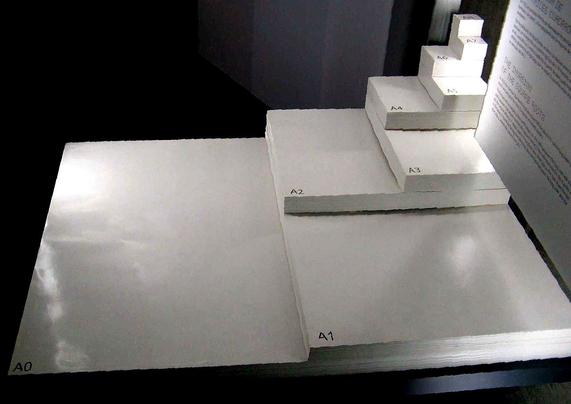
»The origins of the exact dimensions of Letter size paper are lost in tradition and not well documented. The American Forest and Paper Association argues that the dimension originates from the days of manual papermaking and that the 11-inch length of the page is about a quarter of "the average maximum stretch of an experienced vatman's arms."« 🤡
Source:
@inthehands@hachyderm.ioHigh-dimensional data has this property: it is extremely unlikely that there will be a data point situated at the exact center.
It’s the high dimensionality that’s important here. One person might be at some sort of average on •one• dimension, but for them to be at the average on •all• dimensions grows exponentially less likely as the number of dimensions increases.
It’s like trying to roll all threes with a set of dice. Odds of that with one die? 1 in 6. Odds with two dice? 1 in 36. Odds with 10 dice? 1 in ~60 million.
4/
 @seeingwithsound@mas.to
Crossmodal interaction of flashes and beeps across time and number follows Bayesian causal inference #SiFI
 @arXiv_grqc_bot@mastoxiv.page
Replaced article(s) found for gr-qc. https://arxiv.org/list/gr-qc/new
[1/1]:
- Gravitational wave from extreme mass-ratio inspirals as a probe of extra dimensions
Mostafizur Rahman, Shailesh Kumar, Arpan Bhattacharyya
 @karlauerbach@sfba.social
I am trying to renew my US passport. I sent in an application via their online renewal system. It worked well - except that it is picky about photographs.
Well, the rejected the application because they now do not like the photograph that they had accepted.
And now they tell me dimensions - e.g. head 1.38 inches high. Well, I sent 'em a digital photo and unless they tell me the pixel resolution of their printers I can't tell 1.38 inches from a hole in the ground.
 @arXiv_mathAC_bot@mastoxiv.page
Crosslisted article(s) found for math.AC. https://arxiv.org/list/math.AC/new
[1/1]:
- Strongly $FP$-injective dimensions and Gorenstein projective precovers
V\'ictor Becerril
https://arxiv.org/abs/2602.00932 https://mastoxiv.page/@arXiv_mathRA_bot/116006106948011463
- A new criterion for the absolute irreducibility of multivariate polynomials over finite fields
Carlos Agrinsoni, Heeralal Janwa, Moises Delgado
https://arxiv.org/abs/2602.01583 https://mastoxiv.page/@arXiv_mathAG_bot/116006152454132364
- Polynomial Interpolation of a Vector Field on a Convex Polyhedral Domain
Junyan Chu, Shizuo Kaji
https://arxiv.org/abs/2602.01803 https://mastoxiv.page/@arXiv_mathDS_bot/116005884688809977
- Triangle equivalences between Gorenstein tiled orders and incidence algebras of posets
Osamu Iyama, Junyang Liu
https://arxiv.org/abs/2602.01878 https://mastoxiv.page/@arXiv_mathRT_bot/116006035840435585
toXiv_bot_toot
 @johnhobbs@mstdn.ca
After five decades in information management, one paramount truth stands: LEARNING NEVER STOPS! 📚 Whether delving into history or exploring sci-fi realms, new dimensions always await. What books have recently expanded your mind? Share your enlightening reads! #LifelongLearning #BookLovers

 @paulbusch@mstdn.ca
I've often wondered if a Canadian EV "Kei Car" type program would help the country achieve zero emission goals, provide affordable transportation, and reduce grid lock in our cities.
In 1949, Japan created a special category of keijidosha (light vehicles) created for affordability and maneuverability in dense cities. The Kei car quickly became popular despite strict limits on dimensions (length, width, height) and engine displacement (under 660cc). They were given unique license plates for enforcement purposes and had tax benefits for owners.
What if an "Ion" vehicle category was created in Canada:
- must be manufactured in Canada
- minimum 100Km range, suitable for any urban commute
- limited to 50Km/hr
- restricted to street use, not to be used on highways
- size restrictions, perhaps Smart Car sized for personal vehicles, larger for commercial vehicle category
How many city-dwelling Canadians would buy a cheap EV to run errands and give the finger to big oil?
#KeiCars
https://youtu.be/LtTirdKvyeI
 @arXiv_mathDG_bot@mastoxiv.page
Elliptic genera and E8 Bundles in odd dimensions
Siyao Liu, Yong Wang
https://arxiv.org/abs/2601.18221 https://arxiv.org/pdf/2601.18221
 @arXiv_csGR_bot@mastoxiv.page
Hybrid Foveated Path Tracing with Peripheral Gaussians for Immersive Anatomy
Constantin Kleinbeck, Luisa Theelke, Hannah Schieber, Ulrich Eck, R\"udiger von Eisenhart-Rothe, Daniel Roth
https://arxiv.org/abs/2601.22026 https://arxiv.org/pdf/2601.22026 https://arxiv.org/html/2601.22026
arXiv:2601.22026v1 Announce Type: new
Abstract: Volumetric medical imaging offers great potential for understanding complex pathologies. Yet, traditional 2D slices provide little support for interpreting spatial relationships, forcing users to mentally reconstruct anatomy into three dimensions. Direct volumetric path tracing and VR rendering can improve perception but are computationally expensive, while precomputed representations, like Gaussian Splatting, require planning ahead. Both approaches limit interactive use.
We propose a hybrid rendering approach for high-quality, interactive, and immersive anatomical visualization. Our method combines streamed foveated path tracing with a lightweight Gaussian Splatting approximation of the periphery. The peripheral model generation is optimized with volume data and continuously refined using foveal renderings, enabling interactive updates. Depth-guided reprojection further improves robustness to latency and allows users to balance fidelity with refresh rate.
We compare our method against direct path tracing and Gaussian Splatting. Our results highlight how their combination can preserve strengths in visual quality while re-generating the peripheral model in under a second, eliminating extensive preprocessing and approximations. This opens new options for interactive medical visualization.
toXiv_bot_toot
 @arXiv_csLG_bot@mastoxiv.page
UrbanFM: Scaling Urban Spatio-Temporal Foundation Models
Wei Chen, Yuqian Wu, Junle Chen, Xiaofang Zhou, Yuxuan Liang
https://arxiv.org/abs/2602.20677 https://arxiv.org/pdf/2602.20677 https://arxiv.org/html/2602.20677
arXiv:2602.20677v1 Announce Type: new
Abstract: Urban systems, as dynamic complex systems, continuously generate spatio-temporal data streams that encode the fundamental laws of human mobility and city evolution. While AI for Science has witnessed the transformative power of foundation models in disciplines like genomics and meteorology, urban computing remains fragmented due to "scenario-specific" models, which are overfitted to specific regions or tasks, hindering their generalizability. To bridge this gap and advance spatio-temporal foundation models for urban systems, we adopt scaling as the central perspective and systematically investigate two key questions: what to scale and how to scale. Grounded in first-principles analysis, we identify three critical dimensions: heterogeneity, correlation, and dynamics, aligning these principles with the fundamental scientific properties of urban spatio-temporal data. Specifically, to address heterogeneity through data scaling, we construct WorldST. This billion-scale corpus standardizes diverse physical signals, such as traffic flow and speed, from over 100 global cities into a unified data format. To enable computation scaling for modeling correlations, we introduce the MiniST unit, a novel split mechanism that discretizes continuous spatio-temporal fields into learnable computational units to unify representations of grid-based and sensor-based observations. Finally, addressing dynamics via architecture scaling, we propose UrbanFM, a minimalist self-attention architecture designed with limited inductive biases to autonomously learn dynamic spatio-temporal dependencies from massive data. Furthermore, we establish EvalST, the largest-scale urban spatio-temporal benchmark to date. Extensive experiments demonstrate that UrbanFM achieves remarkable zero-shot generalization across unseen cities and tasks, marking a pivotal first step toward large-scale urban spatio-temporal foundation models.
toXiv_bot_toot
@inthehands@hachyderm.ioIn the 1950s, the Air Force realized that planes were crashing because cockpits didn’t actually fit the pilots’ bodies. Wrong size = danger!! They commissioned a researcher to develop a new, more correct set of standard dimensions for the seat, yoke, etc.
That researcher, Gilbert S. Daniels, came up with 10 body measurements that matter to cockpit size. He gathered measurements of several thousand pilots. And the number of people who were at the average for all ten measurements? Zero. Not a single one.
“Average” proved to be a statistical construct, not a thing that actually exists as a person.
https://99percentinvisible.org/episode/on-average/
3/
@YaleDivinitySchool@mstdn.social“A lot of times when we hear information about U.S. religious life, so much of it is based on polls, which do a particular kind of work,” YDS professor and ethnographer Todne Thomas says, noting that polls lack nuance and often focus on political dimensions of faith. “Religious life is important, whether we’re in an election year or not.”
Hear more from Prof. Thomas in the new episode of the YDS podcast series, which you can listen to here:
 @arXiv_mathDG_bot@mastoxiv.page
Llarull type theorems for bands in Three and Four dimensions
Xiaoxiang Chai, Xueyuan Wan
https://arxiv.org/abs/2602.21813 https://arxiv.org/pdf/2602.21813 https://arxiv.org/html/2602.21813
arXiv:2602.21813v1 Announce Type: new
Abstract: Llarull's theorem asserts that the scalar curvature and the metric on the $n$-sphere cannot be bounded below at the same time by those of the standard $n$-sphere. Using the warped $\mu$-bubble method, we develop Llarull type theorems for three and four-dimensional bands with spectral scalar curvature bounds.
toXiv_bot_toot
@inthehands@hachyderm.ioThere is variation in everyone, but society / context / environment makes that variation more burdensome for some than for others. “Neurotypical” is not a thing that anyone •is•, but rather an archetype that human systems are designed for / evolved around.
When we recognize that “neurotypical” is an archetype and not an actual person, we can reach the same insight that the Air Force reached: you don’t build things to some single optimal set of “normal” dimensions; you make things more adjustable, flexible, accommodating of variation.
/end
@arXiv_csLG_bot@mastoxiv.pageHigh-Dimensional Robust Mean Estimation with Untrusted Batches
Maryam Aliakbarpour, Vladimir Braverman, Yuhan Liu, Junze Yin
https://arxiv.org/abs/2602.20698 https://arxiv.org/pdf/2602.20698 https://arxiv.org/html/2602.20698
arXiv:2602.20698v1 Announce Type: new
Abstract: We study high-dimensional mean estimation in a collaborative setting where data is contributed by $N$ users in batches of size $n$. In this environment, a learner seeks to recover the mean $\mu$ of a true distribution $P$ from a collection of sources that are both statistically heterogeneous and potentially malicious. We formalize this challenge through a double corruption landscape: an $\varepsilon$-fraction of users are entirely adversarial, while the remaining ``good'' users provide data from distributions that are related to $P$, but deviate by a proximity parameter $\alpha$.
Unlike existing work on the untrusted batch model, which typically measures this deviation via total variation distance in discrete settings, we address the continuous, high-dimensional regime under two natural variants for deviation: (1) good batches are drawn from distributions with a mean-shift of $\sqrt{\alpha}$, or (2) an $\alpha$-fraction of samples within each good batch are adversarially corrupted. In particular, the second model presents significant new challenges: in high dimensions, unlike discrete settings, even a small fraction of sample-level corruption can shift empirical means and covariances arbitrarily.
We provide two Sum-of-Squares (SoS) based algorithms to navigate this tiered corruption. Our algorithms achieve the minimax-optimal error rate $O(\sqrt{\varepsilon/n} \sqrt{d/nN} \sqrt{\alpha})$, demonstrating that while heterogeneity $\alpha$ represents an inherent statistical difficulty, the influence of adversarial users is suppressed by a factor of $1/\sqrt{n}$ due to the internal averaging afforded by the batch structure.
toXiv_bot_toot
@johnhobbs@mstdn.caHave you explored the intricate chronicles of history or ventured into scientific realms via literature? WWII books, in particular, provide profound insights and enrich our understanding. 📚 Which literary genres transport you to new dimensions or eras? Share your favorites! Let's embark on this enlightening journey together. #BookLovers #HistoryBuffs
 @arXiv_mathDG_bot@mastoxiv.page
Calibrations for the Sasaki volume on odd spheres and the no-gap problem
Jonas Matuzas
https://arxiv.org/abs/2602.22961 https://arxiv.org/pdf/2602.22961 https://arxiv.org/html/2602.22961
arXiv:2602.22961v1 Announce Type: new
Abstract: For each odd sphere $S^{n}$ with $n=2m 1\ge 5$, we consider the Sasaki volume functional $\mathrm{Vol}^S(V)=\int_{S^{n}}\sqrt{\det(I (\nabla V)^{\top}(\nabla V))}\,d\mathrm{vol}$ on smooth unit tangent vector fields $V$. Using the Brito--Chacon--Naveira calibration $\omega=a\wedge\Theta$ on the unit tangent bundle $E=UTS^{n}$, we establish the universal calibrated lower bound $\mathrm{Vol}^S(V)\ge c(m;1)\,\mathrm{vol}(S^{n})$, where $c(m;1)=4^{m}/\binom{2m}{m}$. In the relaxed (integral-current) setting, we show that the section-constrained stable mass in $E$ equals the calibration value and is attained by an $\omega$-calibrated mass-minimizing integral $n$-cycle in the section class.
We also analyze the equality case on smooth graphs. If a smooth graph is $\omega$-calibrated on an open set, then it satisfies the rigidity system $\nabla_V V=0$ and $\nabla_X V=\lambda X$ for all $X\perp V$, hence is locally a radial distance-gradient field. In particular, for $m\ge 2$ there is no smooth unit field on $S^n$ whose graph is $\omega$-calibrated everywhere.
Finally, we construct an explicit smooth recovery sequence (presented in detail for $S^5$ and then extended to all odd dimensions) and prove a uniform nonvanishing estimate for the polar-shell normalization in the patching construction. As a consequence, $\inf_{V}\,\mathrm{Vol}^S(V)=c(m;1)\,\mathrm{vol}(S^{n})$, so there is no Lavrentiev gap.
toXiv_bot_toot
 @tomkalei@machteburch.social
A scanned reference with 130 of them:
" The epigrams that follow attempt to capture some of the dimensions of this traffic in imagery that sharpens, focuses, clarifies, enlarges and beclouds our view of this most remarkable of all mans' artifacts, the computer "
https://iiif.library.cmu.edu/file/Simon_box00075_fld05959_bdl0003_doc0002/Simon_box00075_fld05959_bdl0003_doc0002.pdf
( maybe of interest for @… ?)
@@arXiv_physicsatomph_bot@mastoxiv.page@mastoxiv.pageCrosslisted article(s) found for physics.atom-ph. https://arxiv.org/list/physics.atom-ph/new
[1/1]:
- Dipolar quantum gases: from 3D to Low dimensions
Yifei He, Haoting Zhen, Gyu-Boong Jo