 @blakes7bot@mas.torpidity.net
2026-03-12 19:40:50
Series C, Episode 12 - Death-Watch
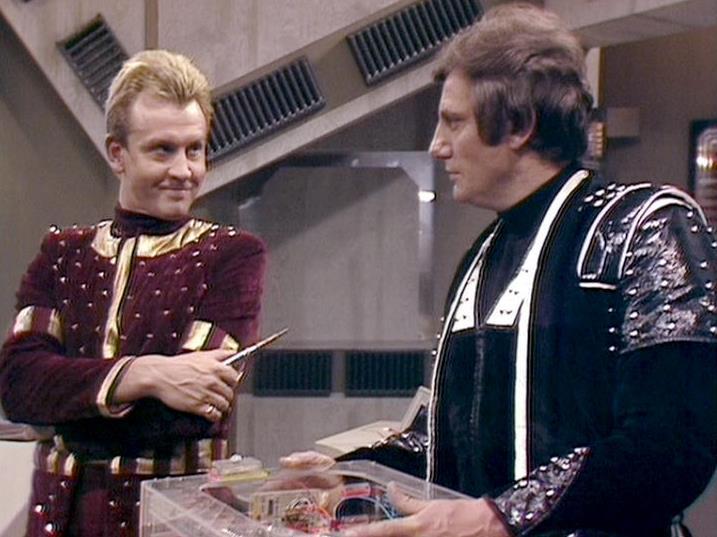
DEETA: Don't do it! [whips out his gun and shoots her]
FEMALE VOICE: Will Deeta Tarrant report immediately to the Flight Deck, please. [Deeta reholsters gun and exits] Deeta Tarrant to the Flight Deck, please.
https://blake.torpidity.net/m/312/31 B…
 @arXiv_physicsinsdet_bot@mastoxiv.page
2026-02-09 08:25:58
CAGE: An Internal Source Scanning Cryostat for HPGe Characterization
G. Othman, C. Wiseman, T. H. Burritt, J. A. Detwiler, M. P. Held, R. Henning, T. Mathew, D. Peterson, W. Pettus, G. Song, T. D. Van Wechel
https://arxiv.org/abs/2602.06289 https://arxiv.org/pdf/2602.06289 https://arxiv.org/html/2602.06289
arXiv:2602.06289v1 Announce Type: new
Abstract: The success of current and future-generation neutrinoless double beta decay experiments relies on the ability to eliminate or reduce extraneous backgrounds. In addition to constructing experiments using radiopure materials and handling in underground laboratories, it is necessary to understand and reduce known backgrounds in data analysis. The Large Enriched Germanium Experiment for Neutrinoless double beta Decay is searching for this decay using 76Ge-enriched high-purity germanium detectors submerged in an active liquid argon veto. A significant background in LEGEND is surface events from shallowly-impinging radiation on detector surfaces. In this paper we introduce the Collimated Alphas, Gammas, and Electrons (CAGE) scanning system, an internal-source scanning vacuum cryostat, designed to perform studies of surface events on sensitive surfaces of HPGe in a surface-lab. CAGE features a collimated radionuclide source inside a movable infrared shield that is able to perform precision scans of detector surfaces by utilizing three independent motor stages for source positioning. This allows detailed studies of pulse shapes as a function of source position and incident angle, where defining features can be extracted and exploited for removing surface backgrounds in data analysis in LEGEND. In this paper, we describe CAGE and demonstrate its performance with a commissioning run with 241Am. The commissioning run was completed with the source at normal incidence, and we estimate a beam spot precision of 3.1 mm, which includes positioning uncertainties and the beam-spot size. Using the 59.5 keV gamma population from 241Am, we show that low-energy photon events near the passivated surface feature risetimes that increase with radial distance from the detector center. We suggest a specific metric that can be used to discriminate low-energy gamma backgrounds in LEGEND with similar characteristics.
toXiv_bot_toot
@blakes7bot@mas.torpidity.net2026-03-01 17:14:20
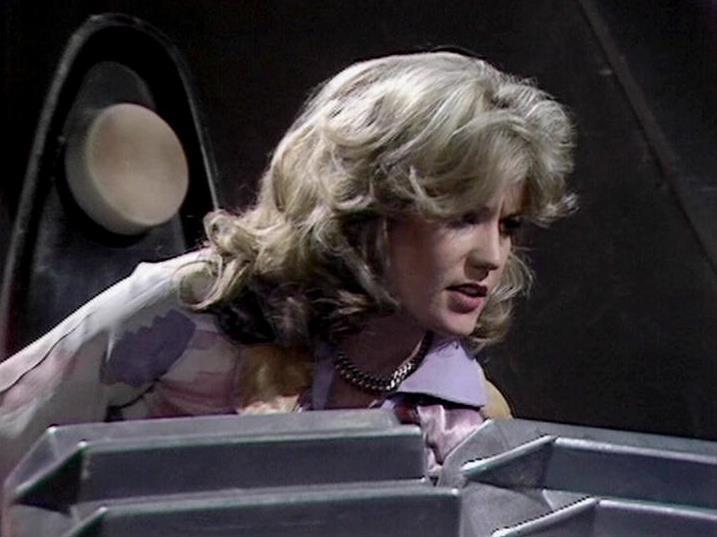
Series A, Episode 10 - Breakdown
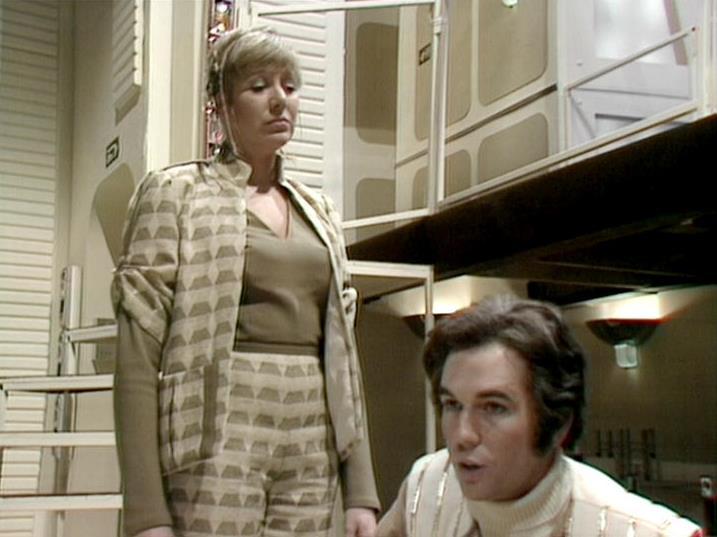
JENNA: Blake, I think you'd better get down to the flight deck. It's Gan.
BLAKE: What's wrong with him, Jenna?
JENNA: I don't know, he seems to be in some sort of pain. He's obviously got - [Gan attacks Jenna]
https://blake.torpidity.net/m/110/6
 @arXiv_csLG_bot@mastoxiv.page
2025-12-22 10:32:30
You Only Train Once: Differentiable Subset Selection for Omics Data
Daphn\'e Chopard, Jorge da Silva Gon\c{c}alves, Irene Cannistraci, Thomas M. Sutter, Julia E. Vogt
https://arxiv.org/abs/2512.17678 https://arxiv.org/pdf/2512.17678 https://arxiv.org/html/2512.17678
arXiv:2512.17678v1 Announce Type: new
Abstract: Selecting compact and informative gene subsets from single-cell transcriptomic data is essential for biomarker discovery, improving interpretability, and cost-effective profiling. However, most existing feature selection approaches either operate as multi-stage pipelines or rely on post hoc feature attribution, making selection and prediction weakly coupled. In this work, we present YOTO (you only train once), an end-to-end framework that jointly identifies discrete gene subsets and performs prediction within a single differentiable architecture. In our model, the prediction task directly guides which genes are selected, while the learned subsets, in turn, shape the predictive representation. This closed feedback loop enables the model to iteratively refine both what it selects and how it predicts during training. Unlike existing approaches, YOTO enforces sparsity so that only the selected genes contribute to inference, eliminating the need to train additional downstream classifiers. Through a multi-task learning design, the model learns shared representations across related objectives, allowing partially labeled datasets to inform one another, and discovering gene subsets that generalize across tasks without additional training steps. We evaluate YOTO on two representative single-cell RNA-seq datasets, showing that it consistently outperforms state-of-the-art baselines. These results demonstrate that sparse, end-to-end, multi-task gene subset selection improves predictive performance and yields compact and meaningful gene subsets, advancing biomarker discovery and single-cell analysis.
toXiv_bot_toot
@blakes7bot@mas.torpidity.net2026-02-24 10:35:43
Series D, Episode 01 - Rescue
DORIAN: Yes, I created Slave.
AVON: What about these? [He draws his gun]
DORIAN: Those as well.
AVON: And all this?
DORIAN: I found the chambers and tunnels already here. I merely had them adapted to my particular needs.
https://blake.torpidity.net/m/401/386