Tootfinder

Opt-in global Mastodon full text search. Join the index!

No exact results. Similar results found.
@netzschleuder@social.skewed.de
2025-11-25 15:00:04

email_company: Manufacturing company email (2010)
A network of emails among employee email addresses at a mid-sized manufacturing company. Each directed edge represents an email sent from address i to address j. Edges are timestamped, and occurred over a 6 month period in an unspecified year.
This network has 167 nodes and 82927 edges.
Tags: Social, Communication, Unweighted, Multigraph, Timestamps
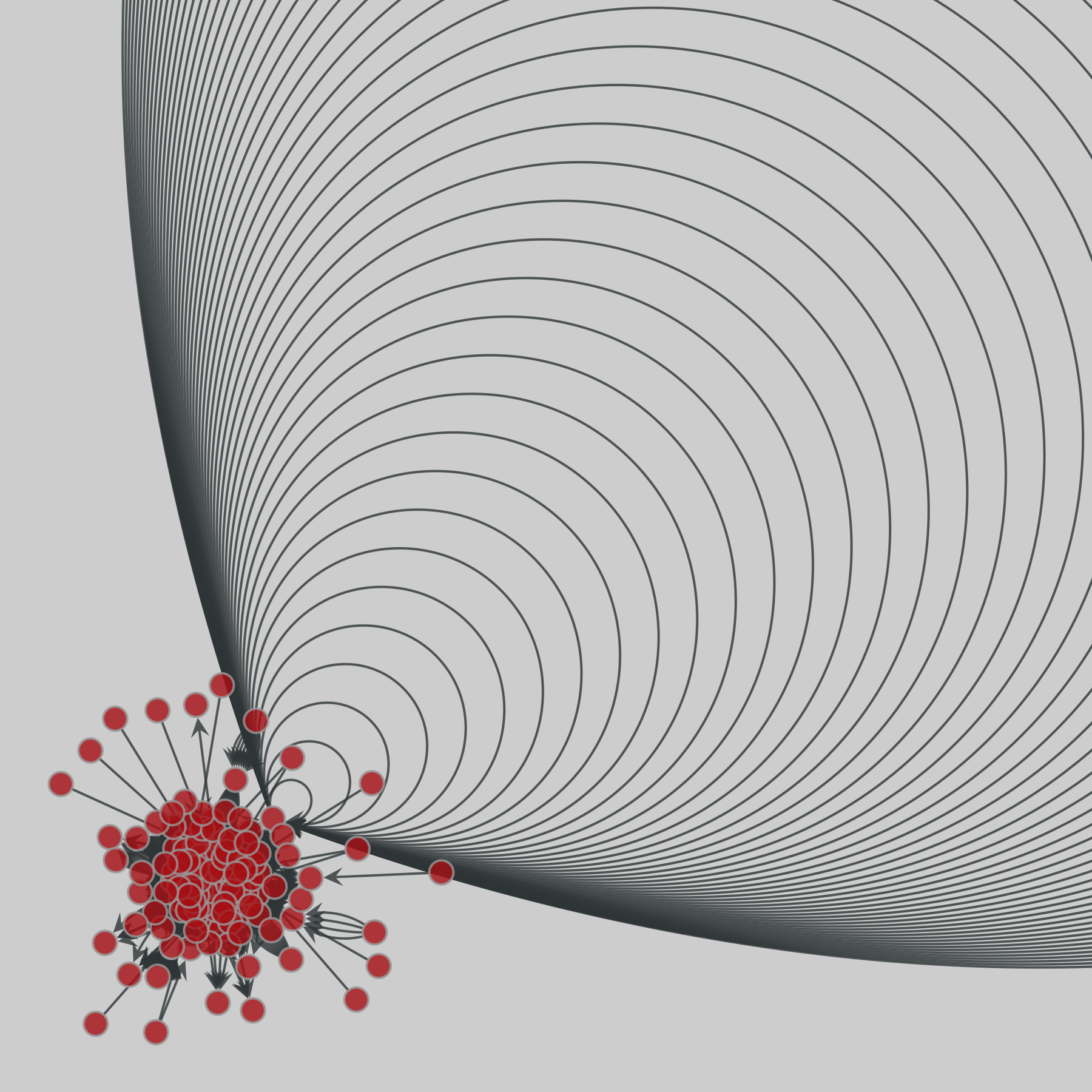

email_company: Manufacturing company email (2010). 167 nodes, 82927 edges. https://networks.skewed.de/net/email_company
@katrinakatrinka@infosec.exchange
2025-11-25 16:01:03

Yes! Well done nonprofit @… living your values! The #Union makes us strong.
#Utah #jouralism

@arXiv_physicsoptics_bot@mastoxiv.page
2025-11-25 09:57:52

Multi-port programmable silicon photonics using low-loss phase change material Sb$_2$Se$_3$
Thomas W. Radford, Idris A Ajia, Latif Rozaqi, Priya Deoli, Xingzhao Yan, Mehdi Banakar, David J Thomson, Ioannis Zeimpekis, Alberto Politi, Otto L. Muskens
arxiv.org/abs/2511.18205 arxiv.org/pdf/2511.18205 arxiv.org/html/2511.18205
arXiv:2511.18205v1 Announce Type: new
Abstract: Reconfigurable photonic devices are rapidly emerging as a cornerstone of next generation optical technologies, with wide ranging applications in quantum simulation, neuromorphic computing, and large-scale photonic processors. A central challenge in this field is identifying an optimal platform to enable compact, efficient, and scalable reconfigurability. Optical phase-change materials (PCMs) offer a compelling solution by enabling non-volatile, reversible tuning of optical properties, compatible with a wide range of device platforms and current CMOS technologies. In particular, antimony tri-selenide ($\text{Sb}_{2}\text{Se}_{3}$) stands out for its ultra low-loss characteristics at telecommunication wavelengths and its reversible switching. In this work, we present an experimental platform capable of encoding multi-port operations onto the transmission matrix of a compact multimode interferometer architecture on standard 220~nm silicon photonics using \textit{in-silico} designed digital patterns. The multi-port devices are clad with a thin film of $\text{Sb}_{2}\text{Se}_{3}$, which can be optically addressed using direct laser writing to provide local perturbations to the refractive index. A range of multi-port geometries from 2$\times$2 up to 5$\times$5 couplers are demonstrated, achieving simultaneous control of up to 25 matrix elements with programming accuracy of 90% relative to simulated patterns. Patterned devices remain stable with consistent optical performance across the C-band wavelengths. Our work establishes a pathway towards the development of large scale PCM-based reconfigurable multi-port devices which will allow implementing matrix operations on three orders of magnitude smaller areas than interferometer meshes.
toXiv_bot_toot

@metacurity@infosec.exchange
2025-10-24 13:58:03

Another crazy week is in the can, so before you head out for the weekend, don't miss today's Metacurity for the most critical developments you should know, including
--DOJ accuses director of defense firm's cyber division of selling secrets to Russia,
--N. Korean IT workers snagged work as animators,
--Ethical hackers breached F1 database and got access to Verstappen's info,
--Hackers enabled theft of Shaquille O'Neal's custom Range Rover,

@arXiv_csLG_bot@mastoxiv.page
2025-09-26 10:31:51

SuperOffload: Unleashing the Power of Large-Scale LLM Training on Superchips
Xinyu Lian, Masahiro Tanaka, Olatunji Ruwase, Minjia Zhang
arxiv.org/abs/2509.21271

@arXiv_csCR_bot@mastoxiv.page
2025-09-26 09:07:21

Reliability Analysis of Fully Homomorphic Encryption Systems Under Memory Faults
Rian Adam Rajagede, Yan Solihin
arxiv.org/abs/2509.20686 a…

@hikingdude@mastodon.social
2025-12-24 16:04:30

Some more #fog ? It was a bit chill but veeerry silent.
I liked the mood there and how the bushes & trees vanished in the fog. Especially the dead tree at the end that looks like reaching out into the water.
Enjoy the silence 🙂
#photography

This black-and-white image captures a tranquil and mysterious scene of a foggy riverside. The river, calm and smooth, reflects the muted light of the overcast sky. Dense fog envelops the area, obscuring the background and creating an ethereal atmosphere.

On the left side of the image, a row of leafless trees stands along the riverbank, their bare branches reaching into the fog. The trees are partially shrouded in mist, adding to the sense of depth and mystery. The fog softens the outlines of t…
@arXiv_csSI_bot@mastoxiv.page
2025-09-26 08:27:11

AI-Enhanced Multi-Dimensional Measurement of Technological Convergence through Heterogeneous Graph and Semantic Learning
Siming Deng, Runsong Jia, Chunjuan Luan, Mengjia Wu, Yi Zhang
arxiv.org/abs/2509.21187

@arXiv_physicsoptics_bot@mastoxiv.page
2025-11-25 10:53:53

MOCLIP: A Foundation Model for Large-Scale Nanophotonic Inverse Design
S. Rodionov, A. Burguete-Lopez, M. Makarenko, Q. Wang, F. Getman, A. Fratalocchi
arxiv.org/abs/2511.18980 arxiv.org/pdf/2511.18980 arxiv.org/html/2511.18980
arXiv:2511.18980v1 Announce Type: new
Abstract: Foundation models (FM) are transforming artificial intelligence by enabling generalizable, data-efficient solutions across different domains for a broad range of applications. However, the lack of large and diverse datasets limits the development of FM in nanophotonics. This work presents MOCLIP (Metasurface Optics Contrastive Learning Pretrained), a nanophotonic foundation model that integrates metasurface geometry and spectra within a shared latent space. MOCLIP employs contrastive learning to align geometry and spectral representations using an experimentally acquired dataset with a sample density comparable to ImageNet-1K. The study demonstrates MOCLIP inverse design capabilities for high-throughput zero-shot prediction at a rate of 0.2 million samples per second, enabling the design of a full 4-inch wafer populated with high-density metasurfaces in minutes. It also shows generative latent-space optimization reaching 97 percent accuracy. Finally, we introduce an optical information storage concept that uses MOCLIP to achieve a density of 0.1 Gbit per square millimeter at the resolution limit, exceeding commercial optical media by a factor of six. These results position MOCLIP as a scalable and versatile platform for next-generation photonic design and data-driven applications.
toXiv_bot_toot

@arXiv_physicsoptics_bot@mastoxiv.page
2025-11-25 18:17:39

Replaced article(s) found for physics.optics. arxiv.org/list/physics.optics/
[1/1]:
- LLM4Laser: Large Language Models Automate the Design of Lasers
Renjie Li, Ceyao Zhang, Sixuan Mao, Xiyuan Zhou, Feng Yin, Sergios Theodoridis, Zhaoyu Zhang
arxiv.org/abs/2104.12145
- Room-temperature valley-selective emission in Si-MoSe2 heterostructures enabled by high-quality-f...
Feng Pan, et al.
arxiv.org/abs/2409.09806 mastoxiv.page/@arXiv_physicsop
- 1T'-MoTe$_2$ as an integrated saturable absorber for photonic machine learning
Maria Carolina Volpato, Henrique G. Rosa, Tom Reep, Pierre-Louis de Assis, Newton Cesario Frateschi
arxiv.org/abs/2507.16140 mastoxiv.page/@arXiv_physicsop
- NeOTF: Guidestar-free neural representation for broadband dynamic imaging through scattering
Yunong Sun, Fei Xia
arxiv.org/abs/2507.22328 mastoxiv.page/@arXiv_physicsop
- Structured Random Models for Phase Retrieval with Optical Diffusers
Zhiyuan Hu, Fakhriyya Mammadova, Juli\'an Tachella, Michael Unser, Jonathan Dong
arxiv.org/abs/2510.14490 mastoxiv.page/@arXiv_physicsop
- Memory Effects in Time-Modulated Radiative Heat Transfer
Riccardo Messina, Philippe Ben-Abdallah
arxiv.org/abs/2510.19378 mastoxiv.page/@arXiv_physicsop
- Mie-tronics supermodes and symmetry breaking in nonlocal metasurfaces
Thanh Xuan Hoang, Ayan Nussupbekov, Jie Ji, Daniel Leykam, Jaime Gomez Rivas, Yuri Kivshar
arxiv.org/abs/2511.03560 mastoxiv.page/@arXiv_physicsop
- Integrated soliton microcombs beyond the turnkey limit
Wang, Xu, Wang, Zhu, Luo, Luo, Wang, Ni, Yang, Gong, Xiao, Li, Yang
arxiv.org/abs/2511.06909 mastoxiv.page/@arXiv_physicsop
- Ising accelerator with a reconfigurable interferometric photonic processor
Rausell-Campo, Al Kayed, P\'erez-L\'ppez, Aadhi, Shastri, Francoy
arxiv.org/abs/2511.13284 mastoxiv.page/@arXiv_physicsop
- Superradiance in dense atomic samples
I. M. de Ara\'ujo, H. Sanchez, L. F. Alves da Silva, M. H. Y. Moussa
arxiv.org/abs/2504.20242 mastoxiv.page/@arXiv_quantph_b
- Fluctuation-induced Hall-like lateral forces in a chiral-gain environment
Daigo Oue, M\'ario G. Silveirinha
arxiv.org/abs/2507.14754 mastoxiv.page/@arXiv_condmatme
- Tensor-network approach to quantum optical state evolution beyond the Fock basis
Nikolay Kapridov, Egor Tiunov, Dmitry Chermoshentsev
arxiv.org/abs/2511.15295 mastoxiv.page/@arXiv_quantph_b
- OmniLens : Blind Lens Aberration Correction via Large LensLib Pre-Training and Latent PSF Repres...
Jiang, Qian, Gao, Sun, Yang, Yi, Li, Yang, Van Gool, Wang
arxiv.org/abs/2511.17126 mastoxiv.page/@arXiv_eessIV_bo
toXiv_bot_toot