 @shaun@mastodon.xyz
2026-07-15 04:31:10
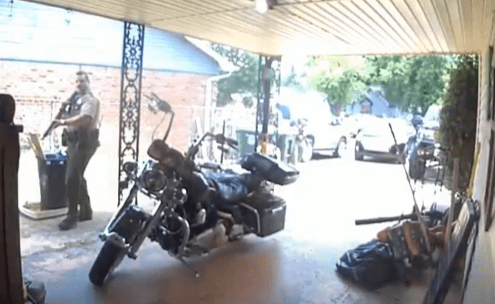
#Memphis unsafe task force unsafing Memphis yet again.
This time, dozens of #Tennessee state #troopers stormed a South Memphis house looking for … stolen lawn mowers? Naturally, they appear to have end…
 @aardrian@toot.cafe
2026-07-15 17:41:20
Looking at something claiming “Accessible by default” with its barely-WCAG-passing thing & tiny 10px text, vibe-coded patterns, SC misrepresentations, Twitter-only social presence, and failure to use HTML correctly reminds me that this ‘law’ also applies to sites:
https://adrianroselli.com/2026/03…

 @yetiinabox@todon.nl
2026-07-15 06:11:10
At this moment, in our small garden, the cherries are finishing, the raspberries are yielding bucketloads, and the strawberries are just starting. The parsley has gone to seed and the mint and oregano are just flowering, and the various chives and garlicky things have seedheads.
However, the slugs appear to be munching all the mizuna seedlings - I'm hoping the hedgehog will help with that. We did have a frog for a while but I think they've left.
We can go two days without…
 @hikingdude@mastodon.social
2026-08-15 14:13:59
'Detailfotografie' #FotoVorschlag
Oh I posted this one recently but I think it also fits very well for the 'details' topic. And it has some waterdrops to cool your timeline during the heat ;)
Happy Saturday my #photography friends

 @outer@mas.to
2026-10-13 17:04:20
Where Do the Children Play?
Well I think it's fine, building Jumbo planes
Or taking a ride on a cosmic train
Switch on summer from a slot machine
Get what you want to if you want, 'cause you can get anything
I know we've come a long way
We're changing day to day
But tell me, where do the children play?
Well you roll on roads over fresh green grass
For your lorry loads pumping petrol gas
And you make them long, and you make …
 @cdarwin@c.im
2026-09-10 15:32:52
We have been trained and trained ourselves to lose touch with the magical, life-giving force of stories.
And our life-sustaining love for stories has been beaten out of us by AI slop, by a shitty, commercialized culture industry, by living under capitalism and end-times fascism, etc.
I get why we feel that way, and I feel it, too. But there’s something really, really wrong there.
Like our air and water and soil and atmosphere, I think we have been trained and trained oursel…

 @NFL@darktundra.xyz
2026-09-12 16:06:24
Titans vs. Jets: Robert Saleh makes debut as Tennessee coach against team that fired him
https://www.cbssports.com/nfl/news/titans-vs-jets-where-to-watch-odds-prediction/
 @tiotasram@kolektiva.social
2026-08-14 12:50:14
The world needs more science fiction of the social- variety.
Rather than imagining how life could be different because of advances in purely mechanistic technologies, why not imagine how life could be different because of advances in social technologies: new inventions of ways societies can be organized or groups of people can relate to each other.
Some concrete examples of existing social technologies: Amish barn-raising, dolphin surf-fishing, online crowd-funding, Capoeira, potlucks, punk rock concerts, etc.
Each of these things was invented at some point, spread (not inevitably) through social communication, allows groups to achieve a specific purpose (or facilitates several different outcomes) and may or may not require specific tools or mechanistic technologies. There will be new social technologies in the future, and they could radically change how human societies function and what human lives look like, just as mechanistic technologies can.
In the current sociopolitical climate, we see one vision of the future, heavily propagandized, which assures us that advances in mechanistic technology will make life ever easier for humans, leading into a golden age where human needs are met by robots. In this imagination, each individual can actualize the productive capacity to meet their own needs because an individual's productive capacity has been multiplied in every dimension by new mechanistic technologies. Humans can finally be rid of the messy complexity of community-dependence and be totally free because mechanistic technologies will replace the need for community connections to satisfy material desires.
But there's an ugly underside to this vision explored by cyberpunk, where advances in mechanistic technologies bring us to a point of total hierarchical domination and control. In this future, productivity-multipliers are recognized as force-multipliers, and the humans who gain control of them use them to subjugate everyone else.
Some of the best science fiction authors, like Le Guin or Asimov, look at not only mechanistic but also at social technologies, and often at the interaction between the two. Social technologies also have the capacity to radically change the human condition, but they don't lend themselves as well to the power fantasy or libertarian utopia of the self-sufficient individual. Social technologies involve people satisfying their needs through dependence on others, and in turn being obligated to take part in communities.
As an anarchist, I believe that the social technologies needed for human flourishing have not been invented yet. I also believe that with the right social technologies, even without significant advances in mechanistic technologies, it's possible for everyone to be able to meet their own needs through community, in a truly sustainable way.
I wish we had more authors using their craft to help explore the space of social technologies and inspire others to join in that exploration, so that the technologies we need can more quickly be invented and evangelized.
#anarchy #SciFi #technology
 @megapenguinx@social.linux.pizza
2026-09-12 07:36:11
I think the best thing I can do for myself is sell off a large chunk of magic cards to hopefully eliminate this debt I’ve been carrying around so that I can start fresh
@NFL@darktundra.xyz2026-10-10 16:26:11
Will the Marvin Harrison Jr. trade unlock his potential? History offers hope, and a warning
https://www.cbssports.com/nfl/news/history-offers-hope-warning-for-marvin-harriso…