 @cdarwin@c.im
2026-07-13 15:04:01
Sen. Mitch McConnell on Sunday revealed for the first time that a fall led to his hospitalization,
breaking the silence about his condition after weeks of mounting speculation about the Kentucky Republican’s health.
McConnell, 84, said in a statement that he was “briefly unconscious” around the time he was first taken to the hospital
and has undergone a battery of tests to try and determine what led to his fall.
He said he was also treated for mild pneumonia and has b…

 @mgorny@social.treehouse.systems
2026-07-13 19:40:49
A new #LifeHack just dropped.
I carry a "medicine organizer" with four compartments where I keep four portions of glucose. The problem is, I never remember which ones I took and refilled recently (I don't need it often), so I don't know which ones are the oldest.
Today I've figured out to shift everything left while refilling, so the oldest always are in the first compartment.
You don't need to congratulate my on the speed of my brain.
 @Techmeme@techhub.social
2026-09-09 17:33:31
Apple unveils the 2nm A20 Pro, featuring a 6-core CPU with two "desktop class" super cores, a 7-core GPU up to 40% faster, and 32 Neural Engine cores in total (Hartley Charlton/MacRumors)
https://www.macrumors.com/2026/09/09/apple-unveils-a2…

 @finlaydag33k@social.linux.pizza
2026-09-11 22:42:57
tfw Uradora gives you first place. :gnulightened:
(Uradora are not known in advance and only revealed when a hand wins with Riichi - I lucked out having a triplet for the tile in the Uradora so got 3 Han extra worth 6K points and giving me 1st place right at the end).


 @doktrock@toad.social
2026-08-07 00:51:39
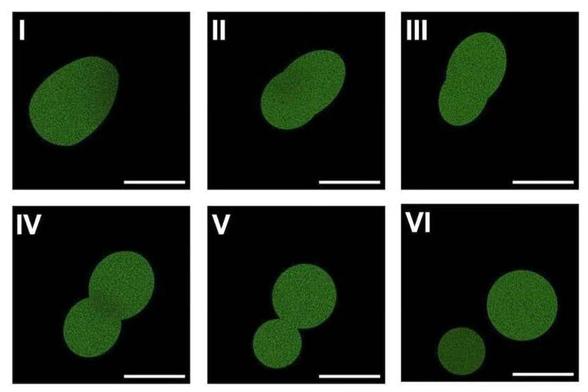
"Kate Adamala and Aaron Engelhart and their teams ... have developed the world’s first synthetic cell with a complete life cycle, built entirely from non-living chemical components"
(Not a biologist, posting this because I'm a #Minnesota alum!)
 @metacurity@infosec.exchange
2026-10-13 10:25:10
First Physical Robbery Potentially Linked to Revolut Data Breach
https://www.infostealers.com/article/first-physical-robbery-potentially-linked-to-revolut-data-breach/
 @PaulWermer@sfba.social
2026-09-10 14:27:32
Not 2, but 3 of this morning's headlines on th#ClimateCrisis - The first is encouraging - We know how to do this, if only we had the sense to do this:
Climate solutions most likely to reach ‘positive tipping points’ revealed by scientists
https://www.
 @paulwermer@sfba.social
2026-09-10 14:27:32
Not 2, but 3 of this morning's headlines on th#ClimateCrisis - The first is encouraging - We know how to do this, if only we had the sense to do this:
Climate solutions most likely to reach ‘positive tipping points’ revealed by scientists
https://www.
 @heiseonline@social.heise.de
2026-09-24 19:29:03

 @callunavulgaris@mastodon.scot
2026-10-08 11:53:28
This article is fascinating and proves yet again that historical films are entertainment first, #history second.
"The uprising was a revolt of all classes below the level of the aristocracy. That is why it was so dangerous."
@…