 @penguin42@mastodon.org.uk
2025-12-13 01:01:19
Submitted an IPv6 ticket to my ISP, #youfibre - as far as I can tell inbound packets are fine, outbound IPv6 don't seem to get far.
They were working a few weeks ago when I started doing IPv6 config on my router; but there's plenty of other people saying they've had IPv6 problems with them intemittently.
 @tinoeberl@mastodon.online
2026-02-10 21:22:15

 @tschundler@leds.social
2026-02-12 21:00:12
It can help me relax/recover by doing a thing that has an end and requires focus and not too much decision-making.
I've been tempted by the newer MARUTOYS/Kotobukiya kits for awhile, so I gave in and bought the Ramune NOSERU, and the similarly colored 30MS Rydira.
After doing some minimal painting, I'm now tempted to fully paint the interior of the NOSERU. But there are a lot of moving parts, so I think it is safer if I leave it unpainted. (panel line accents maybe?)


 @arXiv_csDS_bot@mastoxiv.page
2026-02-10 09:06:51
Local Computation Algorithms for (Minimum) Spanning Trees on Expander Graphs
Pan Peng, Yuyang Wang
https://arxiv.org/abs/2602.07394 https://arxiv.org/pdf/2602.07394 https://arxiv.org/html/2602.07394
arXiv:2602.07394v1 Announce Type: new
Abstract: We study \emph{local computation algorithms (LCAs)} for constructing spanning trees. In this setting, the goal is to locally determine, for each edge $ e \in E $, whether it belongs to a spanning tree $ T $ of the input graph $ G $, where $ T $ is defined implicitly by $ G $ and the randomness of the algorithm. It is known that LCAs for spanning trees do not exist in general graphs, even for simple graph families. We identify a natural and well-studied class of graphs -- \emph{expander graphs} -- that do admit \emph{sublinear-time} LCAs for spanning trees. This is perhaps surprising, as previous work on expanders only succeeded in designing LCAs for \emph{sparse spanning subgraphs}, rather than full spanning trees. We design an LCA with probe complexity $ O\left(\sqrt{n}\left(\frac{\log^2 n}{\phi^2} d\right)\right)$ for graphs with conductance at least $ \phi $ and maximum degree at most $ d $ (not necessarily constant), which is nearly optimal when $\phi$ and $d$ are constants, since $\Omega(\sqrt{n})$ probes are necessary even for expanders. Next, we show that for the natural class of \emph{\ER graphs} $ G(n, p) $ with $ np = n^{\delta} $ for any constant $ \delta > 0 $ (which are expanders with high probability), the $ \sqrt{n} $ lower bound can be bypassed. Specifically, we give an \emph{average-case} LCA for such graphs with probe complexity $ \tilde{O}(\sqrt{n^{1 - \delta}})$.
Finally, we extend our techniques to design LCAs for the \emph{minimum spanning tree (MST)} problem on weighted expander graphs. Specifically, given a $d$-regular unweighted graph $\bar{G}$ with sufficiently strong expansion, we consider the weighted graph $G$ obtained by assigning to each edge an independent and uniform random weight from $\{1,\ldots,W\}$, where $W = O(d)$. We show that there exists an LCA that is consistent with an exact MST of $G$, with probe complexity $\tilde{O}(\sqrt{n}d^2)$.
toXiv_bot_toot
@arXiv_csDS_bot@mastoxiv.page2026-02-10 10:40:45
Submodular Maximization over a Matroid $k$-Intersection: Multiplicative Improvement over Greedy
Moran Feldman, Justin Ward
https://arxiv.org/abs/2602.08473 https://arxiv.org/pdf/2602.08473 https://arxiv.org/html/2602.08473
arXiv:2602.08473v1 Announce Type: new
Abstract: We study the problem of maximizing a non-negative monotone submodular objective $f$ subject to the intersection of $k$ arbitrary matroid constraints. The natural greedy algorithm guarantees $(k 1)$-approximation for this problem, and the state-of-the-art algorithm only improves this approximation ratio to $k$. We give a $\frac{2k\ln2}{1 \ln2} O(\sqrt{k})<0.819k O(\sqrt{k})$ approximation for this problem. Our result is the first multiplicative improvement over the approximation ratio of the greedy algorithm for general $k$. We further show that our algorithm can be used to obtain roughly the same approximation ratio also for the more general problem in which the objective is not guaranteed to be monotone (the sublinear term in the approximation ratio becomes $O(k^{2/3})$ rather than $O(\sqrt{k})$ in this case).
All of our results hold also when the $k$-matroid intersection constraint is replaced with a more general matroid $k$-parity constraint. Furthermore, unlike the case in many of the previous works, our algorithms run in time that is independent of $k$ and polynomial in the size of the ground set. Our algorithms are based on a hybrid greedy local search approach recently introduced by Singer and Thiery (STOC 2025) for the weighted matroid $k$-intersection problem, which is a special case of the problem we consider. Leveraging their approach in the submodular setting requires several non-trivial insights and algorithmic modifications since the marginals of a submodular function $f$, which correspond to the weights in the weighted case, are not independent of the algorithm's internal randomness. In the special weighted case studied by Singer and Thiery, our algorithms reduce to a variant of their algorithm with an improved approximation ratio of $k\ln2 1-\ln2<0.694k 0.307$, compared to an approximation ratio of $\frac{k 1}{2\ln2}\approx0.722k 0.722$ guaranteed by Singer and Thiery.
toXiv_bot_toot
 @hex@kolektiva.social
2025-11-17 08:52:05
The implications are interesting enough when we apply this to systems like capitalism or national governments, but there are other very interesting implications when applied to systems like race or gender.
Like, as a cis man the only way I can be free to express and explore my own masculinity is if the masculinity I participate in is one which allows anyone the freedom to leave. Then I have an obligation to recognize the validity of nom-masculine trans identity as a necessary component of my own. If I fail to do this, then I trap myself in masculinity and allow the system to control me rather than me to be a free participant in the system.
But if it's OK to escape but not enter, that's it's own restriction that constrains the freedom to leave. It creates a barrier that keeps people in by the fear that they cannot return. So in order for me to be free in my cis masculine identity, I must accept non-masculine trans identities as they are and accept detransitioning as also valid.
But I also need to accept trans-masc identities because restricting entry to my masculinity means non-consensually constraining other identities. If every group imposes an exclusion against others coming in, that, by default, makes it impossible to leave every other group. This is just a description of how national borders work to trap people within systems, even if a nation itself allows people to "freely" leave.
So then, a free masculinity is one which recognizes all configurations of trans identities as valid and welcomes, if not celebrates, people who transition as affirmations of the freedom of their own identity (even for those who never feel a reason to exercise that same freedom).
The most irritating type of white person may look at this and say, "oh, so then why can't I be <not white>?" Except that the critique of transratial identities has never been "that's not allowed" and has always been "this person didn't do the work." If that person did the work, they would understand that the question doesn't make sense based on how race is constructed. That person might understand that race, especially whiteness, is more fluid than they at first understood. They might realize that whiteness is often chosen at the exclusion of other racialized identities. They would, perhaps, realize that to actually align with any racialized identity, they would first have to understand the boot of whiteness on their neck, have to recognize the need to destroy this oppressive identity for their own future liberation. The best, perhaps only, way to do this would be to use the privilege afforded by that identity to destroy it, and in doing so would either destroy their own privilege or destroy the system of privilege. The must either become themselves completely ratialized or destroy the system of race itself such being "transracial" wouldn't really make sense anymore.
But that most annoying of white person would, of course, not do any such work. Nevertheless, one hopes that they may recognize the paradox that they are trapped by their white identity, forced forever by it to do the work of maintaining it. And such is true for all privileged identities, where privilege is only maintained through restrictions where these restrictions ultimately become walls that imprison both the privileged and the marginalized in a mutually reinforcing hell that can only be escaped by destroying the system of privilege itself.
 @ruari@velocipederider.com
2025-12-04 08:59:04
Sometimes it is handy to use archives formats that do not confuse our windows friends. Or perhaps you want a quick listing, or to update files without reading and writing the entire thing (i.e. non-solid archives).
Zip or 7z can be handy. The problem is that with their Windows hertitage they do not (reliably) retain certain UNIX-y 'things'. Be that permissions or symlinks.
Here is an example symlink workaround. Permissions left as an exercise for the reader:
 @arXiv_csDS_bot@mastoxiv.page
2026-02-10 10:58:06
Approximate Cartesian Tree Matching with Substitutions
Panagiotis Charalampopoulos, Jonas Ellert, Manal Mohamed
https://arxiv.org/abs/2602.08570 https://arxiv.org/pdf/2602.08570 https://arxiv.org/html/2602.08570
arXiv:2602.08570v1 Announce Type: new
Abstract: The Cartesian tree of a sequence captures the relative order of the sequence's elements. In recent years, Cartesian tree matching has attracted considerable attention, particularly due to its applications in time series analysis. Consider a text $T$ of length $n$ and a pattern $P$ of length $m$. In the exact Cartesian tree matching problem, the task is to find all length-$m$ fragments of $T$ whose Cartesian tree coincides with the Cartesian tree $CT(P)$ of the pattern. Although the exact version of the problem can be solved in linear time [Park et al., TCS 2020], it remains rather restrictive; for example, it is not robust to outliers in the pattern.
To overcome this limitation, we consider the approximate setting, where the goal is to identify all fragments of $T$ that are close to some string whose Cartesian tree matches $CT(P)$. In this work, we quantify closeness via the widely used Hamming distance metric. For a given integer parameter $k>0$, we present an algorithm that computes all fragments of $T$ that are at Hamming distance at most $k$ from a string whose Cartesian tree matches $CT(P)$. Our algorithm runs in time $\mathcal O(n \sqrt{m} \cdot k^{2.5})$ for $k \leq m^{1/5}$ and in time $\mathcal O(nk^5)$ for $k \geq m^{1/5}$, thereby improving upon the state-of-the-art $\mathcal O(nmk)$-time algorithm of Kim and Han [TCS 2025] in the regime $k = o(m^{1/4})$.
On the way to our solution, we develop a toolbox of independent interest. First, we introduce a new notion of periodicity in Cartesian trees. Then, we lift multiple well-known combinatorial and algorithmic results for string matching and periodicity in strings to Cartesian tree matching and periodicity in Cartesian trees.
toXiv_bot_toot
 @cdarwin@c.im
2025-11-26 06:43:22
This is a bold but absolutely feasible solution, which would immediately bring Putin to the negotiation table in earnest,
ready to make real concessions rather than aiming to swindle and take away Ukrainian sovereignty diplomatically.
Europe needs to step up before it's too late.
https://…

 @kurtsh@mastodon.social
2025-11-23 18:38:14
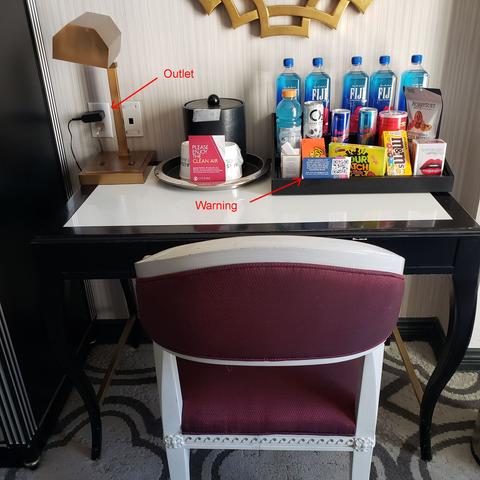
The problem with Las Vegas is that visitors are now treated like marks rather than guests.
The $50 gotcha charge at Paris Las Vegas for unplugging a cord in the room to charge a laptop is a perfect example:
https://view…