 @doktrock@toad.social
2026-01-16 13:27:35
@doktrock@toad.social @arXiv_physicsgenph_bot@mastoxiv.page
Einstein and Debye temperatures, electron-phonon coupling constant and a probable mechanism for ambient-pressure room-temperature superconductivity in intercalated graphite
E. F. Talantsev
https://arxiv.org/abs/2511.07460 https://arxiv.org/pdf/2511.07460 https://arxiv.org/html/2511.07460
arXiv:2511.07460v1 Announce Type: new
Abstract: Recently, Ksenofontov et al (arXiv:2510.03256) observed ambient pressure room-temperature superconductivity in graphite intercalated with lithium-based alloys with transition temperature (according to magnetization measurements) $T_c=330$ $K$. Here, I analyzed the reported temperature dependent resistivity data $\rho(T)$ in these graphite-intercalated samples and found that $\rho(T)$ is well described by the model of two series resistors, where each resistor is described as either an Einstein conductor or a Bloch-Gr\"uneisen conductor. Deduced Einstein and Debye temperatures are $\Theta_{E,1} \approx 250$ $K$ and $\Theta_{E,2} \approx 1,600$ $K$, and $\Theta_{D,1} \approx 300$ $K$ and $\Theta_{D,2} \approx 2,200$ $K$, respectively. Following the McMillan formalism, from the deduced $\Theta_{E,2}$ and $\Theta_{D,2}$, the electron-phonon coupling constant $\lambda_{e-ph} = 2.2 - 2.6$ was obtained. This value of $\lambda_{e-ph}$ is approximately equal to the value of $\lambda_{e-ph}$ in highly compressed superconducting hydrides. Based on this, I can propose that the observed room-temperature superconductivity in intercalated graphite is localized in nanoscale Sr-Ca-Li metallic flakes/particles, which adopt the phonon spectrum from the surrounding bulk graphite matrix, and as a result, conventional electron-phonon superconductivity arises in these nano-flakes/particles at room temperature. Experimental data reported by Ksenofontov et al (arXiv:2510.03256) on trapped magnetic flux decay in intercalated graphite samples supports the proposition.
toXiv_bot_toot
 @Techmeme@techhub.social
Cursor-developer Anysphere acquires code review startup Graphite and says Graphite will continue operating as an independent product (Beatrice Nolan/Fortune)
https://fortune.com/2025/12/19/cursor-ai-coding-startup-graphite-competition-heats-up/
 @UP8@mastodon.social
🧀 Graphite's natural pores shown to have no impact on nuclear reactor performance
#graphite
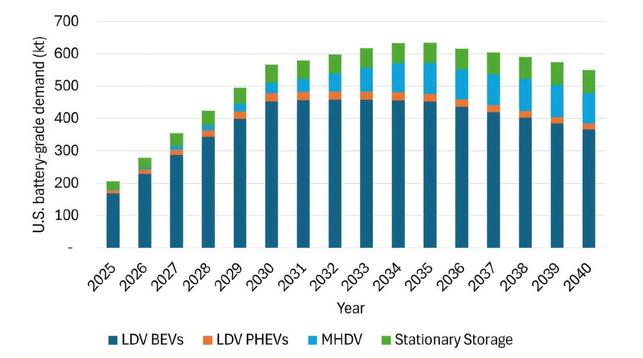
@UP8@mastodon.social💪 Does the US have enough graphite to meet growing energy demand? Yes, but costs, quality are concerns
https://techxplore.com/news/2025-10-graphite-energy-demand-quality.html
 @simon_brooke@mastodon.scot
"this new arms race is halting attempts to tackle the climate crisis as countries scramble to secure critical minerals for the next generation of weapons.
The study found that at least 38 minerals and metals, including lithium, cobalt, graphite and rare earth elements that form the basis of the energy transition are being stockpiled by the Pentagon with potentially devastating effects on climate action"
1, 2, 3, 4, WAR! What is it good for?
 @arXiv_physicsoptics_bot@mastoxiv.page
Graphene and thin graphite films for ultrafast optical Kerr gating at 1 GHz repetition rate under focused illumination
Amr Farrag, Assegid M. Flatae, Mario Agio
https://arxiv.org/abs/2511.17713 https://arxiv.org/pdf/2511.17713 https://arxiv.org/html/2511.17713
arXiv:2511.17713v1 Announce Type: new
Abstract: The ability to address sub-picosecond events of weak optical signals is essential for progress in quantum science, nonlinear optics, and ultrafast spectroscopy. While up-conversion and optical Kerr gating (OKG) offer femtosecond resolution, they are generally limited to ensemble measurements, making ultrafast detection in nano-optics challenging. OKG, with its broadband response and high throughput without phase-matching, is especially promising when used at high repetition rates under focused illumination.
Here, we demonstrate an ultrafast detection scheme using the third-order nonlinearity of graphene and thin graphite films, operating at 1 GHz with sub-nanojoule pulses and achieving 141 fs temporal resolution. Their exceptionally large nonlinear refractive index, orders of magnitude higher than conventional Kerr media, enhances detection efficiency at smaller thicknesses, enables sub-picosecond response, and supports broadband operation. Their atomic-scale thickness minimizes dispersion and simplifies integration with microscopy platforms, optical fibers, and nanophotonic circuits, making them a compact, practical material platform for nano-optical and on-chip ultrafast Kerr gating.
toXiv_bot_toot