"""
[…] Paradoxically, the more a population grew, the more precious it became, as it offered a supply of cheap labour, and by lowering costs allowed a greater expansion of production and trade. In this infinitely open labour market, the ‘fundamental price’, which for Turgot meant a subsistence level for workers, and the price determined by supply and demand ended up as the same thing. A country was all the more commercially competitive for having at its disposal the virtual wealth that a large population represented.
Confinement was therefore a clumsy error, and an economic one at that: there was no sense in trying to suppress poverty by taking it out of the economic circuit and providing for a poor population by charitable means. To do that was merely to hide poverty, and suppress an important section of the population, which was always a given wealth. Rather than helping the poor escape their provisionally indigent situation, charity condemned them to it, and dangerously so, by putting a brake on the labour market in a period of crisis. What was required was to palliate the high cost of products with cheaper labour, and to make up for their scarcity by a new industrial and agricultural effort. The only reasonable remedy was to reinsert the population in the circuit of production, being sure to place labour in areas where manpower was most scarce. The use of paupers, vagabonds, exiles and émigrés of any description was one of the secrets of wealth in the competition between nations. […]
Confinement was to be criticised because of the effects it had on the labour market, but also because like all other traditional forms of charity, it constituted a dangerous form of finance. As had been the case in the Middle Ages, the classical era had constantly attempted to look after the needs of the poor by a system of foundations. This implied that a section of the land capital and revenues were out of circulation. In a definitive manner too, as the concern was to avoid the commercialisation of assistance to the poor, so judicial measures had been taken to ensure that this wealth never went back into circulation. But as time passed, their usefulness diminished: the economic situation changed, and so did the nature of poverty.
«Society does not always have the same needs. The nature and distribution of property, the divisions between the different orders of the people, opinions, customs, the occupations of the majority of the population, the climate itself, diseases and all the other accidents of human life are in constant change. New needs come into being, and old ones disappear.» [Turgot, Encyclopédie]
The definitive character of a foundation was in contradiction with the variable and changing nature of the accidental needs to which it was designed to respond. The wealth that it immobilised was never put back into circulation, but more wealth was to be created as new needs appeared. The result was that the proportion of funds and revenues removed from circulation constantly increased, while that of production fell in consequence. The only possible result was increased poverty, and a need for more foundations. The process could continue indefinitely, and the fear was that one day ‘the ever increasing number of foundations might absorb all private funds and all private property’. When closely examined, classical forms of assistance were a cause of poverty, bringing a progressive immobilisation that was like the slow death of productive wealth:
«If all the men who have ever lived had been given a tomb, sooner or later some of those sterile monuments would have been dug up in order to find land to cultivate, and it would have become necessary to stir the ashes of the dead in order to feed the living.» [Turgot, Lettre Š Trudaine sur le Limousin]
"""
(Michel Foucault, History of Madness)
The Supreme Courtsaid on Friday that it will take up its latest gun rights case
and consider striking down a strict regulation on where people can carry firearms in Hawaii.
Trump’s administration had urged the justices to take the case.
The court will consider Hawaii’s law that bans guns on private property,
including businesses like stores and hotels,
unless the owner has specifically allowed them verbally or with a sign.
The Enriquez connection for higher genus polylogarithms
Takashi Ichikawa
https://arxiv.org/abs/2510.00486 https://arxiv.org/pdf/2510.00486
Moody Urbanity - Action Required III 🧭
情绪化城市 - 行动指南 III 🧭
📷 Pentax MX
🎞️ Ilford HP5 Plus 400, expired 1993
#filmphotography #Photography #blackandwhite
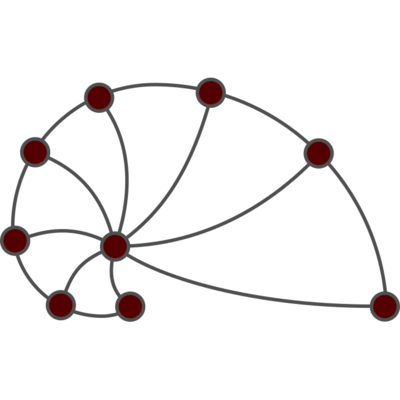
november17: November17 members (2009)
A network representing connections among members of the November 17 (N17) Greek terrorist group. Nodes are members, and an edge exists if two members have some connection in the past. Metadata include role, function, resources. Some attributes are missing.
This network has 22 nodes and 66 edges.
Tags: Social, Offline, Unweighted, Metadata
What are you going to do when the regime falls? After calling all your friends, after the great memes, after the parties, what are you going to do to make sure it never happens again? What world should we create?
Taxing billionaires is great and all, but we could build systems where billionaires are impossible. Is hoarding wealth and using it to control people even something we should consider part of a functional and humane system? Any system where one group of people doesn't have rights means that anyone can be stripped of their rights, like has happened with all the US citizens who've been illegally detained and deported by ICE. Does the concept of "rights" that must be defended with violence, that can be stripped away by people who can exercise more violence, even make sense? Or should the bedrock of a functional system be the obligations that we have to each other and to society, that cannot be severed or taken from us, that tell us we *must* defend regardless of whether systemic oppression will impact us or not?
Americans have been so restricted by the limitations of the two party system, only able to choose between options acceptable to different sections of the capitalist class. Would we even be able to imagine what we could do if those restrictions went away?
The fall of the Berlin wall was a surprise. The fall of Assad was faster than anyone expected. One day the government of Nepal was an unrepentant oligarchy, the next it was on fire. Everything can change in an instant, faster than anyone expects. No one can predict revolutionary change. Will you be ready if the opportunity presents itself?
The US cannot be fixed. The economic system is a ponzi scheme that has been patched again and again, but has finally run out of options. Racism, sexism, and Christian nationalism are baked into the system at every level. Trump gutted the system of soft power that held the US economy together, now there is only a slow decline. Even after he's gone, the damage is done. Once we let go of how to fix something that cannot be fixed, we can start to imagine something that cannot be achieved within the current system.
This is a time of opportunity. Do not burrow so deep in terror that you miss your chance to dream.
#USPol
november17: November17 members (2009)
A network representing connections among members of the November 17 (N17) Greek terrorist group. Nodes are members, and an edge exists if two members have some connection in the past. Metadata include role, function, resources. Some attributes are missing.
This network has 22 nodes and 66 edges.
Tags: Social, Offline, Unweighted, Metadata
Moody Urbanity - Action Required II 🧭
情绪化城市 - 行动指南 II 🧭
📷 Pentax MX
🎞️ Ilford HP5 Plus 400, expired 1993
#filmphotography #Photography #blackandwhite
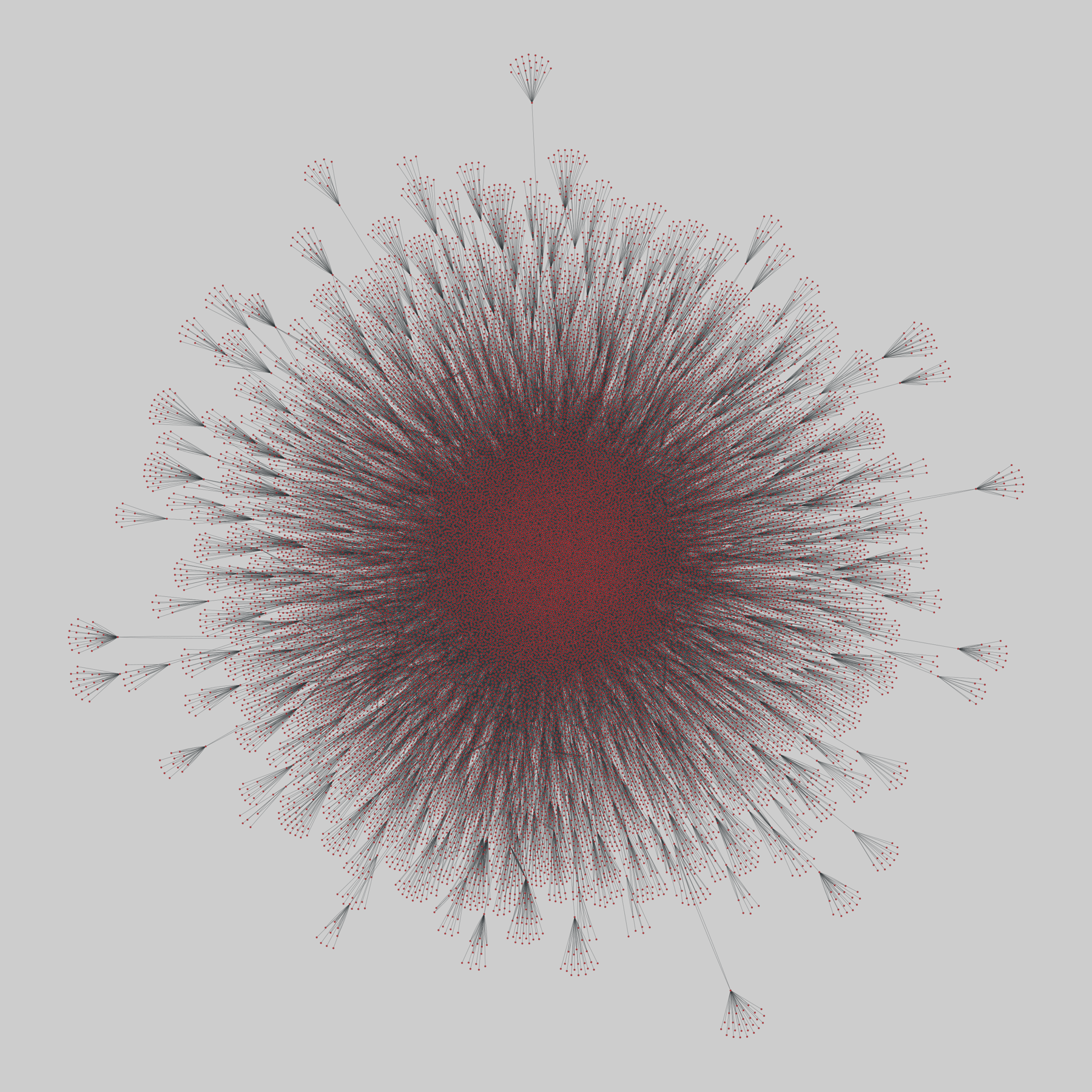
bookcrossing: BookCrossing ratings (2005)
Two bipartite networks representing people and the books they have interacted with, from the BookCrossing website. Nodes represent users and books, and an edge connects a user to a book they have interacted with. The file book_implicit is unweighted; edge weights in book_ratings give the rating a user assigned to a book.
This network has 445801 nodes and 1149739 edges.
Tags: Economic, Preferences, Unweighted, Weighted
arxiv_authors: Arxiv authors (1993-2003)
Scientific collaborations between authors of papers submitted to arxiv.org, under 5 categories: gr-qc, astro-ph, cond-mat, hep-ph, and hep-th categories, spanning January 1993 to April 2003. If an author i co-authored a paper with author j, the graph contains a undirected edge from i to j. If the paper is co-authored by k authors this generates a completely connected (sub)graph on k nodes.
This network has 108300 nodes and 186936 edges.