 @colinpurrington@flipping.rocks
2026-07-18 09:56:18
Here's somebody's blog post about grackles' fondness for dropping feces in water, written from the perspective of an annoyed koi-pond owner. The author gives the usual explanation that behavior reduces nest predation (presumably because fecal smell is attractant). I couldn't find support for this hypothesis in the primary literature, however. Nor could I find support for the idea that a clean nest reduces parasites such as flesh-eating flies. But I'm not a birdologist so I could have missed the definitive paper. https://www.pondtrademag.com/blackbird-gift-sacs-the-airmail-no-pond-keeper-wants/
 @v_i_o_l_a@openbiblio.social
2026-09-13 20:07:33
"Vom Ablehnen" von Gutachten für Artikel schreibt Johann-Mattis List
https://wub.hypotheses.org/3559
 @mgorny@social.treehouse.systems
2026-07-04 04:49:14
#Python Hypothesis package now requires #RustLang. This is a scale of reverse dependencies I can't handle. I guess this means it's the end of WD40 profiles on #Gentoo, and therefore the end of support for Alpha, ARM<v6, HPPA, M68k, i486 and some other random subsets of architectures and profiles. Thanks for all the fish, etc.
https://github.com/HypothesisWorks/hypothesis/issues/4740
 @arXiv_mathDG_bot@mastoxiv.page
2026-09-15 08:49:05
Global Analysis: An Introduction to Nonlinear Analysis and Its Variational Methods on Riemannian Manifolds
Carlos Daniel Vel\'azquez-Mendoza, Mar\'ia de los \'Angeles Sandoval-Romero, Romulo Diaz Carlos
https://arxiv.org/abs/2609.14580 https://arxiv.org/pdf/2609.14580 https://arxiv.org/html/2609.14580
arXiv:2609.14580v1 Announce Type: new
Abstract: This monograph develops an introduction to global analysis centered on the interaction between differential geometry, functional analysis, partial differential equations, and variational methods on Riemannian manifolds. Beginning with smooth and Riemannian geometry, it develops Sobolev spaces, distributions, interpolation and fractional regularity, differential and pseudodifferential operators on vector bundles, elliptic theory, heat methods, bounded geometry, and trace theorems. It then treats Fredholm and index theory, culminating in the Atiyah--Singer index theorem, followed by geometric evolution equations and Ricci flow, infinite-dimensional geometry on Banach and Hilbert manifolds, and variational methods including the direct method, Palais--Smale theory, deformation arguments, the mountain pass theorem, and the Nehari method. Particular emphasis is placed on explicit proofs, the passage from local Euclidean estimates to intrinsic global statements, and the precise geometric hypotheses required in compact, noncompact, and boundary settings. The text is intended for advanced undergraduate and graduate students, as well as readers approaching global analysis from geometry or differential equations.
toXiv_bot_toot
 @cdarwin@c.im
2026-06-22 01:13:24
We introduce Robin,
the first multi-agent system capable of fully automating both hypothesis generation and data analysis for experimental biology.
By integrating literature search agents with data analysis agents,
Robin can generate hypotheses,
propose experiments,
interpret experimental results,
and generate updated hypotheses,
achieving a semi-autonomous approach to scientific discovery.
By applying this system, we were able to identify pr…
 @yetiinabox@todon.nl
2026-08-01 10:22:06
If this isn't evidence for the Gaia hypothesis, I don't know what would be. It's literally an induced, prophylactic immune response to one of the most unsustainable food systems humans have. Now if we could just have a highly contagious, otherwise symptomless STD that (after a variable incubation period) caused sterility and a distinctive facial scar for any human attempting to use a car or lorry...
@v_i_o_l_a@openbiblio.social2026-07-03 10:33:04
"Blick aufs Verlagswesen": seltsame ideen zur registerarbeit und zu belegen
https://netbib.hypotheses.org/78650342
 @simon_brooke@mastodon.scot
2026-08-31 07:18:41
Discussion of how evolution, under #capitalism, systematically selects for #psychopathy. Which is obvious, when you think about it, but it's interesting to hear it argued explicitly.
The Great Simplification with Nate Hagens: The Psychopathic Selection Hypothesis: The Rules of the Game …

 @jacobgudiol@mastodonsweden.se
2026-08-25 18:52:09
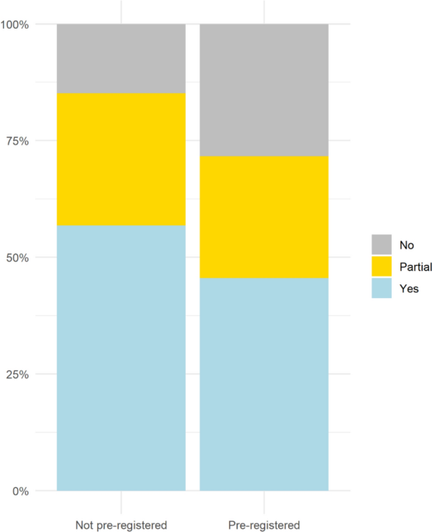
Idrottsvetenskap/träningsstudier är ett forskningsfält med studier som i genomsnitt är ganska dåliga. Evidens nr femtioelva https://link.springer.com/article/10.1007/s40279-026-02451-2
 @arXiv_qfinTR_bot@mastoxiv.page
2026-07-14 07:46:19
Multidimensional stochastic liquidity in Kyle's model of informed trading
Ibrahim Ekren, Evangelos A. Nikitopoulos, Lu Vy
https://arxiv.org/abs/2607.10934 https://arxiv.org/pdf/2607.10934 https://arxiv.org/html/2607.10934
arXiv:2607.10934v1 Announce Type: new
Abstract: We develop a variational formulation of Kyle's model of informed trading that accommodates stochastic liquidity and multiple traded assets. The main equilibrium result is stated first: under a martingale dual condition, a matrix-valued martingale depth process generates a linear-Gaussian equilibrium with stochastic matrix-valued price impact. We derive this martingale from a primal-dual problem, inspired by causal optimal transport, that characterizes the endogenous speed at which the insider injects private information into prices; in general, this problem admits only local martingale optimizers, and the martingale dual condition is the hypothesis that the optimizer is a true martingale. We interpret informed trading as the optimal liquidation of private information and verify the construction in the scalar and common-eigenbasis cases. The fully general matrix-valued case reduces to a coupled matrix FBSDE, which we isolate as the remaining obstruction. Along the way, we establish an independently interesting Doob-Meyer decomposition for general (not necessarily symmetric) matrix-valued submartingales.
toXiv_bot_toot