 @bogo@hapyyr.com
2025-10-17 10:51:56
My talk about #Thunderbird was accepted at @…
it's a talk from a community perspective and I will share my personal story (not so much) and some aspects you wont find anywhere else:

 @metacurity@infosec.exchange
2025-11-18 11:39:55
"People should not "blindly trust" everything AI tools tell them, the boss of Google's parent company Alphabet told the BBC.
In an exclusive interview, chief executive Sundar Pichai said that AI models are "prone to errors" and urged people to use them alongside other tools.
Mr Pichai said it highlighted the importance of having a rich information ecosystem, rather than solely relying on AI technology."

 @poppastring@dotnet.social
2025-11-18 15:30:10
Introducing MSVC AddressSanitizer for ARM64 targets #visualstudio
https://devblogs.microsoft.com/cppblog/introducing-msvc-addresssanitizer-for-arm6…
 @ErikJonker@mastodon.social
2025-09-18 12:48:54
Interesting,
"One Token to rule them all - obtaining Global Admin in every Entra ID tenant via Actor tokens"
https://dirkjanm.io/obtaining-global-admin-in-every-entra-id-tenant-with-actor-tokens/
 @davidaugust@mastodon.online
2025-10-18 22:54:31
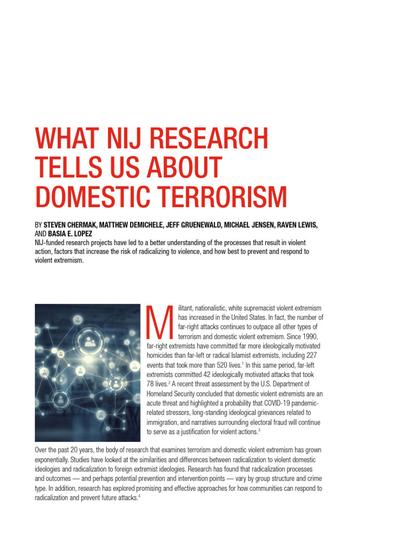
All political violence is bad; violence is never a good answer.
From report AG and potus want to hide: "…the number of far-right attacks continues to outpace all other types of terrorism and domestic violent extremism."
https://www.scribd.com/document/9186184…
 @Techmeme@techhub.social
2025-12-17 11:50:37
Source: Tencent tells staff that Yao Shunyu, an ex-OpenAI researcher who joined in September, is now its chief AI scientist, reporting to President Martin Lau (Juro Osawa/The Information)
https://www.theinformation.com/briefings/tencent-name…

 @thomastraynor@social.linux.pizza
2025-10-17 15:01:56
CRTC consults to help Canadians resolve Internet, cellphone and television service complaints faster - Canada.ca
https://www.canada.ca/en/radio-television-teleco…
 @hex@kolektiva.social
2025-10-16 08:24:42
Actually, I do want to come back to masculinity under patriarchy and whiteness under white supremacy because I think it's worth talking more about. The "man" under patriarchy (at least "Western" patriarchy) is represented as power and independence. The man needs nothing and thus owes nothing to anyone. The man controls and is not controlled, which is intimately related to independence as dependence can make someone vulnerable to control. The image of "man" projects power and invulnerability. At the same time "man" is a bumbling fool who can't be held accountable for his inability to control his sexual urges. He must be fed and cared for, as though another child. His worst behaviors must be dismissed with phrases such as "boys will be boys" and "locker room talk." The absurdity of the concept of human "independence" is impossible to understate.
Even if you go all Ted Kaczynski, you have still been raised and taught. This is, perhaps, why it is so much more useful to think in terms of obligations than rights. Rights can be claimed and protected with violence alone, but obligations reveal the true interdependence that sustains us. A "man" may assert his rights. Yet, on some level, we all know that the "man" of patriarchy acts as a child who is not mature enough to recognize his obligations.
White violence and white fragility reflect the same dichotomy. "The master race" somehow always needs brown folks to make all their shit and do all the reproductive labor for them. For those who fully embrace whiteness, the "safe space" is a joke. DEI shows weakness. Yet, when presented with an honest history adults become children who are incapable of differentiating between criticism and simple facts. *They* become the ones who must be kept safe. The expectation to be responsible for one's own words and actions, one of the very core definitions of being an adult, is far too much to expect. Their guilt needs room, needs tending, needs caring. White people cannot simply "grow the fuck up" or, as they may say of slavery, "fucking get over it."
And again, interestingly, it is *rights* that they reference: "Mah Freeze PEACH!" I find it hard to distinguish between such and my own child's assertion that anything she doesn't like is "not fair!" No, these assertions fail to recognize the fundamental fabric of adult society: the obligations we hold to each other.
At the intersection of all privilege is the sovereign, the ultimate god-man-baby. Again, referencing the essay (https://hexmhell.writeas.com/observations-on-domination-and-trump)
> This is where it becomes important to consider the ideology behind the sovereign ritual. Participation within the sovereign ritual denotes to the participants elements of the sovereign. That is, all agents of the sovereign are, essentially, micro dictators. By carrying out the will of the sovereign, these micro dictators can, by extension, act outside of the law.
While law enforcement is the ultimate representative of sovereign violence, privileges allow a gradated approximation of the sovereign. Those who are "closer" in privilege to the sovereign may, for example, be permitted to carry out violence against those who are father away. The gradation of privilege turns the whole society, except for the least privileged, into a cult that protects the privilege system on behalf of the most privileged. (And immediately Malcolm X pops to mind as having already talked about part of this relationship in 1963 https://www.youtube.com/watch?v=jf7rsCAfQCo.)
 @anildash@me.dm
2025-11-15 04:59:32
One of the top stories on Hacker News today was a post arguing that Mozilla shouldn't accommodate any usage of AI in Firefox because (understandably) people were mad at Big AI companies for all the horrible things they've done to users and the internet and society. But I think people are ignoring the reality that *hundreds of millions of users* are using LLMs today, and they need to have tools from platforms that will look out for their interests.

 @tiotasram@kolektiva.social
2025-10-18 12:29:48
Indirect CW for teen pregnancy, rape, death.
Just finished "Girls Like Us" by Randi Pink. Pink has a knack for telling stories that capture the grim but also vibrant nuances of African-American history. I previously read "Under the Heron's Light" which has more elements of magical realism and connects more directly to the history of enslavement; "Girls Like Us" is more historical fiction, with a bridge at the end to contemporary times (circa 2019, when the book was published). It tells the story of a disparate group of mostly-Black teens who are pregnant in 1972, and shows a range of different outcomes as varied as the backstories of the different girls. Rather than just separate vignettes, the girls' stories are women together into a single plot, and Pink is a expert at pulling us in to deeply contemplate all the complexities of these girls' lives, showing rather than telling us truths about the politics of teen pregnancy and abortion, and how even though the choices involved don't have simple answers, taking those choices out of the hands of the people they most intimately affect is cruel and deadly.
#AmReading #ReadingNow