 @detondev@social.linux.pizza
2026-09-03 01:18:53
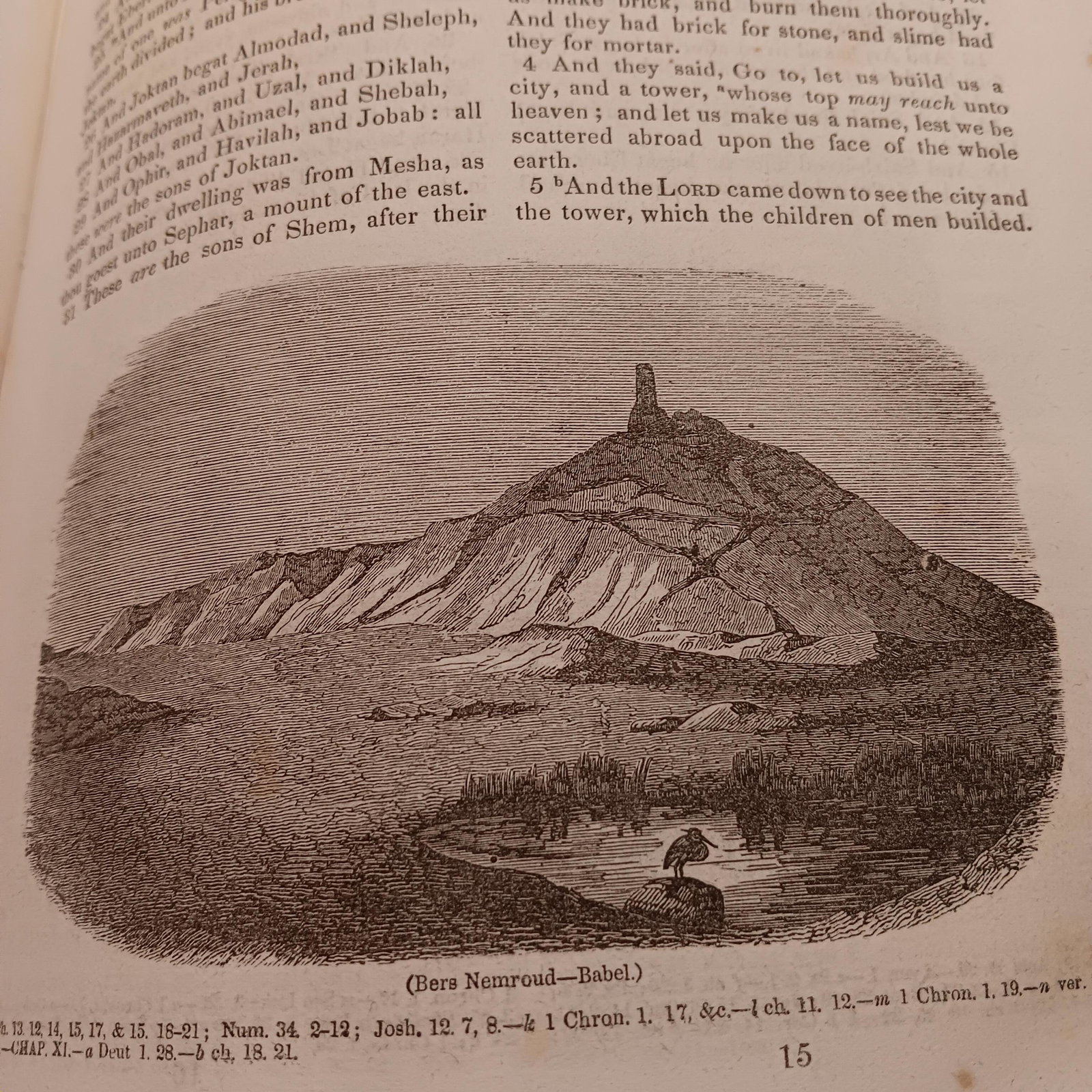
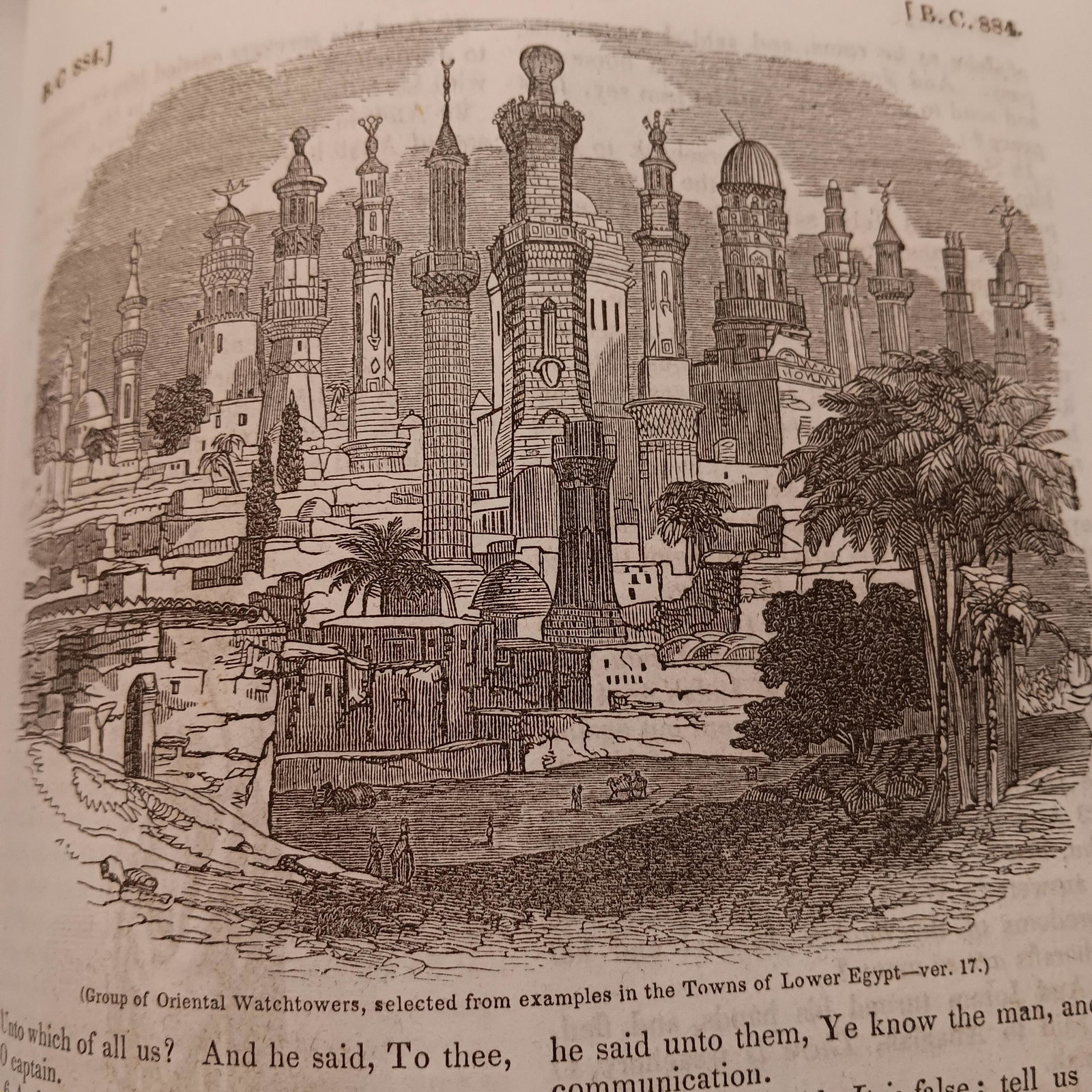
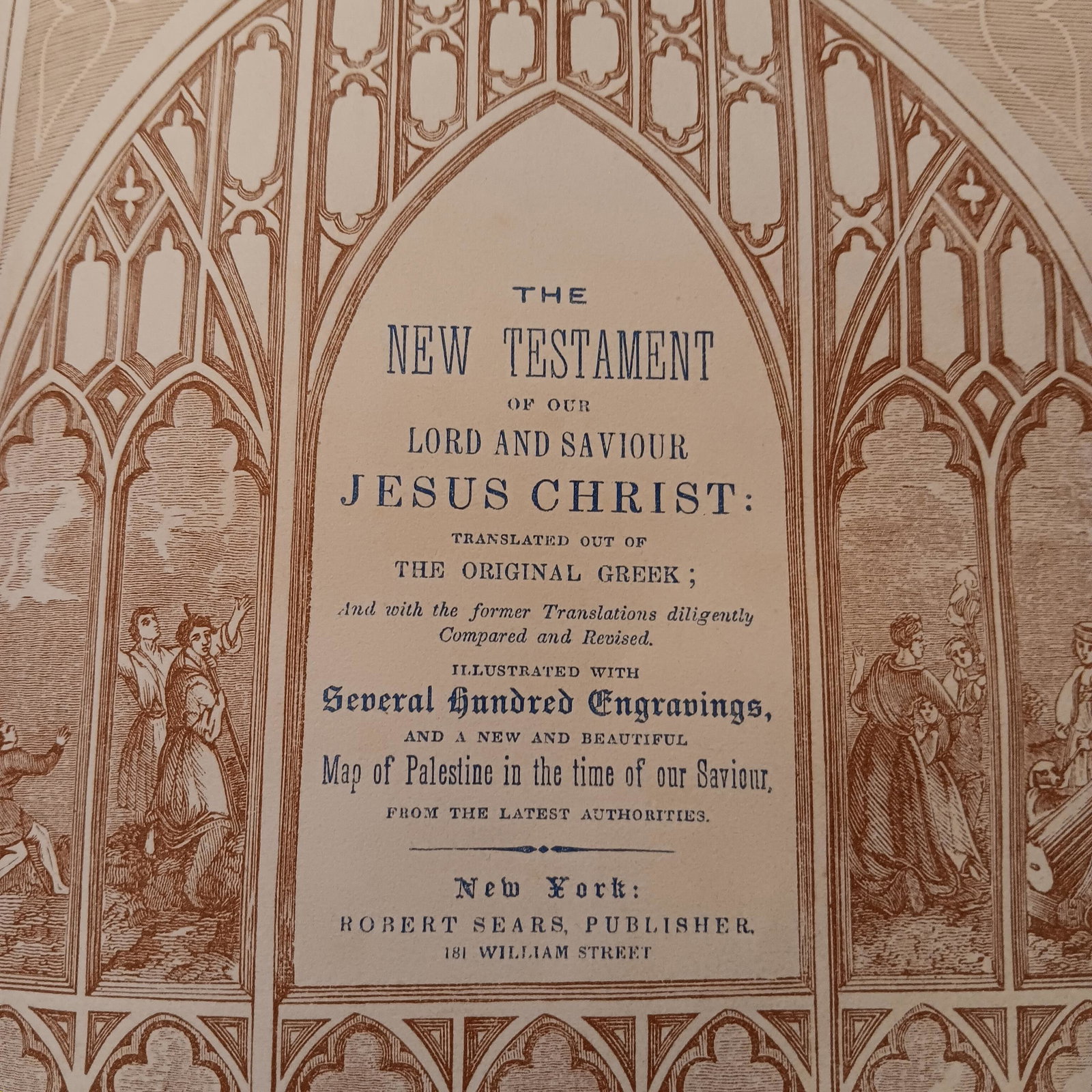
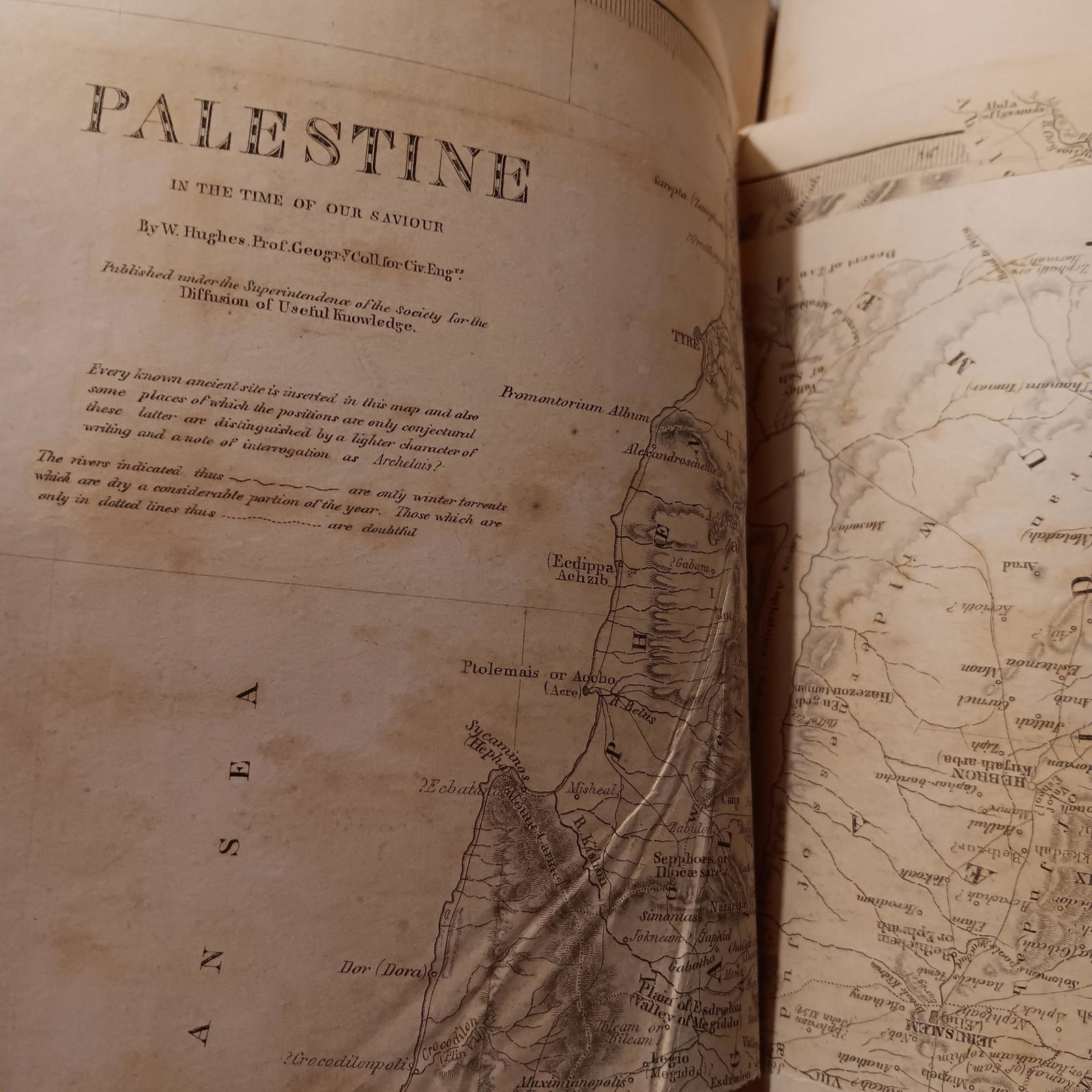
One resident at the retirement place I work at turned 100, and at his party, my grandmother learned of a nearly 200 year old bible he inherited and only recently physically acquired, elaborately decorated with over 1,000 engravings, a map of Palestine (specifically proudly advertised on the New Testament's intro), genealogies, summaries, interpretations, and even records of the owning family's births, marriages, and deaths, written in impeccably preserved cursive. She got my younger …
 @ruth_mottram@fediscience.org
2026-08-11 20:25:47
Sometimes in science people discourage you from talking about wild ideas because what if someone "steals" it.
But that misunderstands several points: you are rarely the first or only person to have an idea, we are all swimming in the same water, reading the same literature, attending the same conferences. It would be odd if only one person has a given idea.
Maybe someone already tried it and found it didn't work. Discussing ideas might help to stop you wasting your time and resources in that case.
And there are more than enough scientific questions to go round!
Ideas are the easy part. Doing the work is the difficult bit.
And so what if someone publishes similar ideas to you beforehand? It's science, it's supposed to be replicable (odd incentives like publish or perish culture notwithstanding) and there is always a new angle to explore.
Science is a group pursuit anyway. It's rare you do everything by yourself, discussion with other scientists is as essential as oxygen. And sometimes the more discussion you have the wilder and cooler the ideas get
#AcademicChatter
https://social.wildeboer.net/@jwildeboer/117078561059020813
jwildeboer@social.wildeboer.net - So. Share your wildest ideas. Not because you want to be praised for it. But because you might inspire other strangers with specific knowledge to build stuff inspired by your idea without even telling you. Ideas want to travel to find new friends. Set them free. They might come back to you or not. Just share. That's what the Real Internet is for ;)
 @tiotasram@kolektiva.social
2026-08-25 22:20:42
I Can See the Babies
---
Whenever I see a person, my mind automatically conjures up an image of them as a baby. It's not really voluntary, nor is it the same as other mental imagery. More like I'm hallucinating a visual echo of their past self, floating in my vision near where I see the person. As if they were haunted and I could see the ghost.
It's all in my head, I'm pretty sure, and the babies aren't necessarily accurate. I checked once with a friend, and the baby I saw had curly hair even though all their baby pictures were bald. After seeing those pictures, my baby image of them changed, too, to match the pictures. So that's why... That's why I'm pretty sure...
But the babies are real, you know? I mean, my images of them might not be right, but all the people I see *were* babies. It's not like one of those stupid prophecy loopholes like "everyone was born of woman", you see, it's a true universal, no exceptions. And these hallucinations won't let me forget about that. Ever.
I tried to play a videogame once, one of those FPS games. My friends were all playing and they needed one more for their group. They didn't know about... this. I told them I didn't think I could do it, but I didn't want to tell them why, so they badgered me into it. I thought maybe I could handle it, I mean the characters were basically cartoons, right? But... well, I think I dissociated a bit and then threw up. Even if they were cartoons, all those babies, shooting and killing and dying, again and again. It's... it's not like the babies got injured, even, or played out exactly what the characters were doing. The babies just kinda floated around doing baby things, and they sort of faded out when their character died. No, what's overwhelming is the knowledge, the constant reminder, of everyone's former innocence.
The worst part, you know, the most horrible thing, is not just the innocence, it's the gap. Like, if you were to force me to watch a torture scene, I would hate seeing the victim, but it's the torturer that scares me. Everybody knows that horrible things happen to innocent people. We're all forced to think about that from time to time. But the thing almost nobody thinks about as much as me, is how innocent babies *become* monsters. How there's a hurricane of hurt and fear and apathy and indoctrination and hatred and prejudice and complicity out there that sucks in babies and twists them into racists and abusers and "business leaders" and soldiers and all sorts of people who hurt and kill others. The worst are the ones who take pleasure in that hurting, because the babies for sure don't. Like, how did that happen? And most people don't think about it, because they just label that person as "bad" and don't think about it any deeper. But you can't do that when you can see the baby right there. The baby isn't bad. The person might be, I'm not trying to say everyone's an angel or people don't deserve to reap what they sow. But the baby wasn't! Something between then and now went wrong, horribly wrong, and now you're stuck with a person that hurts others, and you need a drastic intervention just to stop them, let alone prevent them from doing that stuff again and change their future behavior. But you can *see*, or at least, I can see, that there was always some earlier point, some missed opportunity, where some much easier intervention could have headed the whole thing off. None of those babies are destined to turn into monsters, and that's the gap. The gap between the little baby that was and the monster in front of you on the screen or in real life.
Anyways that's it. That's my statement. I'm not a pacifist or anything, but I think you can see why I can't do it, I just can't. You can lock me up or punish me or whatever, but there's just no way you're gonna put a gun in my hands and give me an order and I'll just follow it, because I can see the babies.
#Microfiction
@tiotasram@kolektiva.social2026-09-15 07:31:34
Wish inspiration hadn't struck right at 1 a.m. when I have to teach tomorrow, but we'll see if I can get back to sleep now that I'm done with a draft of this story. Glad to have my first entry in my "incredulous young historians of the future" series actually written instead of just imagined. There are surely some typos ahead...
#SciFi #Writing #Technology #ShortStory
"The Age of Progress", a short story by Tiota Sram.
"Your assignment", said the teacher, "is to describe why the progressive vision of technology that gives us the name 'Age of Progress' today failed, and why it was actually a pessimistic view of technology. Your study guides have links to a few sources, but as usual you should synthesize information from at least two knowledge systems, and one of those shouldn't be family-based."
"Ugh", said Ye'xik, "this is gonna be tricky. Wasn't the whole problem with the Age of Progress that they were too optimistic about technology?"
"Well, they did talk a lot about the end of the world and extinction, and I did almost happen, right?" said Finan.
"Yeah, that's gotta count as pessimism, doesn't it?" Gedi chimed in.
"Well..." said Hallavia, with their usual deliberate tone, "I think it's not that simple, or at least it doesn't have to be."
The four of them were walking outside to have lunch, pondering the new assignment from this cycle's history and culture teacher. A brief silence fell as they pondered the Age of Progress.
"Maybe we should look at it through another history system?" offered Finan. "I mean, we've been learning about knowledge systems and lenses, and the 'Ages' lens of just one perspective with its own distortions, right?"
"My mab is working with my omeh on an oral history right now", said Gedi, "maybe I can use that as my second knowledge system? I'll see what they have to say about it!"
"We shouldn't all use the same knowledge systems though", said Ye'xik. "I think there's a bit of a thesis/antithesis thing going on here too? Like we were learning in ideas class?"
"Wait, I missed ideas last week", said Gedi, what's an antithesis?"
"It's just an opposite, really", said Ye'xik. "You take the thesis statement and construct any statement that contradicts it. The two form a pair, and then you can try to find a synthesis that combines both ideas."
"I didn't really get that part", Finan interrupted, "like, if they're contradictory, how could they be expressed together? Wouldn't you need to pick one that's true?... wait I guess maybe if you mixed different knowledge systems? But then would they really be contradictory?"
The group fell silent for a moment in thought.
Hallavi spoke up: "Incommensurate isn't the same as contradictory, I think. That's what it would be if you had two truths from different knowledge systems that didn't fit. Plus... not all knowledge systems have a concept of truth, or of contradiction?"
The group pondered this for a bit more.
"I think maybe there's lots of ways to be contradictory, even in a very logic-hungry knowledge system", said Gedi. "Then if your thesis and antithesis contradict in one way, you could find another sort out 'axis' in which they don't, and state your synthesis from there?"
"Oh, that makes sense", said Ye'xik.
"Anyways what were you saying about the Age of Progress, Ye'xik?" said Gedi.
"Wait", interrupted Hallavi, "Did that mashes sense to you, Finan?"
Finan had been silent, looking down at their feet, but replied "Oh yeah, thanks for checking Hallavi! I think I got the part about synthesis now, thanks Gedi. I was just thinking about optimism and pessimism more. Is that where you were going with this, Ye'xik?"
"Haha, yeah Finan, you got it", said Ye'xik. "Since optimism and pessimism can be opposites, does the teacher actually want us to form a synthesis of them?"
"Oh..." muttered Gedi, "that's a good idea."
"I think..." began Hallavi, pausing to collect their thoughts, "I think the teacher would have told us that, though. Obviously it's not a wrong way to approach this assignment because it incorporates pessimism, but teachers usually aren't too tricky. I think it's okay to be literal about the pessimism thing. And I think I have an idea..."
When Hallavi remained silent for a moment, Ye'xik opened their mouth to speak, but then looked at Hallavi and closed it again. Finan and Gedi were looking at Hallavi too. They pushed through the doors out to the meadow, and settled in their usual place to sit, pulling lunches out of their bags. Hallavi finally spoke up while the others were chewing: "The Age of Progress lasted from the Enlightenment to the Dim Times, and they believed that technology would always get better, no matter what. That's the progressive vision of technology our teacher was talking about. They thought it could solve any problem, and they wouldn't have to worry about weapons or extinctions or the climate or pollution or any of that stuff, because technology would eventually come up with a solution. They looked at the technology that solved problems like diseases or overcame engineering challenges and extrapolated too broadly, basically. That's the idea they had?"
The other three were all nodding their heads, knowing Hallavi needed room to think and put words together.
Hallavi continued: "So it seems like it's optimistic, because they thought it could do anything. But they were thinking about technology like I just talked about it: like an 'it' that could 'do'. That's not what we've been learning in our technology class. Invention is a social phenomenon, and technologies have both material and social bases, not to mention communities of practice and knowledge maintenance. So I think the idea of technological progress divorced from social participation is pessimistic, because it mythologizes technology in a way that makes it seem uncontrollable."
"Huh" said Gedi and Finan while at the same time Ye'xik said "mhmm".
Hallavi looked up shyly at the rest of them, but they were all looking back with admiration.
"I think you're right, Hallavi", said Ye'xik. "Or at least, that's probably what the teacher wanted us to puzzle out. Good thing they asked us to include two knowledge systems so we can each have our own perspectives to contribute, otherwise you'd go first and our presentations would all just be 'What Hallavi said'".
Hallavi blushed but Finan laughed "Hah! You're right and that Ye'xik."
Gedi was looking at their sandwich with some intensity. They looked at Hallavi then back at their sandwich. "It's like they thought they were strapped to an out-of-control rocket, when you put it that way", they said. "It must have been scary, really, to believe that technology was almost an entity, changing in an inevitable way. That word 'inevitable' really takes all the human agency out of it, doesn't it. And even though they kept saying that technology would inevitably solve problems, look at what the technologies they invented actually did!"
Finan shuddered. He added, "Really, it was their dominators who were saying it was inevitable wasn't it? Back then it wasn't like today where historians travel and sample all kinds of ideas, so the primary sources we're reading are almost all from dominators, right?"
Ye'xik responded "Yeah, I keep forgetting to account for that. It was such a weird and horrible time, it's kinda hard to believe everything we read and hear sometimes."
Gedi picked up the thread again "That makes it worse, right? All those dominators saying the stuff they're doing is inevitable, and lying to everyone's faces about it being progress and wonderful stuff, meanwhile two thirds of it is the most awful stuff there's ever been, I mean they could have literally killed everyone and ruined the whole planet, and they almost did."
"They did actually crush a lot of cultures beyond recognition so the survivors had to rebuild with only weak ties to their old traditions", said Hallavi with a quiet intensity.
They all were silent for a moment, pondering the horrors of a bygone age.
Finan broke the silence: "That's a terrible kind of pessimism, to believe that technologcal 'progress' is inevitable, at a time when most people are dominators somewhere in a hierarchy and the ones on top constantly talk about how technologies like medicines will 'save' the world while mostly inventing new technologies of violence. Everyone must have understood what they really meant based on the technologies they were actually developing and investing into. I think I still don't understand how the Age of Progress and the Dim Times could even happen".
"Yeah, and the pessimism is only part of our assignment", signed Ye'xik. "We still have to describe why the progressive vision failed, although I think maybe you just did a lot of that, Finan".
A gloom descended briefly, until Gedi said "Well, this assignment is supposed to take a week or two, right? Thanks to Hallavi we've already cracked the crux, I think, so we don't need to ruminate too much right this moment about ancient history, and we know things turned out okay in the end. Let's finish lunch and go climb a tree!"