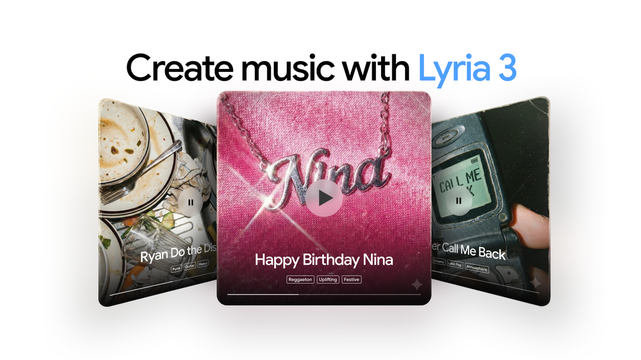
Google rolls out Lyria 3, a generative music model that can make 30-second tracks with Nano Banana cover art, in beta in the Gemini app in eight languages (The Keyword)
https://blog.google/innovation-and-ai/products/gemini-app/lyria-3/
Ein einzelner Top-Artikel reicht nicht, um für ein Thema als Autorität zu gelten. 🏗️Google bewertet Themenabdeckung in Clustern: Wie tief, wie breit, wie vernetzt behandelst du ein Thema? Wer nur Keywords recherchiert statt Themenfelder zu kartieren, baut Inseln statt Netzwerke.
https://hechtinsgefecht.…
Nuke bug of the day: Nuke's color pipeline breaks with completely nonsensical errors whenever you add the keyword "default_view_transform:" to your OCIO configuration. That's really weird because it doesn't really do anything color-related except define which value the viewer should be set to initially.
#Nuke
I have 28 keyword filters in Mastodon across the categories AI, Bluesky, Donations, Instagram/Threads, Newsletter, Substack, Twitter, Defederate, and Mastodon HOA, and it works so incredibly well that I wish I could set up the same thing in GtS.
Google updates Gemini 3 Deep Think to better solve modern science, research, and engineering challenges and expands it via the Gemini API to some researchers (The Keyword)
https://blog.google/innovation-and-ai/models-and-research/gemini-models/gem…
"Das Keyword muss genau 2,5% im Text vorkommen!" 📉
Dieser Mythos hält sich wacker seit 2010.
Tools, die Ampeln auf Rot schalten, weil ein Wort einmal zu wenig drin steht, sollte man kündigen.
Google versteht Themen und Kontexte (Semantik).
Ob das Wort nun 5x oder 7x vorkommt, ist dem Algorithmus egal, solange der Text das Thema umfassend behandelt.
Lesbarkeit schlägt Mathematik. Immer. 📖
Google rolls out Gemini in Chrome to India, New Zealand, and Canada, and adds support for over 50 additional languages, including Hindi, French, and Spanish (Charmaine D'Silva/The Keyword)
https://blog.google/products-and-platforms/prod…
Zwei deiner Seiten ranken für dasselbe Keyword? Gratulation, du halbierst gerade deine Klicks. 🔪Google muss sich für eine entscheiden. Meistens rotiert das Ranking zwischen beiden, keine kommt richtig nach vorne.
Der häufigste Fall: Ratgeber-Artikel kannibalisiert Kategorie-Seite. Oder zwei alte Blogposts zum gleichen Thema.
Fix: Zusammenführen, 301 setzen, eine starke Seite statt zwei schwache.
#SEO
I need an IDE with a Java mode for Kotlin developers. Something to add the `new` keyword for me when I type `ClassName(` 😢
I need an IDE with a Java mode for Kotlin developers. Something to add the `new` keyword for me when I type `ClassName(` 😢
#rustlang 's 'as' keyword in it's use clause is nice when you want to use your local spelling:
use smart_leds::{colors as colours, SmartLedsWrite};
(and esp-hal-smartled works nicely using the esp's RMT (remote control unit) to drive the LEDs rather than bitbanging)).
@… Careful curation. Keeping my mastodon focused on gamedevs instead of games helps: My broader bsky follows are all doom. Keyword filters for all kinds of cheeto-man topics, GoFundMe, and other topics correlated with life going wrong.
Add a content filter for ice and be okay with missing some posts about a cool ice level. Or use …
RISK: Efficiently processing rich spatial-keyword queries on encrypted geo-textual data
Zhen Lv, Cong Cao, Hongwei Huo, Jiangtao Cui, Yanguo Peng, Hui Li, Yingfan Liu
https://arxiv.org/abs/2602.20952
Google launches Gemini 3.1 Flash-Lite, which it says delivers "enhanced performance" at a fraction of the cost of larger models and outperforms 2.5 Flash (The Keyword)
https://blog.google/innovation-and-ai/models-and-research/gemini-mo…
Mehr Content ist nicht immer besser. Oft ist es Selbstsabotage. 🔪
Viele Blogs produzieren jede Woche Artikel zum fast gleichen Thema.
Das Ergebnis: Keyword-Kannibalisierung. Drei Artikel konkurrieren um dasselbe Keyword, keiner rankt richtig, weil Google nicht weiß, welcher der "beste" ist.
Statt immer neue URLs zu erzeugen, ist es oft schlauer, bestehende Artikel zu aktualisieren und zu erweitern (Content Refresh).
Qualität und Tiefe schlagen Frequenz. Imme…
Tailoring AI-Driven Reading Scaffolds to the Distinct Needs of Neurodiverse Learners
Soufiane Jhilal, Eleonora Pasqua, Caterina Marchesi, Riccardo Corradi, Martina Galletti
https://arxiv.org/abs/2603.28370 https://arxiv.org/pdf/2603.28370 https://arxiv.org/html/2603.28370
arXiv:2603.28370v1 Announce Type: new
Abstract: Neurodiverse learners often require reading supports, yet increasing scaffold richness can sometimes overload attention and working memory rather than improve comprehension. Grounded in the Construction-Integration model and a contingent scaffolding perspective, we examine how structural versus semantic scaffolds shape comprehension and reading experience in a supervised inclusive context. Using an adapted reading interface, we compared four modalities: unmodified text, sentence-segmented text, segmented text with pictograms, and segmented text with pictograms plus keyword labels. In a within-subject pilot with 14 primary-school learners with special educational needs and disabilities, we measured reading comprehension using standardized questions and collected brief child- and therapist-reported experience measures alongside open-ended feedback. Results highlight heterogeneous responses as some learners showed patterns consistent with benefits from segmentation and pictograms, while others showed patterns consistent with increased coordination costs when visual scaffolds were introduced. Experience ratings showed limited differences between modalities, with some apparent effects linked to clinical complexity, particularly for perceived ease of understanding. Open-ended feedback of the learners frequently requested simpler wording and additional visual supports. These findings suggest that no single scaffold is universally optimal, reinforcing the need for calibrated, adjustable scaffolding and provide design implications for human-AI co-regulation in supervised inclusive reading contexts.
toXiv_bot_toot
Google launches Gemma 4, its "most intelligent" open model family, purpose-built for advanced reasoning and agentic workflows, under an Apache 2.0 license (The Keyword)
https://blog.google/innovation-and-ai/technology/developers-tools/gemma-4/
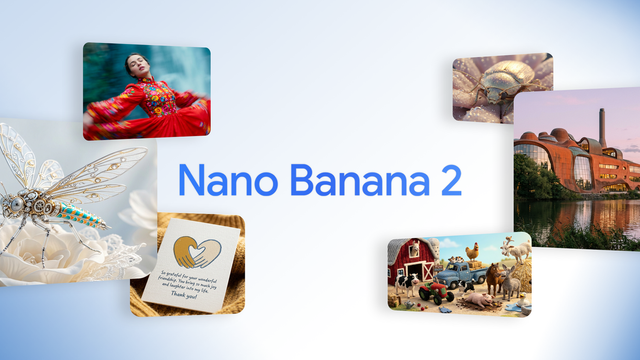
Google rolls out Nano Banana 2, aka Gemini 3.1 Flash Image, with advanced world knowledge and precision text rendering and translation, across its products (Naina Raisinghani/The Keyword)
https://blog.google/innovation-and-ai/technology/ai/nano-banana-2/
Google Discover bringt Traffic, den man nicht gesucht hat. Im besten Sinne. 📲
Discover ist der Feed auf der Google-Startseite am Handy. Kein Keyword nötig, kein Ranking-Kampf. Google entscheidet allein anhand von Nutzerinteressen, was im Feed angezeigt wird.
Wer reinkommt, bekommt tausende Klicks an einem einzigen Tag. Am nächsten wieder null. Kein planbarer Traffic, eher wie ein Jackpot.
Was hilft: Bilder ab 1200px Breite, starke E-E-A-T-Signale und aktueller Bezug. 🎰
Google launches Gemini 3.1 Flash Live, an audio model with improved tonal understanding and lower latency for real-time dialogue, watermarked with SynthID (Valeria Wu/The Keyword)
https://blog.google/innovation-and-ai/models-and-research/gemini-…
Website in mehreren Sprachen aber kein hreflang? Dann entscheidet Google selbst, wer was sieht. 🌐
hreflang sagt dem Bot: "Diese Seite gibt es auch auf Englisch und Französisch. Zeig die richtige Version."
Ohne das Tag landen deutsche Nutzer auf der englischen Seite. Oder beide Versionen konkurrieren um dasselbe Keyword. Im schlimmsten Fall rankt keine von beiden.
Implementierung ist fummelig und fehleranfällig, aber bei internationalen Seiten unverzichtbar. 🗺️
…
 @Techmeme@techhub.social