 @macandi@social.heise.de
2026-07-20 10:48:03
iPad mini bald mit OLED – aber wohl ohne ProMotion
Apple steht kurz vor der Überholung seines Kompakt-Tablets – und bereitet auch neue Modelle weiterer Baureihen vor. Doch gibt es technische Defizite?
https://www.

 @cdarwin@c.im
2026-08-17 20:35:45
Kushner predicts Hamas disarmament progress in about 30 days
Trump approval falls to 33%, lowest of his presidency, Reuters/Ipsos poll finds
Texas parents ask US supreme court to hear Ten Commandments in classrooms case
House ethics committee investigating Jimmy Gomez over sexual misconduct allegations
Trump says Kim Jong-un has responded to his overtures but doesn't offer details
Trump blames 'vandals' for damaged grass in the spot where he held his…

 @trochee@dair-community.social
2026-07-18 06:00:32
Numismatist alert!
I just found this very old penny in my pocket because it *stuck to my headphone case's magnetic clasp*
Wait, you say. Isn't ol' Abe supposed to be copper (or copper and zinc)?
Apparently not in 1943!


 @mcdanlj@social.makerforums.info
2026-08-13 00:55:57
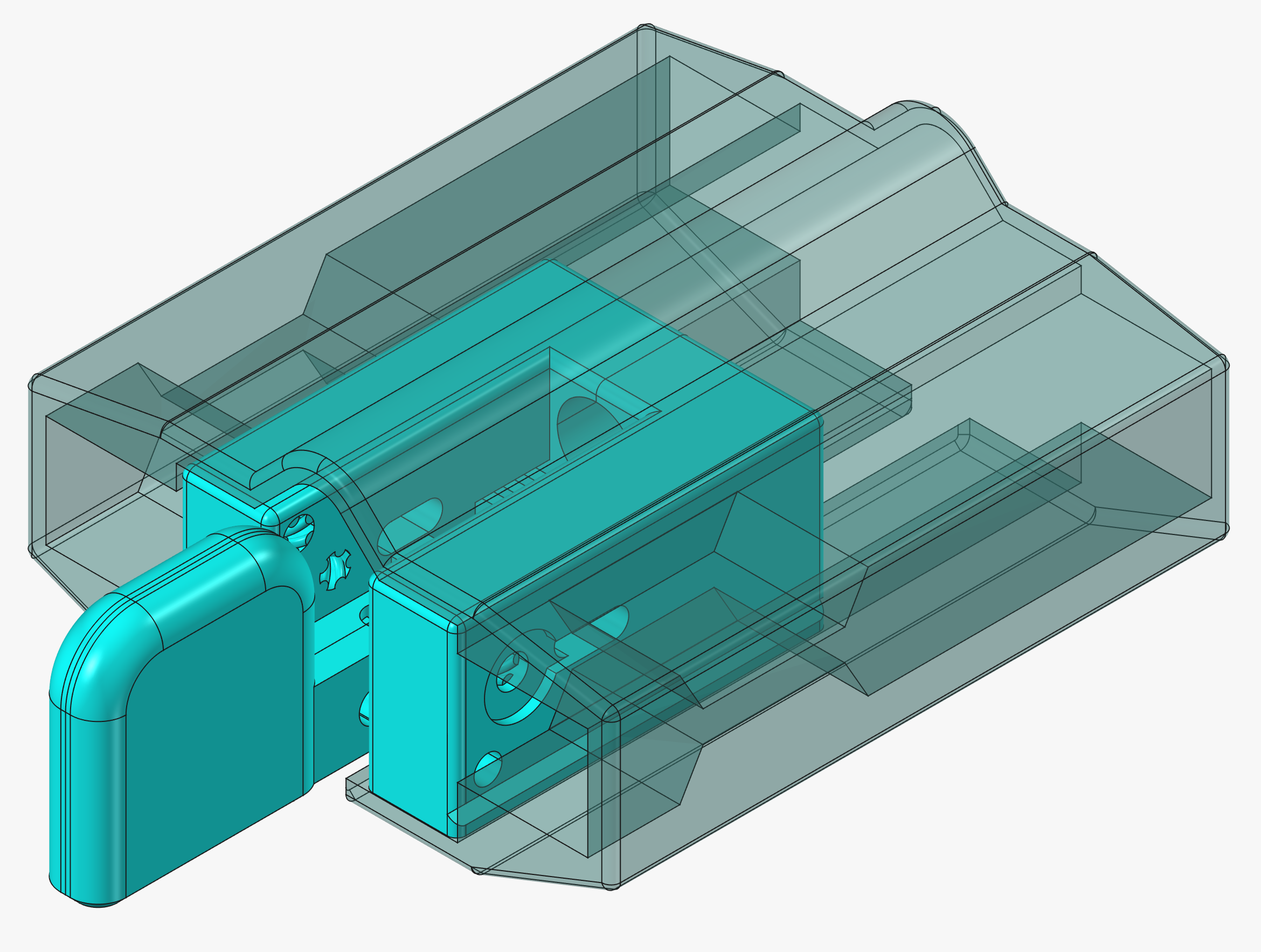
Big news! I just released version 0.9 of my 3d-printed #MorseCode single-paddle key system.
Changes:
- New grip that acts like a case. @…



 @peterhoneyman@a2mi.social
2026-07-02 17:55:42
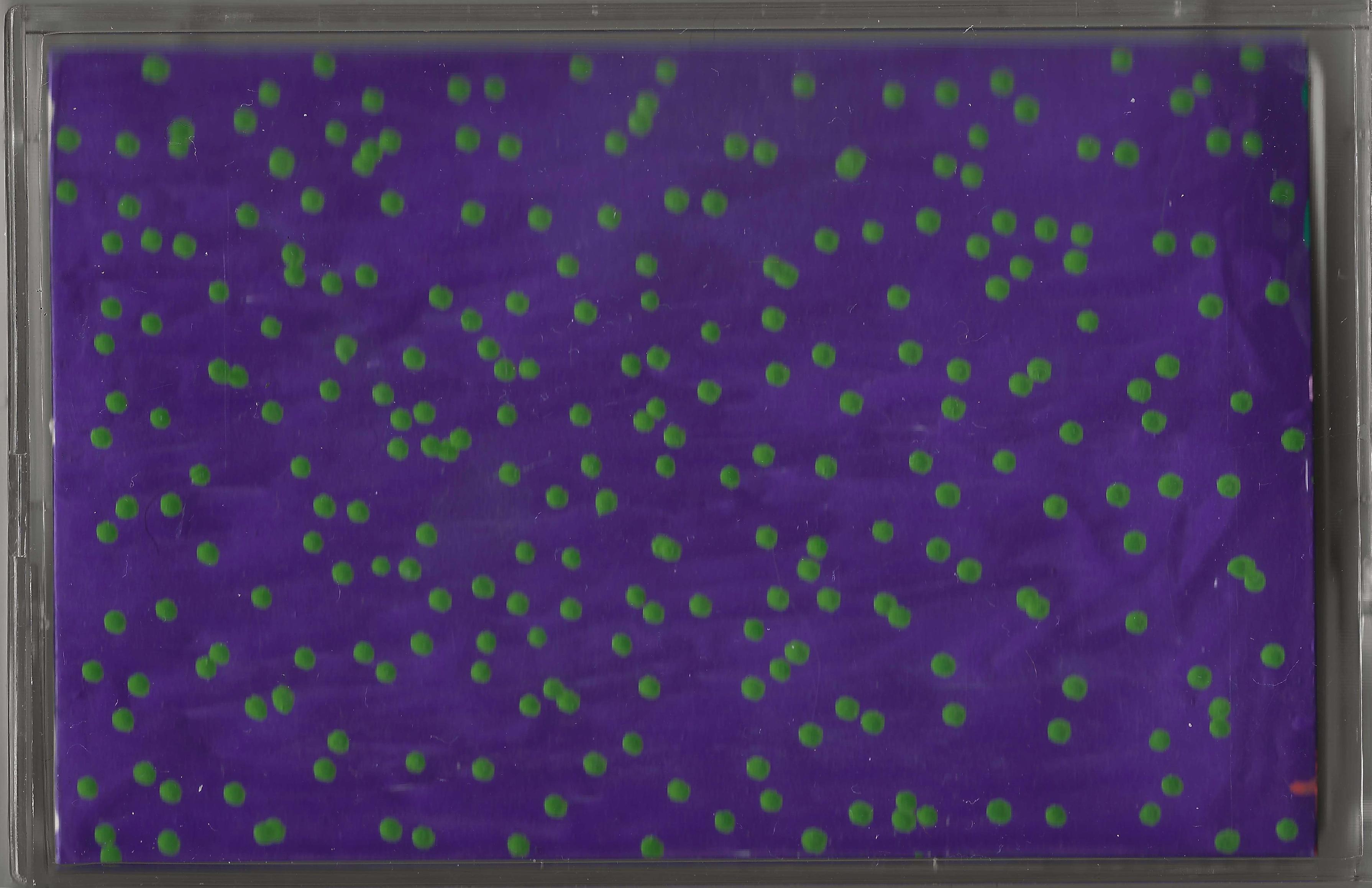
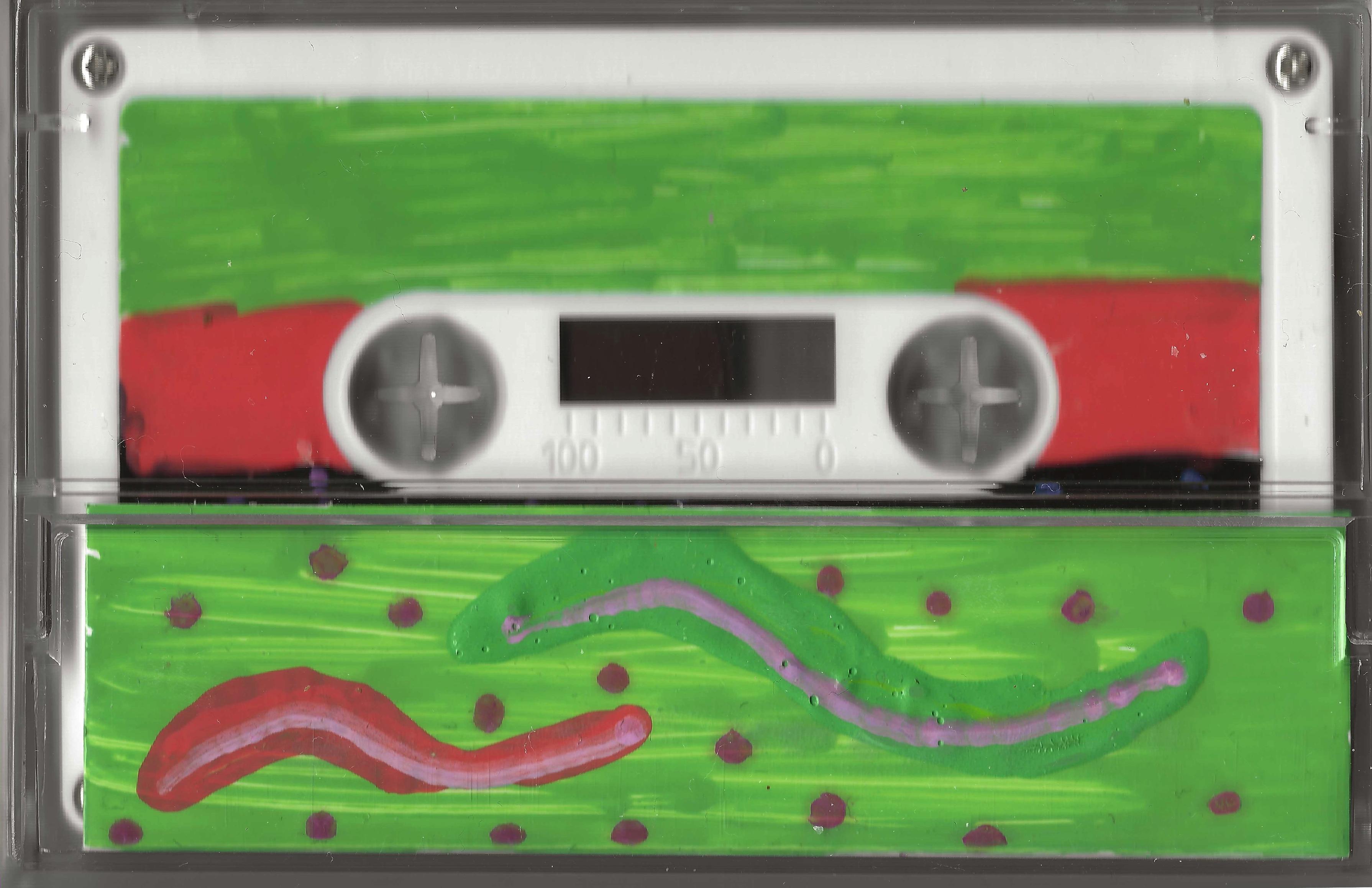
headed to the post office to mail a couple mix tapes to ypsilanti and rockingham (va)


 @arXiv_astrophGA_bot@mastoxiv.page
2026-09-09 09:21:56
Detection prospects for heavy WIMP dark matter around M31* in microwave band
Andrei E. Egorov
https://arxiv.org/abs/2609.08771 https://arxiv.org/pdf/2609.08771 https://arxiv.org/html/2609.08771
arXiv:2609.08771v1 Announce Type: new
Abstract: This work analyzes the detection prospects for weakly interacting massive particles (WIMPs) in dark matter (DM) density spike around the supermassive black hole (SMBH) in Andromeda galaxy M31 in microwave band. WIMP annihilation produces relativistic electrons and positrons, which generate the synchrotron emission in strong magnetic field of the accretion flow medium at microwave frequencies. Properties of this emission, as well as their dependence on DM and medium parameters, were modeled. Atacama Large Millimeter Array (ALMA) sensitivity to this emission and underlying WIMP parameters was estimated. It was obtained that M31* in microwave band represents the unique target, where DM spike signal can be detected in case of realistic spike and halo density profiles. In such case ALMA may reach the thermal s-wave annihilating WIMPs with masses up to around 1 TeV with just 10--100 hours exposure. Optimistic parameter configurations may allow probing all possible WIMP masses up to 100 TeV. Related systematic uncertainties are discussed.
toXiv_bot_toot
 @arXiv_astrophCO_bot@mastoxiv.page
2026-08-05 08:18:08
Cosmology in the Einstein Telescope era: comparing traditional and simulation-based methods for population inference
Giovanni Antinozzi, Guillermo Franco Abell\'an, Davide Sciotti, Matteo Martinelli
https://arxiv.org/abs/2608.04005 https://arxiv.org/pdf/2608.04005 https://arxiv.org/html/2608.04005
arXiv:2608.04005v1 Announce Type: new
Abstract: The next generation of gravitational wave detectors, such as the Einstein Telescope (ET), will observe orders of magnitude more binary black hole mergers than current facilities. Most of these events will lack an electromagnetic counterpart, also known as dark siren events, yet will still enable percent-level cosmological constraints. However, the likelihood traditionally used in Hierarchical Bayesian Inference (HBI) for population-level analyses becomes computationally prohibitive as the size of dark siren catalogues and population parameters grow. In this work we compare HBI against simulation-based inference (SBI) as a scalable alternative for cosmological population inference in the ET era. Studying a proof-of-concept example of a mock ET inference, we build a catalogue of $O(10^4)$ binary black hole events, then perform inference on the Hubble constant $H_0$ and matter density $\Omega_m$ in a flat $\Lambda$CDM cosmology, using both a hierarchical analytical likelihood and Marginal Neural Ratio Estimation (MNRE). We find excellent agreement between the two approaches, with SBI reproducing the HBI posteriors to high accuracy, while requiring orders of magnitude less computation once the simulation and training cost is amortized. We further demonstrate that SBI extends straightforwardly to a joint cosmology-plus-astrophysics analysis, simultaneously constraining $(H_0,\Omega_m)$ together with the parameters of the star formation rate density, at negligible additional cost compared to the significant increase in complexity such an extension would require within the HBI framework. Our results indicate that SBI is a promising and scalable tool for population inference with third-generation GW detectors.
toXiv_bot_toot
@peterhoneyman@a2mi.social2026-07-07 03:45:16
these tapes are ready to go (to ann arbor, ann arbor, chicagoland, and denton texas) as soon as i print the mailing labels
this makes 250 tapes mailed out (so far!)

 @arXiv_mathDS_bot@mastoxiv.page
2026-08-05 07:53:08
Fixed Points, Stability, and Basin Geometry of the $3\times 3$ Correlation Map
Ishrak Alhajj Hassan
https://arxiv.org/abs/2608.03404 https://arxiv.org/pdf/2608.03404 https://arxiv.org/html/2608.03404
arXiv:2608.03404v1 Announce Type: new
Abstract: For more than half a century, iterated Pearson correlation has been used in clustering, seriation, and information visualization despite the absence of a general analytical theory of its limiting dynamics. We completely resolve the fixed-point classification and relative Lyapunov stability problems for the correlation map in dimension three. An exact row-wise Gram factorization yields the identity $\operatorname{rank}C(A)=\operatorname{rank}(AH_n)$, forcing every fixed point to be singular and to lie on the relative boundary of the elliptope. In arbitrary dimension, we characterize all nondegenerate sign-valued fixed points and prove that their number is $2^{n-1}-1$.
For $n=3$, we derive an explicit coordinate representation and prove that the natural nondegenerate domain contains exactly seven fixed points: three rank-one patterned points, three rank-two mixed points, and one rank-two equicorrelation point, forming three orbits under the permutation action of $S_3$. Exact symbolic Jacobian calculations prove that the patterned points are locally asymptotically stable, whereas admissible invariant boundary curves realize the expanding multipliers and prove that the mixed and equicorrelation points are Lyapunov unstable relative to the natural nondegenerate domain.
Permutation equivariance maps the three patterned basins onto one another and implies equal Lebesgue measure whenever measurable. Reproducible basin computations classify every sampled admissible trajectory as converging to one of the three patterned attractors, with nearly equal frequencies and no trajectory-level classification mismatches under stricter validation. These results establish a complete fixed-point and relative Lyapunov stability theory in dimension three and provide strong reproducible evidence for the full-measure convergence conjecture for the union of the three patterned basins.
toXiv_bot_toot
@cdarwin@c.im2026-08-23 18:25:09
Government information librarian Charlie Amiot makes a strong case for the misinterpretation of the cause of hallucinations in the legal work product.
Amiot argues that If you happen to be someone who has a set of encyclopedias sitting next to them,
you’re undoubtedly sitting next to hundreds of hallucinations,
inserted both at the time of print and facts that have mutated with the passage of time since being printed.
Any newspaper or magazine you pick up contains a…